

From the outside, our manufacturing business looks simple: we receive orders, produce milk formulas, and deliver it to customers. But stepping into the business showed me that I was entering a maze my parents had spent more than twenty years learning to navigate. Because we produce nutrition for children, every decision carries weight. I found myself studying food safety regulations, preparing for inspections, responding to audits, and ensuring every process met increasingly rigorous standards. Every time I sat in meetings with school principals and government officers, I learned that trust had to be earned through transparency, consistency, and a willingness to answer every question—whether the purpose was an inspection, an evaluation, or the beginning of a new partnership.
It was in those moments, not while walking through the factory, that I truly understood what my parents had built. Behind every box of milk was decades of resilience, discipline, and integrity. I also experienced the disappointments they had quietly carried for years: customers who chose not to sign, projects that didn't move forward, and the constant responsibility of protecting a reputation that could take years to build but only moments to lose.
The greatest realization wasn't that the business was difficult. It was that my parents had never been in the business of simply manufacturing milk. They had spent more than two decades earning the trust of schools and families, one relationship and one promise at a time. Only then did I realize that what I was inheriting wasn't just a factory or a brand, it was a reputation built over 24 years, and the responsibility to protect and strengthen it for the next generation.
When I joined SAF Vietnam, I noticed something that had remained unchanged for over twenty years: our factory layout.
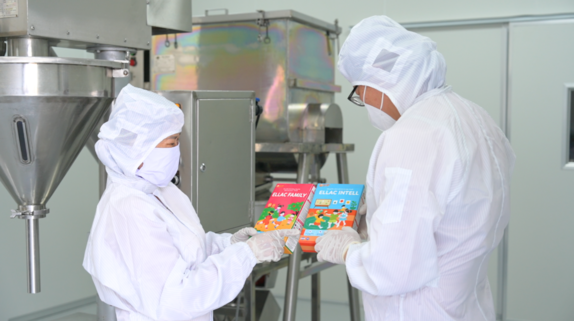
Rather than simply purchasing new equipment, we made the bold decision to redesign our production flow by investing in a clean room and a one-way manufacturing system. It was unfamiliar territory for all of us. Instead of relying solely on consultants, I invited our production team into the process. Together, we visited suppliers' factories, studied different layouts, learned construction terminology, debated material choices, and questioned every assumption about what would—and would not—work for milk powder production.
The construction was only at the beginning. The new environment introduced stricter hygiene standards, different maintenance routines, and more careful product handling. The transition was more demanding than we had anticipated. Production slowed as the team adapted to new workflows, additional maintenance schedules, and higher operating standards.
Rather than expecting everyone to adjust overnight, we treated the implementation as a learning journey. We held regular retrospectives, listened closely to operators' feedback, refined the workflow, and invested in new handling tools that improved both efficiency and product care. As confidence grew, so did ownership. The factory gradually found its new rhythm—not because change was imposed, but because the people operating it helped shape it.
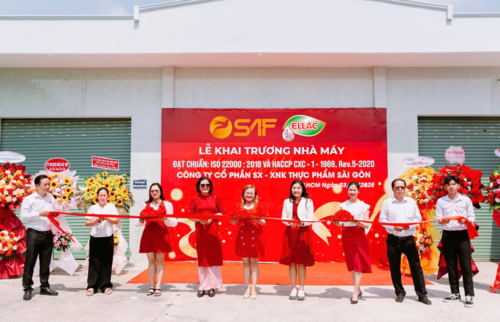
Today, we proudly welcome schools, parents, suppliers, and government agencies to visit our factory. Looking back, I realized the clean room was never the real innovation. The real innovation was discovering that sustainable transformation is about creating an environment where people learn, adapt, and improve together.
It was in those moments, not while walking through the factory, that I truly understood what my parents had built. Behind every box of milk was decades of resilience, discipline, and integrity. I also experienced the disappointments they had quietly carried for years: customers who chose not to sign, projects that didn't move forward, and the constant responsibility of protecting a reputation that could take years to build but only moments to lose.
The greatest realization wasn't that the business was difficult. It was that my parents had never been in the business of simply manufacturing milk. They had spent more than two decades earning the trust of schools and families, one relationship and one promise at a time. Only then did I realize that what I was inheriting wasn't just a factory or a brand, it was a reputation built over 24 years, and the responsibility to protect and strengthen it for the next generation.
When I joined SAF Vietnam, I noticed something that had remained unchanged for over twenty years: our factory layout.
Rather than simply purchasing new equipment, we made the bold decision to redesign our production flow by investing in a clean room and a one-way manufacturing system. It was unfamiliar territory for all of us. Instead of relying solely on consultants, I invited our production team into the process. Together, we visited suppliers' factories, studied different layouts, learned construction terminology, debated material choices, and questioned every assumption about what would—and would not—work for milk powder production.
The construction was only at the beginning. The new environment introduced stricter hygiene standards, different maintenance routines, and more careful product handling. The transition was more demanding than we had anticipated. Production slowed as the team adapted to new workflows, additional maintenance schedules, and higher operating standards.
Rather than expecting everyone to adjust overnight, we treated the implementation as a learning journey. We held regular retrospectives, listened closely to operators' feedback, refined the workflow, and invested in new handling tools that improved both efficiency and product care. As confidence grew, so did ownership. The factory gradually found its new rhythm—not because change was imposed, but because the people operating it helped shape it.
Today, we proudly welcome schools, parents, suppliers, and government agencies to visit our factory. Looking back, I realized the clean room was never the real innovation. The real innovation was discovering that sustainable transformation is about creating an environment where people learn, adapt, and improve together.
