There are no available cars matching the current filters.
Reset All
Thank you! Your submission has been received!
Oops! Something went wrong while submitting the form.
Thank you! Your submission has been received!
Oops! Something went wrong while submitting the form.
Edison Investment and Innovation Development Joint Stock Company - Thementor

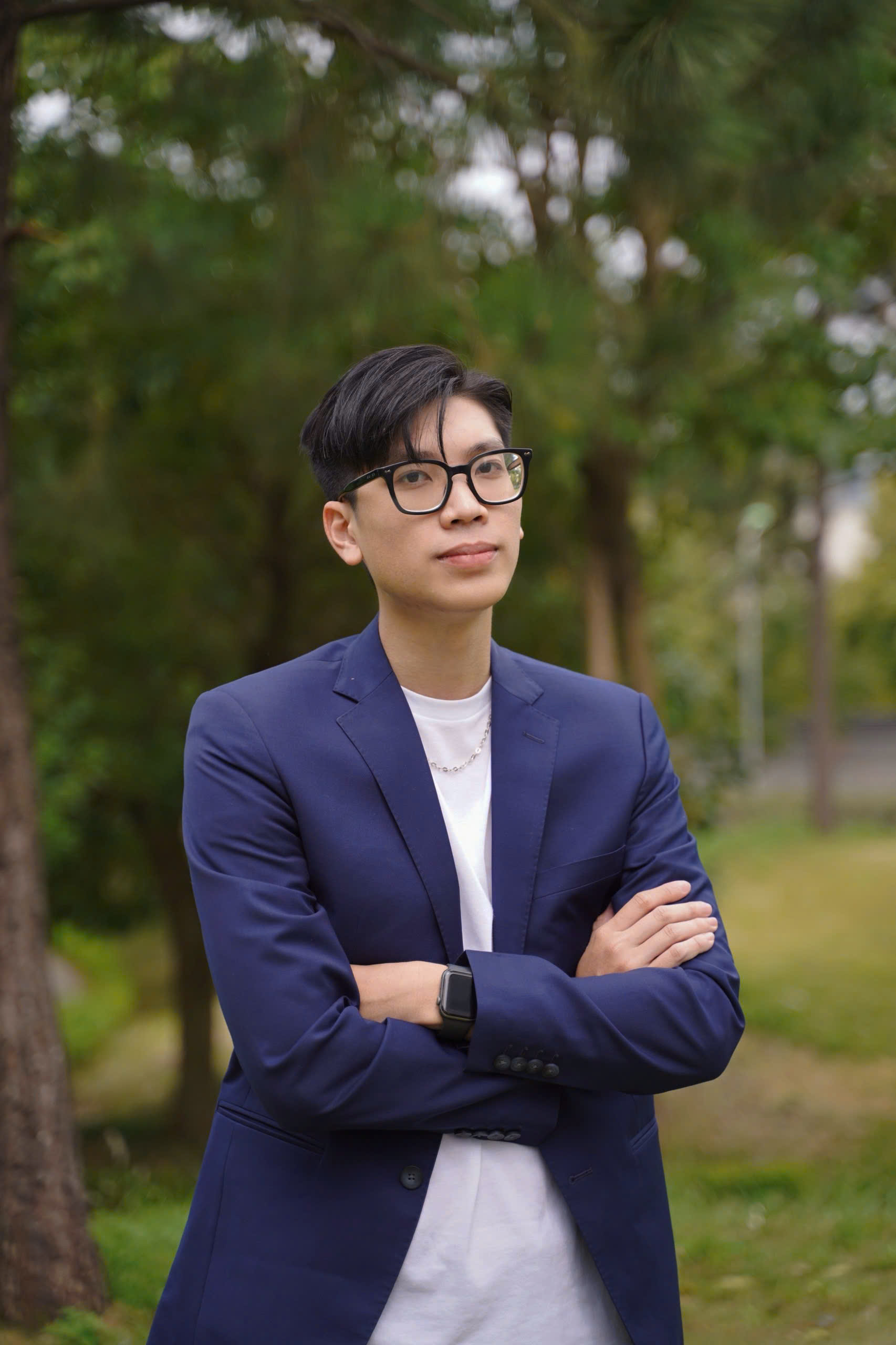
Pham Thanh Huyen

Beyond Inheritance: Building My Own Journey
Click to view story
Saigon South Campus
2018
Vietnam
Our family business operates across multiple industries, including investment, manufacturing, and healthcare, with a focus on identifying and developing new business opportunities in the Vietnamese market. Rather than focusing on a single industry, we leverage our family’s business network and resources to explore potential partnerships and introduce promising international products and solutions to Vietnam. In my role, I am responsible for identifying, evaluating, and building relationships with overseas partners, as well as coordinating the process of bringing suitable foreign products into the Vietnamese market. Working in a diversified, family-led business environment requires me to combine strategic thinking, market awareness, and cross-cultural communication while carefully assessing potential partners and opportunities to ensure long-term business value and sustainable growth.
Growing up, I was surrounded by business conversations. My parents often talked about building their company, making difficult decisions, and dealing with uncertain times. I did not fully understand the weight of those decisions then, but listening to them gradually shaped my interest in business. After university, I chose to work in different industries, hoping to gain practical experience and, more importantly, develop a perspective of my own before returning to the family business. A few years later, I came back to the company and took responsibility for developing relationships with international partners and exploring opportunities to bring foreign products into the Vietnamese market. As the eldest daughter, I felt a strong responsibility to contribute to the company’s future. Yet working with family was not always easy. We sometimes had different views on management and operations, and disagreements were inevitable. Instead of seeing these moments as obstacles, I tried to understand where they came from, learn from them, and find better ways to work together. Over time, I realized that taking responsibility was not simply about inheriting a role. It was about learning, adapting, and having the courage to improve what had been entrusted to me. Then, life took me in an unexpected direction. I was invited to teach at Vietnam National University, Hanoi, where I spent five meaningful years as a lecturer. Teaching changed the way I saw my own career. I discovered how rewarding it was to support young people as they explored their ambitions and made important choices about their futures. That experience eventually led me to establish my own education company, providing educational consulting, study-abroad guidance, career orientation, and scholarship support for students aspiring to study at leading universities around the world. My own learning journey continued when I pursued an MBA at RMIT University. Beyond business knowledge, the experience gave me new perspectives, international connections, and relationships that I continue to value. I was especially grateful for the encouragement of my professors and friends, whose support reminded me that meaningful growth rarely happens alone. Looking back, I am grateful for every chapter of my journey—for my family, who gave me my foundation, and for the people and institutions that encouraged me to grow beyond it. I no longer see succession as simply taking over what the previous generation built. To me, it means carrying forward the values I inherited while having the courage to create something of my own. My journey has taught me that honoring a legacy does not require following a predetermined path. Sometimes, the best way to carry a legacy forward is to keep learning, keep exploring, and find your own way.
Mekong Petrochem

Tran Thi Hien Hau

Success is only a moment. It is the effort that makes the journey worthwhile.
Click to view story
Saigon South Campus
2012
Vietnam
Mekong Petrochem is a family-owned lubricant business founded in 1998 by my father-in-law, a medical doctor who sought to build a livelihood alongside his medical career. Through years of challenges and setbacks, the company has developed an integrated supply chain from seaport operations to direct distribution to dealers. My role is to manage operations, optimise performance, and help shape the company’s strategic direction, ensuring that Mekong continues to grow sustainably in the years ahead.
I grew up during Vietnam’s economic reform and was fortunate to witness the country transform from widespread hardship into a middle-income economy. Many people of my generation were raised by parents who were extremely careful with money because they still carried painful memories of poverty and hunger. Yet when it came to my education, my parents never held back. Sending me to RMIT was one of their greatest investments in me—an investment made without demanding any guaranteed return. These memories have become one of the strongest motivations behind both my personal development and the business I now help lead. In my case, I has been lucky to have a family-in-law alike with my blooded one. Although our two generations grew up under very different material conditions, we share the same values: appreciating life, contributing to society, and recognizing those who have devoted their effort and youth to building Mekong Petrochem over nearly three decades. One of my greatest challenges arose when I proposed investing heavily in marketing to strengthen the Mekong brand. My family raised many objections, believing it could consume significant resources without creating the practical value traditionally prioritized by our company. I felt almost hopeless. I knew we could not rely only on established management practices while society and customer expectations were rapidly changing. Instead of forcing the idea through, I spent countless days and nights studying different marketing approaches and gradually building a stronger business case. I first had to earn the leadership team’s confidence that I understood our customers, could sell through new channels, and could demonstrate why customers needed a stronger Mekong brand to support their own business growth. The experience taught me that, in a family business, the hardest challenge is not necessarily convincing your parents; it is earning the support of experienced employees whose knowledge and skills may be greater than your own. Today, although the results have not yet reached all my expectations, Mekong has begun applying modern marketing and business-management solutions. Our customers choose us because of our consistent quality, approachable brand, and accessible pricing. Delivering that balance requires careful coordination across raw-material sourcing, manufacturing, and distribution by the entire Mekong team. The RMIT community continues to remind me of my responsibility to my family and society. The professional mindset of my lecturers and the perspectives shared by my classmates shaped me into a different person. Without RMIT, Mekong would not be what it is today—a company that has developed what we believe to be the lubricant industry’s only fully digitized modern distribution system.
Nhựa Quân Kiệt

Trinh Uyen Quan

Transforming Legacy Businesses with Next-Gen Mindsets
Click to view story
Saigon South Campus
2023
Vietnam
My business mainly serves B2B customers from various industries, including pipe manufacturers, food processors, metal packaging manufacturers, paper packaging manufacturers, and ceramic manufacturers. I serve as COO, ensuring that daily operations run smoothly and according to plan.
I partially joined my family business very early, starting with small tasks when I was in middle school. Starting early helped me prepare and understand the nature of the work, markets, products, and human relationships better than many others in my generation. It also cultivated a learning attitude that has always guided me throughout my professional journey. Four years ago, I worked for a SaaS company as a second job alongside my role in my parents’ business. I had the opportunity to understand how new-generation businesses operate compared with traditional ones. The core values—people, products, and vision—stood out to me the most. Early this year, after experiencing a major family crisis, I decided to leave my second job. I now lead the businesses alongside my brother. Together, we recognize that there are many gaps and opportunities for innovation, and we continue working every day to sustain and scale the business. I would be happy to connect with you if we share similar values, aspirations, and dreams, and explore potential future collaborations.
Cong Bang Corporation

Pham Nhat Nam

The Bridge Between Two Generations: One built the business. One will carry the story forward.
Click to view story
Saigon South Campus
2025
Vietnam
Cong Bang Corporation, established in 2008, is the official distributor and developer of SEKISUI CHEMICAL GROUP in Vietnam, Laos, and Cambodia. The company has a mission to elevate human living standards through advanced insulation and acoustic solutions that contribute to more sustainable, comfortable, and energy-efficient environments. I serve in business development within the high-technology manufacturing sector, specializing in foam OEM applications across Vietnam, Laos, and Cambodia. My role is defined by my ability to bridge technical innovation with market expansion. I work closely with regional partners to introduce cutting-edge foam technologies that meet diverse industrial and residential needs, from construction, automotive, fashion, and packaging to medical applications. My expertise lie in identifying growth opportunities, building strategic collaborations, and ensuring that high-performance solutions are tailored to the unique demands of Southeast Asia’s fast-developing markets.
Every family business begins with a dream. For Cong Bang Corporation, that dream began with a founder (Mr. Eric, my uncle) who had the courage to start from the ground up and the determination to build something that could stand the test of time. Today, Cong Bang Corporation has grown across multiple business areas, from industrial and construction materials to insulation, acoustic, and HVAC-related solutions, serving a wide range of demanding applications. Through partnerships with the Sekisui Group, Cong Bang has brought advanced material solutions to OEM automotive manufacturing, hotels, restaurants, high-end projects, and other sophisticated developments. What began as one entrepreneur's vision has evolved into a business built on relationships, expertise, international partnerships, and long-term trust. Throughout his entrepreneurial journey, Eric understood that the world never stops changing and neither should a business leader. That belief led him to RMIT University, where he completed his Executive MBA. RMIT became an important part of his development, challenging him to broaden his perspective, think strategically, and see business beyond day-to-day operations. Growing up in a family business, I always knew that the company I saw around me had a story. Only as I grew older did I begin to understand that he was also the Founder, the person who had started Cong Bang Corporation from the ground up, taken the risks, built the relationships, and spent years turning an idea into a business that would eventually become one of Vietnam’s trusted brands in its field. Cong Bang Corporation did not begin with everything it has today. It began with ambition, persistence, and a willingness to take the first step when there was no clear path ahead. Over the years, my uncle built the company through different stages of Vietnam’s economic development, gradually expanding its business across industrial and construction materials, insulation, acoustic, and HVAC-related solutions, while developing partnerships with international brands such as Sekisui Foam. But when I look at Cong Bang Corporation, I don't only see a business. I see years of my uncle’s life. I see the decisions he had to make when there was no easy answer. I see the relationships he built over decades. I see the values that became part of the company’s culture. My uncle encouraged me to experience a world beyond the family business, develop my own perspective, and challenge myself. He also recommended the place that had once shaped his own journey, RMIT. I realized that RMIT had become a bridge between us. The same institution that had once challenged my uncle to think differently was now challenging me. We could talk about business cases, leadership, strategy, innovation, people, and the future. I could ask him about decisions he had made years ago, and he could understand some of the new ideas I was bringing back from my generation. For the first time, I was not simply listening to my uncle’s stories. I was beginning to understand the thinking behind them. He became not only my uncle, and not only the Founder of our family business, but also my mentor. He taught me things that no classroom could fully teach. He was not trying to teach me how to become him. He was teaching me how to become myself. He built the foundation. My generation has to build upon it. And perhaps, one day, I will sit across from the next generation of our family and tell them about the man who started it all. The lessons he taught me. The company he built. And the university that connected our two journeys. Because when I look back, I realize that my uncle did not simply give me an opportunity to join a family business. He allowed me to discover what it means to carry a legacy. Cong Bang Corporation is the legacy he built. And my journey is only beginning. I may never build the company exactly the way he did. My responsibility is to take what he built, learn from it, and have the courage to write the next chapter in my own way. Because perhaps the greatest gift a founder can give the next generation is not a successful business. It is the knowledge, values, and freedom to build something worthy of the legacy they inherited. My uncle built the legacy. RMIT connected our generations. And now, it is my turn to build what comes next.
Lĩnh Private Enterprise

Nguyen Ngoc Trung Kim

The Best Foundation: Hard Work, Grit and Family - Standing on Strong Shoulders
Click to view story
Saigon South Campus
2022
Vietnam
Linh Private Enterprise is a premier two-wheeler dealership specializing in the retail sale of motorbikes, motorcycles, parts, electric bicycles, and electric scooters. We provide the local community with a diverse lineup of reliable transportation brands such as Honda, Yamaha, Suzuki, SYM, KYMCO, YADEA, DAELIM, and more. Beyond the showroom floor, our operations encompass full-service dealership management, handling vehicle registration, tax and administrative compliance, inventory tracking, and customer after-sales support to ensure a professional purchasing experience from start to finish. As a General Manager, my core responsibilities include operational and administrative oversight, directing the sales and service teams, structuring daily responsibilities, managing inventory, driving retail performance, maintaining brand standards, and handling other tasks as required.
Being asked about my career path today, I suddenly think back to my days as a student at this school. I honestly feel a bit sentimental. Back then, I majored in Business Management with a minor in International Business. I'm not even sure what those majors are called nowadays, but looking back, you could clearly tell that business was the only path I ever wanted to pursue. When it comes to how I entered this industry, my family’s journey actually started way back in 2004. My parents simply aimed to build a financial foundation for the family, so they started building a business. In the beginning, my parents weren't just standard retailers or simply operating as authorized dealers for motorcycle brands. They genuinely understood vehicles, engines, the local market, and they slowly built everything from the ground up. I heard them share their story day by day over the years. They worked so hard and were so good at what they did that now we are running nearly ten dealerships across various brands, which is something I admire so much. To be completely honest, before I decided to come back, I went through a lot of consideration and doubt. Like most young people, I wanted to break out on my own, prove what I could do, and build something entirely independent. But then, it was like a lightbulb went off in my head. I caught myself thinking: Wait a minute. Why am I constantly talking about wanting to do big things in business, yet completely ignoring the incredible resources sitting right in front of me? Why was my ego so big, insisting on starting from zero when I was already standing on this amazing launchpad built by my parents' efforts? Honestly, if it weren't for their hard work back then, I wouldn't even be here, standing on this stage today. That exact moment of realization is what brought me back home. When I officially stepped into the family business a little over three years ago, my goal wasn't just to keep selling our current products. More than anything, I wanted to inherit my parents' grit and entrepreneurial spirit. Working side by side with the older generation definitely came with its challenges, but it also gave me priceless lessons in things like social intelligence, handling real-world situations, and developing business intuition that would have taken me years to learn elsewhere. I gradually learned how to handle situations, build my professional skills, and work effectively. When working with people, I realized that the fewer management layers you have, the more accurate your processes need to be. Workflows are documented and used for staff training, not to create rigidity, but as an important step to minimize risks and improve task completion rates. Sure, we had our fair share of generational clashes and misunderstandings. But over time, that friction turned into a deep appreciation for the sheer amount of love and sacrifice my parents poured into this business. Now, standing on that foundation, our generation is bringing in fresh ideas, technology, and new ways to connect with customers. For me, the magic formula is combining the experience and battle-tested wisdom of our parents with the fresh energy of Gen 2. That’s how we will continue to grow and sustain our family business for many years to come.
Công ty TNHH Thương mại An Thành ĐT

Le Thanh Hao

From My Mother’s “Yes” to My Own: How a Family Business Taught Me That Women Can Lead
Click to view story
Saigon South Campus
2024
Vietnam
Founded by my mother in 2003, An Thanh DT is a family-owned business in Dong Thap, Vietnam, specialising in the distribution of gas and kitchenware. It started as a small, locally rooted enterprise and has grown into one of the province’s leading businesses in the sector, among the few established and led by a female CEO. As Growth Strategy Lead, I work across business development, market expansion, operational improvement, and long-term growth strategy. Beyond growing the business, I see my role as carrying forward my mother’s entrepreneurial legacy while helping build a more resilient, innovative, and women-led family enterprise for the next generation.
I do not remember one dramatic moment when I decided to join my family business. I remember something quieter: watching my mother run it. Founded by her in 2003, our gas and kitchenware distribution business in Dong Thap grew from her determination into one of the leading businesses in the province. As a girl, I watched her negotiate, make difficult decisions, earn people’s trust, and keep going when things were uncertain. She never told me that women could lead. She showed me. When I eventually stepped into the business as Growth Strategy Lead, I realised I was not simply joining a company; I was inheriting a story. My question was no longer whether I could continue what my mother had built, but how I could help it grow for the next generation. That question became real when our approaches collided. My mother trusted relationships, experience, and ways of working that had served the business for more than two decades. I wanted to introduce more structured processes, data-driven decision-making, digital tools, and new approaches to growth. At times, what I saw as necessary innovation felt to her like changing something that already worked. Instead of choosing between “old” and “new,” we chose to learn from each other. I learned that her experience was also a form of data, built through years of knowing customers, suppliers, and our community. She became more open to experimenting with my ideas when I learned to introduce change gradually and prove its value. We found our middle ground: preserving the trust and values that built the business while making room for innovation. This experience changed my definition of growth. Growth is not simply about becoming bigger; it is about knowing what must never be lost while having the courage to change what can be better. I hope our family business can become a small but meaningful example of what Vietnamese businesses can achieve: locally rooted, professionally managed, adaptable, and ambitious enough to look beyond traditional boundaries. Most importantly, I want our story to challenge the assumptions that still surround women in business. My mother’s business proved something to me long before I had the words for it: girls can lead well. Now, I want to help build a future where they do not have to prove it quite so hard.
Tuan Viet Shoes

Tran Viet Cuong

The Business I Spent Years Trying Not to Inherit
Click to view story
Saigon South
2011
Vietnam
Tuan Viet Shoes is a 100% Vietnamese-owned family footwear manufacturer founded in 1989, specializing in vulcanized rubber footwear, particularly rubber boots, while providing OEM/ODM development and manufacturing services for international brands. I currently serve as a Board Member, Executive Advisor, and COO. In parallel, I am the CEO of tuvi’s, our family-owned footwear brand, leading its transformation from my father’s original vision into a modern, purpose-driven Vietnamese brand serving domestic and international markets.
For a long time, I thought joining the family business was something that would eventually happen to me—like grey hair or taxes. My parents started Tuan Viet Shoes from a small rubber-outsole workshop in 1989. They came from a farming family, built the company largely through experience, instinct, and an extraordinary tolerance for things going wrong. By the early 2010s, my father already had another dream: after years of making shoes for international brands, why couldn’t we create a Vietnamese brand of our own? That dream became tuvi’s. I wish I could say I immediately understood the vision. I didn’t. I had studied abroad and spent years in international environments like the RMIT South Saigon Campus, where everything had a framework, a presentation, and preferably an Excel file. I came back to a factory full of people who could look at a piece of rubber, touch it for three seconds, and tell me something was wrong. My degree was impressive right up until somebody asked me why a shoe was not bonding properly. That gap created plenty of friction. I wanted systems, digitalization, branding, and new ways of working. The older generation often responded with the manufacturing equivalent of: “Interesting PowerPoint. Now come and see what actually happens on the line.” Annoyingly, they were often right. But not always. Over time, something changed. We stopped arguing about old versus new and started asking what each could contribute. Their craftsmanship met our systems. Their instincts met data. Experience met experimentation. And somewhere during that process, my relationship with Tuan Viet changed too. It took me almost twenty years to understand that inheriting a family business was not primarily about inheritance. It was about opportunity. Today, when I walk through the factory, I no longer see only machines, production lines, or pairs of boots. I see people, hundreds of livelihoods, accumulated knowledge, relationships built across decades—and the possibility of creating something meaningful from all of it: bringing greater abundance to more people through decent work, made possible by many decent people working together. My ambition for tuvi’s is therefore bigger than selling footwear. I want to prove that Vietnamese manufacturing can create not only products for other people’s brands, but also ideas, brands, and values of our own. And perhaps the biggest twist is this: I spent years wondering whether I had to continue my father's journey. Eventually, I realized I wanted to.
Maple Bear Vietnam

Dao Khanh Linh

A Question Worth Inheriting
Click to view story
Melbourne
2025
Vietnam
Our family business operates in Vietnam’s education sector with a long-term ambition: to bring the best possible education to Vietnamese children. Through Maple Bear Vietnam, we aim to combine international educational practices with an understanding of the Vietnamese context, creating learning environments centred on immersion, curiosity, play-based learning, and the child. As a Business Development Specialist at Maple Bear Vietnam, I work across school development, international partnerships, and strategic growth, connecting our Vietnamese team with Canadian educators and global partners. As the next generation, I hope to bring fresh perspectives while helping carry this educational ambition forward.
My father did not begin his career in education. He built his career as an auditor at UHY, yet behind the numbers was an ambition he carried for years: to bring the best possible learning experience to Vietnamese children. That ambition eventually grew into Times School, now with four campuses in Hanoi. Growing up, I watched education become part of our family life. Schools, teachers, and students often found their way into conversations around our dinner table. I knew how much my father had built, but for a long time, I did not fully understand the question that had driven him to build it: What kind of education do Vietnamese children truly deserve? Strangely, I had to leave Vietnam before I began to understand. Studying at RMIT in Melbourne exposed me to far more than what could be taught in a classroom. Living among different cultures, perspectives, and ways of thinking taught me to question what I knew, remain curious about what I did not, and see learning as something that should continue long after university. RMIT changed my understanding of education because education changed me first. When I returned to Vietnam, my father’s question suddenly felt different. I no longer saw education only through the schools my family had built; I understood, from my own experience, how profoundly the right learning environment could expand a young person’s view of the world. That was when joining the family business became meaningful to me. Our journey with Maple Bear became part of that same search. Canada’s bilingual environment first drew our attention, but we found something deeper in its educational philosophy: immersion rather than memorisation, children at the centre of learning, and play and curiosity as ways of discovering the world. These ideas resonated with what I had learned personally—the most powerful education does not simply give us answers; it teaches us to keep asking better questions. Today, my work connects Vietnamese schools with Canadian educators and international partners, helping translate a global educational philosophy into something meaningful for Vietnamese classrooms. Sometimes, sitting in those conversations, I think about how far that original question has travelled: from my father, to our family dinner table, to my years at RMIT, and now into classrooms filled with children whose futures we are helping to shape. Perhaps that is the RMIT lesson I carry with me most: never believe that what you already know is enough. Keep listening, questioning, adapting, and learning. And that is what I hope our family’s work can pass on to the next generation, children who are curious enough to explore the world, confident enough to find their place in it, and grounded enough to bring something meaningful back to Vietnam. My father began with a question. RMIT taught me why it mattered. Now, I am finding my own way of answering it.
Metal Solutions Company Limited

Nguyen Minh

From Workshop Floor to Industry Transformation: Earning Trust, Scaling Technology, and Leading Change
Click to view story
Saigon South
2025
Vietnam
For the past six years, I have served as CEO of Metal Solutions, a company specialising in advanced surface engineering and thermal spray technologies. We provide solutions including HVOF, Plasma Spray, and PTA welding to repair, maintain, and extend the service life of critical industrial components. Our technologies support customers and partners across a wide range of heavy industries, including steel, paper, and other manufacturing sectors, helping to improve equipment reliability, reduce downtime, and optimise the performance of production lines.
When I returned from Australia after studying commerce, I joined Metal Solutions, a traditional mechanical engineering company where many of my colleagues understandably had little confidence in either my technical ability or the value I could bring. Rather than enter the business through a senior management role, I started on the workshop floor as an entry-level technician. For the first six months, I focused almost entirely on learning. I worked alongside experienced technicians, studied decades of manuals and operating instructions, and tried to understand not only how our technologies worked, but also why things had always been done in a certain way and where the limitations were. Only after building that foundation did I begin redesigning our production processes. I learned to program robots, operate HVOF and thermal spray systems, and implement many of the changes myself. It took roughly two years before I felt I had truly earned the trust of senior staff and the confidence to embrace my role as Director. What had once been a VND 3 billion annual segment eventually became our core business, contributing over 90% of revenue. We have since exceeded US$2 million in annual revenue and continue to grow rapidly. As the company expanded, another limitation became clear: traditional, paper-based management could no longer support the number of orders we were handling while maintaining consistency and quality control. During my MBA at RMIT, I was exposed to modern digital tools and immediately began applying them at Metal Solutions. Over two years, we moved our records to the cloud, standardised workflows, introduced Slack, and built more than 100 automated processes based on RPA principles. There was significant resistance at first, but through training, persistence, and investment in company-issued devices, adoption gradually followed. Today, more than two-thirds of our daily processes are managed through these workflows, helping us scale from roughly 40–50 orders per month to more than 150. One lesson from RMIT that continues to shape my leadership is the importance of what I call the “organiser.” I am not the smartest engineer, salesperson, or accountant in my company. My role is to ask the right questions, bring the right expertise together, and direct our resources toward a common goal. Looking ahead, I believe RMIT and Metal Solutions could create real value together. We can provide students and faculty with access to advanced HVOF, Plasma, and surface-engineering technologies, real industrial applications, and research opportunities. In return, RMIT can contribute academic expertise, engineering talent, and collaboration, helping accelerate the development and adoption of advanced surface engineering in Vietnam.
THO LONG LABEL

Nguyen Huu Tho

One Brick at a Time - Transforming a Family Legacy Through Innovation
Click to view story
Saigon South
2020
Vietnam
Tho Long Label Co., Ltd. is a label-printing manufacturer serving garment, footwear, food, electronics, and interior companies in Ho Chi Minh City, Vietnam. My role is to manage operations, production, and customer relationships.
One Brick at a Time – Transforming a Family Legacy Through Innovation Upon graduating with a degree in Textiles and Fashion Merchandising, I dedicated seven years to gaining practical experience in the fashion industry. During this period, I secured a well-paying position with a competent employer. However, I found myself contemplating whether I desired a life of consistent employment or a career in services that would have a tangible impact. This realization led me to transition into the printing industry. I am acutely aware of the rapid advancements in technology and changing customer behavior after COVID-19. I believe that this opportunity will only arise within the next two to three years. I am filled with excitement and eager to elevate our business to new heights. I initiated discussions with my family to resign from my current position and was entrusted with the responsibility of managing the family business that my parents had established. The initial year of any new role presents its own set of challenges. As the F2 leader, you face double the stress. Nevertheless, progress and moving forward are the keys to overcoming obstacles. Employees will recognize your enthusiasm, energy, and experience, which will undoubtedly earn you their respect. By consistently building one good brick every day, you will eventually achieve remarkable success. As a leader, my primary objective is to foster a culture of growth and development within the company. I envision a future where the growth of the business is directly linked to the performance and contributions of our employees. The traditional method of printing paperwork for executive orders and storing numerous design changes has proven inefficient. This process is time-consuming and requires a few individuals to take sole responsibility for remembering and managing the history of changes. To address this, I have implemented part of an ERP system that enables everyone to locate, track, and resolve issues more effectively and quickly. Furthermore, I am committed to assembling a dynamic team of young professionals who are eager to learn, adapt, and provide support to our experienced team members. When I observe our employees inviting their family members to join our company, I am confident that this approach will cultivate a collaborative and innovative work environment. Additionally, it is imperative to establish a robust network of dependable material suppliers who can provide us with favorable lead times, consistent quality, and competitive pricing. This approach will mitigate the risks associated with relying on a limited number of suppliers. I am particularly appreciative of the invaluable experiences and knowledge acquired during my time at RMIT. The university’s diverse range of projects, assignments, courses, lecturers, friends, events, and part-time jobs have significantly shaped my mindset and expertise. Furthermore, the vibrant RMIT Alumni community has been instrumental in enhancing my networking skills and providing valuable insights from various perspectives.
Hong Ngoc Duong Dong., JSC

Le To Quyen

Sailing The Same Boat On A New Journey
Click to view story
Saigon South Campus
2012
Vietnam
My family business, Hong Ngoc Duong Dong, has been operating on Phu Quoc Island since 1996. The company is a key partner for large infrastructure and real estate developers in Phu Quoc, with a core operations team and a comprehensive fleet of barges, cranes, trucks, heavy equipment, and warehouses that are highly capable of delivering end-to-end supply and logistics services. In addition, we continue our traditional business line of providing fish sauce essence to the food industry.
Our family business is built around a seaport on one of Vietnam’s most well-known tourism islands. Over the years, we have grown from a traditional port operator into an integrated supply and logistics partner for major infrastructure and real estate developers on the island. I am currently the Deputy Director in charge of operations. Interestingly, joining the family business was never really part of my original plan. After graduating from university, my parents supported my passion for hospitality. We opened a hotel in the center of town, and I spent several years living and working on the island. Running the hotel gave me the opportunity to understand the island beyond what I had known from growing up in the family—and, more importantly, to gradually see the scale and potential of our core business. After several successful years, we exited the hospitality business, and my parents reinvested the proceeds into expanding the seaport. That decision turned out to be a major turning point for our family. The business grew from a relatively small operation into a much larger and more complex organization. At the same time, the island was experiencing a wave of major infrastructure and real estate development, bringing a huge increase in projects and cargo volumes to our doorstep. The opportunity was enormous—but so was the pressure. My parents, who had built the business from the ground up, suddenly found themselves dealing with a scale of operations that was very different from what they had managed before. They were exhausted, almost burnt out. Although my own experience in the industry was very limited at the time, I felt an urge to step in and give them a hand. And that was when my real journey in the family business began: when the business outgrew the organization. In the beginning, everything was messy. The traditional organizational structure and management practices that had worked well for a small family business were simply not ready to keep pace with large, complex projects and increasingly professional business partners. I can describe it as being like a machine originally designed for a motorbike, suddenly being asked to run at racing-car speed. The problem was not that the machine was bad. It had brought the family this far. The problem was that we were asking it to do something completely different. To survive and grow, we had to move forward. We had to break some old chains, replace obsolete processes, and build new systems. But, of course, a castle cannot be built overnight. And transforming a family business is not just a matter of changing processes. It is also about managing relationships, expectations, and emotions. I had to learn where I could make changes and where I needed to respect the boundaries of my parents and other family members. I started taking responsibility for areas where I had more knowledge or experience—particularly accounting, finance, reporting, and organizational processes—while gradually building my credibility in operations. The journey was far from smooth. There were many debates and arguments. Everyone had their own experience, their own beliefs, and, naturally, everyone believed they were trying to do the right thing. Sometimes, the most damaging moments were not caused by bad decisions, but by frustration. That is perhaps one of the hardest things about a family business: you cannot simply leave the emotions at the office. A disagreement with a colleague can end when you leave work. A disagreement with your parents can follow you all the way to the dinner table. What eventually helped us was the realization that, despite our different approaches, we were all in the same boat. My parents built this business from almost nothing. Their experience, instinct, and determination are the foundation that brought us to where we are today. I have tremendous respect for that. But I also gradually came to understand something equally important: what brought us here may not necessarily bring us to where we want to go next. The environment has changed. The size and complexity of our projects have changed. Our partners have become more professional, and the standards expected from us have changed as well. The next stage therefore requires a different way of working. My parents gradually understood that the changes I was pushing for were not a rejection of what they had built. They were an attempt to protect it—and prepare it for the next generation. For me, professionalism is not about replacing family values. It is about giving those values a structure that can survive as the business becomes larger. We are still on that journey. There are still disagreements. There are still moments when old habits meet new expectations. And I am sure there will be many more challenges ahead. But perhaps that is what makes a family business unique. You are not simply managing a company. You are carrying a legacy while trying to build something that the next generation can be proud of. And sometimes, the most difficult part of succession is not deciding who will lead the business next. It is finding a way for two generations to believe in the same future, even when they have very different ideas about how to get there.
VIET UC LPG CO., LTD

Thắng Bùi (Nis Bùi)

Ordinary Journeys, Lasting Roots
Click to view story
Melbourne
2017
Vietnam
Viet Uc Trading Liquefied Petroleum Gas Company Limited, also known as Viet Uc LPG Co., Ltd., was established in 2013 and is a privately owned enterprise specializing in the wholesale and distribution of liquefied petroleum gas (LPG) and related energy products in Vietnam. Headquartered in Dong Nai Province, the company provides reliable and safe gas solutions for residential, commercial, and industrial customers. With a strong commitment to quality, safety standards, and customer satisfaction, Viet Uc LPG continuously enhances its operations and services. The company aims to contribute to a sustainable energy supply while creating professional career opportunities for young talents in the energy sector. I currently serve as Head of External Relations at Viet Uc Trading Liquefied Petroleum Gas Company Limited, alongside my role as Deputy CEO. In this role, I lead corporate communications, stakeholder engagement, and strategic partnerships, playing a key role in shaping the company’s external positioning and long-term growth.
My family’s story began with farming. Like many Vietnamese families, we came from a simple life where hard work, family, and looking after the people around us mattered more than anything else. Over the years, our family found its way into the energy business, from the warmth of charcoal to LPG. The source of the flame changed, but what it represented remained the same: warmth, nourishment, and a sense of home. In 2013, my parents established Viet Uc LPG. Growing up, I saw the business simply as part of our family life. I saw gas cylinders, delivery vehicles, warehouses, employees, customers, and familiar faces around us. Only as I grew older did I begin to understand what was behind them: years of hard work, uncertainty, responsibility, and the trust my parents had built with people. What stayed with me most was not the business itself, but the people around it. A family business is never built by one family alone. It grows through employees who stay and contribute, partners who believe in you, customers who return, friends who stand beside you, and neighbours who become part of our everyday life. In many ways, the business became a place where our family values met the wider community. When I eventually stepped into the business, I found myself asking: What does it mean to inherit something without simply repeating it? My years at RMIT and my experiences living and working across different countries gave me new perspectives on communication, people, business, and change. They encouraged me to question old assumptions and imagine new possibilities. But returning to a family business also taught me humility: not everything old needs to be replaced. Some traditions survive because they carry wisdom. Today, I see my role not simply as continuing what my parents built. I see it as carrying forward what they taught me to work hard, to keep your word, to value relationships, to take care of people, and to create something useful for others. I want to bring new ideas, technology, and more responsible ways of working into the business, while keeping the human values that brought us here. My parents inherited values from the generations before them. They built their own chapter and passed those values on to me. One day, I hope to pass them on again. After all, what we inherit is not only a business. It is a way of living, caring, and contributing, and our responsibility is to make it meaningful for the generation that comes next.
Bếp Cô Đang

Vu Anh Thu

From Our Family Kitchen to the Future: Preserving Vietnamese Tradition Through Innovation
Click to view story
Saigon South
2019
Vietnam
My mother owns the craft: she braises the fish for 18 hours, then portions and packs the finished product. I own the route to market: strategy, positioning, branding, combo and bundle architecture, marketing, website, order flow, and fulfillment, so that a handmade product can reach more customers and earn repeat purchases.
I realized I wanted to join the family business when I helped my mother manage a batch of deliveries in Ho Chi Minh City for the second time. Our kitchen is based in our hometown of Can Tho, but she had begun receiving a growing number of orders from customers in Ho Chi Minh City. Each week, she transported the products to my apartment, where we arranged individual deliveries to customers. Coordinating all the orders at once was complicated, and the delivery costs were relatively high because we relied on on-demand shipping services. Having previously optimized operations for my own consumer-products business, I immediately saw opportunities to improve the process. That was the moment I became eager to use my experience to help my parents streamline the entire journey from our kitchen to our customers’ homes. One story that has stayed with me came from customers who bought our braised fish for their elderly parents or grandparents. Because the fish is slow-cooked until the bones become completely soft, it is easy for both older adults and young children to eat. Several customers have told us how happy they were to see their parents enjoying their meals and eating more rice than usual. What may seem like a simple meal can mean so much to a family, especially when an elderly loved one, who may normally have little appetite or difficulty eating, genuinely enjoys the food. Stories like these remind me that our family business is not only about preserving a traditional dish; it is also about helping families care for the people they love. I hope our family’s work can demonstrate that traditional Vietnamese dishes and recipes do not have to disappear as lifestyles change. By improving production, operations, packaging, and distribution, we can make these dishes more accessible and relevant to modern consumers without losing their authenticity. Food is an important expression of culture. When a traditional dish is preserved, developed, and passed on to future generations, the history and values behind it are preserved as well. I hope our journey shows that Vietnamese businesses can combine tradition with innovation: honoring what came before while building something sustainable for the future. In doing so, we can introduce the world not only to Vietnamese food but also to the richness and resilience of Vietnamese culture. One lesson from university that I still apply every day is never to assume that the first solution is the best one. I learned to keep looking for ways to improve, to question my own choices and assumptions, and to evaluate whether there might be a more effective approach. This mindset encourages me to research how similar challenges are addressed in different industries and parts of the world, then adapt those ideas to our own circumstances. In our family business, it helps me balance confidence with curiosity: making decisions when necessary while remaining open to learning, refining, and doing things better.
Phu Si Service Trading Production Co., Ltd

Ha Tuan Kien

From Digital Products to Physical Ones: Returning Home to Carry On My Father's Legacy
Click to view story
Saigon South
2024
Vietnam
Phú Sĩ specializes in manufacturing and wholesaling tarpaulin fabrics for awnings, vehicle covers, and the production of inflatables, as well as clear PVC curtains and components for awnings, retractable roofs, and roller blinds. With over 16 years of experience, we supply high-quality, reasonably priced products to customers nationwide, backed by dedicated service and fast delivery. Our stable supply chain allows us to respond quickly to orders, with products prepared and shipped out daily to keep our partners' timelines on track and maintain quality standards. Within this operation, my role is to keep that reliability running smoothly from the inside, managing inventory and driving operational improvements so the right stock is always ready to move.
After graduating with a degree in Hospitality and Restaurant Management, I was determined to build my own career. Despite the tough job market during COVID-19, I was fortunate to land a role as a Product Executive at VNG, and later as a Product Manager at Firegroup. With strong support from colleagues and managers, my career, despite being outside my field of study, went smoothly for over four years. Throughout that time, my father and I often talked, and I came to see the deep, boundless passion he had for the awning and tarpaulin business. It struck me as a real shame if that legacy was not carried forward. So I decided to leave my job and return to take over the family business, stepping once again into an entirely new field. Starting out as a newcomer, I had to learn everything from the ground up. Unlike the digital products I was used to, information about Vietnam's awning industry was scarce and hard to find. Worse, the company's data still lived on paper and scattered spreadsheets, making it hard to see the bigger picture, and I suspected this was also holding back every new hire. So I proposed implementing an ERP system. The idea met resistance at first, but I worked to win over our long-tenured staff by showing them the benefits and personally training them. They struggled early on, as they were used to the old ways, but gradually came to see the system as a real help for business decisions, pricing policies, and beyond. An efficient operation, though, is only half the story. As a former Product Manager, I believe a great product is what truly sets a business apart. Vietnam's awning industry today competes mainly on price, which drags down quality and squeezes margins. Amid Vietnam's rapid urbanization, my father and I are now focusing on premium product lines cassette awnings and aluminum louvered pergolas, hoping to help make our cities more beautiful along the way.
Hoang Hai Construction and Trading Co., Ltd

Hoang Thanh Hai

Turning Legacy into Future Growth
Click to view story
Saigon South
2023
Vietnam
Our family business mainly operates in road construction, infrastructure development, and construction materials. My role focuses on HR, administration, and internal management, while also supporting the management team in developing new projects. I am involved in cost optimization, improving management systems, increasing productivity, and digital transformation. In addition, I help review legal and compliance matters to reduce risks and improve operational efficiency. My goal is to make the company more professional, efficient, and sustainable in the long term.
Before joining my family’s construction business as a second-generation member, I had studied and worked in Hanoi and Ho Chi Minh City, including a position at a large bank. Returning home meant leaving a stable career and a professional environment I knew well. What ultimately attracted me was the opportunity to solve practical business problems and contribute directly to the company’s development. When I joined, I saw how much the previous generation had built through experience, trust, and hard work. Direct communication and flexible decisions had helped the company grow. However, as the business expanded to more projects, construction sites, employees, and equipment, these methods became harder to maintain. Information could arrive late, making it difficult to monitor costs, coordinate resources, and identify inefficiencies early. I began to see where I could contribute: improving processes and applying technology to support better cost control. Rather than focusing on expansion alone, I wanted us to examine how we worked every day. Could information move faster between construction sites and the office? Could more consistent reporting help us understand project costs and use equipment more efficiently? These questions shaped the changes I wanted to introduce. My proposed approach was to standardize essential workflows and gradually use digital tools to collect and organize operational data. Clearer information on project progress, expenses, cash flow, and resource utilization could help managers identify problems sooner. My aim was to reduce duplicated work, unnecessary spending, and delays while giving people a clearer basis for decisions. However, my ideas sometimes clashed with established practices. I was looking for consistent processes and measurable information, while the existing approach relied heavily on practical judgment and direct communication. I had to learn that introducing technology also meant understanding the habits and experience behind the way people worked. Instead of trying to change everything at once, I chose a gradual approach. I learned to preserve flexibility where it was useful and introduce greater structure where the growing business needed it. I wanted data to strengthen practical judgment and make everyday decisions easier. This experience has shaped my understanding of being part of the second generation. My contribution is to build on the foundation my family created by helping the company operate more efficiently and make better-informed decisions. For me, innovation begins with practical improvements: simpler processes, clearer information, and more careful use of resources. The challenge is to bring experience and technology together in a way that people can understand, trust, and sustain.
M — N Associates

Nguyen Bao Anh Duy - Mai Ngoc Que Lan

Two minds. One vision — Shaping Vietnam’s Creative Future Together.
Click to view story
Saigon South
2014
Vietnam
M — N Associates is an independent strategic branding company founded in Ho Chi Minh City in 2014 by partners in life and business, Duy Nguyễn and Lan Mai. We help businesses express their identity through strategy, design, typography, packaging, and digital and spatial experiences. As Executive Creative Director and Partner, Duy leads the creative vision. As CEO and Partner, Lan leads the business, operations, and project delivery. Together with our team, we build distinctive brands rooted in Vietnamese culture, with the ambition to make their stories resonate internationally.
Before M — N Associates became a company, it began with a coffee shop. Lan and Duy often met there with friends, spending long hours talking and gradually falling for each other. At the time, neither of them knew that those ordinary gatherings would become the beginning of a shared life and a shared practice. Before that possibility took shape, Duy had discovered independent creative studios in RMIT’s library. A book called The Small Studios showed Duy how small practices could build a future through their own convictions. Around the same time, a branding assignment taught Duy a harder lesson: Duy had put too much of himself into the design and too little attention into the system the brand needed. That experience pushed Duy to understand branding more deeply. During their first year, almost every bit of money they earned went into buying books and learning about branding. When Lan left her previous company, Duy came up with what felt like a crazy idea: opening a studio. In 2014, they founded M — N Associates in Ho Chi Minh City. Their name brings together their surnames, Mai and Nguyễn. They started very small, with one table, two old laptops, four chairs, two desk lamps, and one printer in our apartment. That was the entire studio. They did everything themselves, from designing and arranging shoots to printing and putting up signs. They also travelled whenever they could, looking for new ways to approach projects and discovering possible directions for the studio’s work and models. Those journeys helped them understand the world beyond their desks and gave them a wider sense of what design could do. Being partners in life and business meant building something that depended on both of them. Duy brought a background in multimedia design and an interest in strategy and storytelling. Lan brought design knowledge, production experience, and the ability to organise people and turn ambitious ideas into finished work. Today, Duy leads their creative direction, while Lan leads the company as CEO. Earning clients’ trust took time. They wanted businesses to see how design could express their purpose and support their growth. They learned to demonstrate that value through completed projects. Each became evidence for the next conversation, and each taught them how to work better together. Guta Cafe became a turning point. Looking at contemporary Vietnam’s street culture, they found inspiration in an ordinary plastic stool. Its familiar form helped shape a distinctive identity and custom typography. The project gave them confidence that everyday Vietnamese life held ideas capable of connecting with people locally and earning recognition internationally. As more talented people joined them, the studio grew beyond what either of them could make alone. Today, M — N Associates is one of Vietnam’s leading branding agencies, bringing together around 20 young and talented people who work to build meaningful creative solutions for cultural organisations and major corporations across the country. Their work has expanded to brands and institutions including GHTK, Biti’s Hunter, MoMo, Bát Tràng Museum, and Quang San Art Museum. In 2024, Lan and Duy shared their journey at the Brand New Conference, one of the biggest branding conventions in the world, in Salt Lake City, ten years after starting the company. Looking back, building M — N has meant learning how to give a shared ambition a practical foundation: thoughtful work, dependable delivery, and relationships built over time. It began with a coffee shop, a small room, a few old devices, and an idea that seemed slightly unreasonable. It grew through curiosity, persistence, and the belief that a studio could create its own path. Their hope is that the next generation of Vietnamese designers can see a future for themselves here. They want to keep building a company where their curiosity has room to grow, and where the culture they live with every day becomes a source of creative confidence. For them, that is a future worth building together.
T-Group

Nguyen Minh Dang

Value Before Ask
Click to view story
Saigon South
2025
Vietnam
TGroup is an ecosystem with over 15 years of experience across different services - Eplus (events, MICE, PR, digital marketing), The Wall Architecture (interior design & construction), Nguyen Moc Production (event and interior fabrication), Enabler Plus (e-commerce enablement), and GolfCare Asia (golf tournaments, premium travel). I currently support the group as a part-time Sales Executive. Whenever I meet someone new through my network or at business events, I like to hear about what they're building, and if one of TGroup's companies could genuinely help, I introduce it as an option worth considering.
Some of my clearest memories with my dad are not at the office, but in the car, on the way home. He talks about the business the way other dads talk about their day, and over the years I noticed his purpose kept changing. In the beginning, it was simple: build something so the family has financial comfort. Later, the reason changed, and he started talking about the team, like how working with outside vendors was annoying and unreliable, and bringing things in-house was better for the people who work there, giving them steady jobs and salaries. Later still, the business grew into things he actually loves, like golf, and I saw it turn into something that supports whole communities around that too. Every time, the purpose got bigger and included more people. I think my dad's mantra, even if he never said it directly, is simple: wherever you go, whatever you do, provide value first. The moment this became real for me was during my second year at RMIT, while I was interning as a marketing operator at a games corporation in Vietnam. By then I'd already built some trust with the team through small projects' success and referring a college friend for a website project that went well. So when my brand needed an agency for an offline event, I thought of Engage Plus. They delivered it right to expectation, and the team was happy. That was the moment it clicked for me: if I keep sharpening my own skills at work, I can create value for both my network and my family's business at the same time. That first referral in year 2 wasn't a one-off — by year 3, I referred both Eplus and Engage Plus for a bigger shared project. Around the same time, a close friend from RMIT had to move to Cambodia to help run his family business and needed a house built there, so I referred The Wall, and they did a good job for him too. That habit stuck with me, and two years after graduating, I'm still doing it — meeting people, hearing about what they're building, and if one of TGroup's companies genuinely fits, I would bring it up as an option for them to choose from. That's basically how I ended up doing sales for TGroup, without ever really deciding to. Value first, always. The rest usually follows on its own.
3S Software Co.,Ltd

Võ Quỳnh Như

Finding My “Như Ý”: A Young Successor’s Journey
Click to view story
Saigon South
2023
Vietnam
3S Software is a Vietnamese family-owned technology company founded in 2004. 3S specializes in ERP, MES, and digital transformation solutions for manufacturing and distribution businesses, particularly in plastics & rubber, pharmaceuticals & medical devices, food & beverage, metals & fabricated metals, furniture, automotive, and industrial machinery. We partner with global technology providers to improve operational efficiency, data visibility, and process control as Epicor, Sage, AVEVA, Intouch. As the second generation in the family business, I work as a Partnerships Manager, focusing on strategic partnerships, business development, marketing, and sales support while helping modernize the company and prepare it for its next stage of growth and succession.
I would like to begin by introducing the very first gift my parents gave me: my name, “Như.” In Vietnamese, Như is often associated with “Như Ý,” a phrase that expresses the wish for everything to go as one hopes that every journey I take will be successful, smooth, and blessed by my family. There is another interesting dimension to my name. “Như là” is commonly used in Vietnamese when giving examples, sharing real-life stories, or simply connecting different ideas. Perhaps that is why I have always been curious about other people’s stories. I find myself drawn to those who share a similar role to mine a successor, a young person, and a lifelong learner trying to find my own path. Since 2023, I have had the opportunity to work in my father’s business, 3S Software, an IT company serving manufacturing and distribution businesses in Vietnam. With around 20 employees, most of whom specialize in ERP implementation, the company has given me the opportunity to wear many hats from Marketing and Sales Support to HR, Partnerships, and Assistant to the CEO. Rather than following a clearly defined position, I have often found myself filling whatever gaps the business needed me to fill. One experience particularly changed the way I looked at my role in the family business. Before Tet, I received mixed feedback from a prospect, a partner, and our internal team regarding a sales presentation. Everything seemed to be going in different directions, and I felt overwhelmed because the outcome was far from what I had expected. I remember calling my RMIT Entrepreneurship professor, Mr. Eytan Shaham, to ask for advice. He listened to everything I shared, encouraged me to step back and look at the facts, and then asked me simple but powerful questions: Were we aligned with the prospect’s expectations? What was unusual about this situation? What could I improve? And perhaps most importantly, how could I make my next project become “Như Ý”? That conversation taught me that being a successor is not about making everything go according to plan. It is about learning how to understand different perspectives, identify what is really happening, and continuously improve the way I contribute to the business. Through the RMIT Family Business Club and related events, I have had the privilege of listening to many different succession stories. I have seen different pathways, business models, industries, visions, and expectations that one generation hopes to pass on to the next. One successor chose to build a career outside the family business first, hoping to prove his capabilities to both the board and his parents. Another daughter had been working in her family business since she was eighteen. Someone else built an agency under the family company, while another started a new venture from scratch with people from the older generation. Some joined their family businesses when the companies were at their peak; others stepped in during times of crisis. These stories have made me realize that there is no single definition of a “right” successor, and perhaps there is no single pathway to succession either. Each family business has its own story, its own challenges, and its own version of “Như Ý.” For me, the journey is not simply about inheriting a business. It is about discovering what I can contribute, understanding what my generation can bring to the table, and learning how to connect the values of the past with the possibilities of the future.
Công Ty TNHH Thang Máy - Kỹ Thuật Điện Hisa

To Thi Quynh Chi

Expect the Unexpected
Click to view story
Saigon South
2024
Vietnam
HISA Elevator is a family-owned elevator manufacturer with over 20 years of experience. We specialize in OEM production and work with more than 300 distributors nationwide. Guided by the motto “Quality – Safety – Modernity,” we are constantly improving and investing in modern machinery and new factories to ensure that our products meet quality standards, ensure user safety, and offer long-lasting durability. I currently work as an Executive Assistant, supporting my father in day-to-day operations by helping improve the way we work through new ideas and new tools, while also strengthening relationships with our partners.
I used to joke that I was probably the least likely person to enjoy office work or being in business. I've always been someone who loves creativity, so sitting behind a desk all day? That just didn't sound like me. So after graduating from RMIT, I chose to pursue a creative path, such as photography and modelling. I always knew I would return to my family's business one day, but I thought it would be years later—after I had spent enough time chasing my own dreams. But life is truly unpredictable. Just as a creative project I had poured my heart into came to an unexpected end, our company was also facing a challenge. A colleague who had been with us for more than twenty years needed to leave for family reasons, and my father asked if I could take on that position because it required a trustworthy person. To be honest, I didn't say yes because I had suddenly discovered a passion for business. I said yes because I didn't have a next plan yet, while my family needed me, so I simply thought, “Why not? I'll give it a try.” That “try” ended up changing me. What surprised me most wasn't learning about business. It was finally seeing everything I had never noticed before. I saw colleagues who had quietly spent decades growing the company alongside my parents. I had conversations with customers and partners that taught me not only about business but also about life. Joining the RMIT Family Business Club made that feeling even stronger. For the first time, I met other next-generation leaders who were also trying to answer the same question I had been asking myself: How do I honor what my parents built without losing who I am? Somewhere along the way, my question changed. Instead of asking, “Do I really belong here?” I started asking, “How can I contribute in a way that's uniquely mine?” Today, I contribute by bringing fresh ideas to make work more efficient and by building stronger relationships with our partners. They're small things. But maybe that's the point. Not every generation is meant to rewrite the story. Sometimes, our role is to quietly add our own light to a flame that has been burning long before we arrived, so it burns a little brighter for those who come next.
Kien Phu

Nguyen Duc Phu

No Shortcuts, Just Steps Forward
Click to view story
Hanoi
2025
Hanoi, Vietnam
Kien Phu is a tile levelling-wedge brand under Dong Anh Transformer Manufacturing Co., Ltd., a company established in 2016. Building on its manufacturing capabilities and experience in factory operations, the Kien Phu brand was officially developed in 2024, focusing on the production and supply of tile levelling-wedge solutions for the construction materials and tile installation markets. Kien Phu’s development is built on consistent quality, practical value, and responsibility towards partners. We focus on optimising our products based on real-world functionality, consistent form, stable pulling performance, and clean breakage while maintaining reasonable pricing to meet market and distribution channel needs. With the direction of “Built from the Foundation, Lasting through Quality,” Kien Phu aims not only to supply products but also to become a reliable manufacturing partner for distributors. We prioritise transparency in materials and production processes, conduct quality control checks on every batch, maintain a stable supply, and take full responsibility for the products we bring to market. Currently, our factory has a production capacity of over 100 tonnes of tile levelling wedges per month, enabling us to meet large-scale and continuous supply requirements for factories, central warehouses, and distribution networks nationwide. In addition to products under the Kien Phu brand, the company also provides OEM manufacturing and customised packaging services, supporting partners in developing products under their own brands. For strategic distribution partners, Kien Phu offers regional market protection policies, together with sales support and partner protection programmes designed to minimise inventory risks and establish long-term partnerships.
I did not always know that I wanted to join my family business. Growing up, I saw the factory mostly as my parents’ work rather than something connected to my own future. That changed when I began to understand how difficult it was to build a manufacturing business from the ground up in Vietnam. Behind every machine were years of investment, risk, relationships, and people who had grown together with the company. I realized that joining the business was not simply about continuing what my family had built, but about finding what I could contribute to its next stage. One of my first challenges was introducing new products and a more market-oriented way of thinking. A simple example was our tile levelling system, a small construction accessory used by tilers to keep tiles flat and evenly spaced. The product itself is simple, but developing it taught me an important lesson: manufacturing is not only about producing something cheaply. We had to understand what installers actually needed, improve material consistency, control production quality, and think about packaging, distribution, and branding. At first, some of my ideas were questioned. The older generation had built the company through experience, relationships, and practical judgment, while I often approached problems through data, branding, technology, and experimentation. Instead of trying to replace the old ways, I learned to combine both. Their experience helped me understand what was realistic; my perspective helped us explore what could be improved. I began to feel that I was earning their trust when my ideas moved beyond presentations and started producing tangible results. I became involved in the details, from materials and production processes to speaking with distributors and understanding feedback from workers who used our products. That experience taught me that trust in a family business is earned through execution, not through a title. Looking ahead, I hope our family business can represent a generation of Vietnamese manufacturers that compete not only through low-cost production, but through consistency, transparency, product development, and strong partnerships. Even with something as small as a tile levelling system, we can demonstrate that a Vietnamese-made product can be reliable, professionally manufactured, and capable of creating real value for both workers and distributors. For me, continuing the family business is not, therefore, about preserving everything exactly as it was. It is about respecting what the previous generation built while developing the capabilities needed for the next one.
HELLA BEAUTY

Tran Pham Bao Tran

From an RMIT Classroom to Building Hella Beauty
Click to view story
Melbourne
2022
Ho Chi Minh City
My family operates a manufacturing and trading business in Vietnam, which gave me early exposure to product development, supply chains, and day-to-day operations. Building on this foundation, I founded Hella Beauty in 2020 as a new venture within our family business ecosystem, focusing on affordable body care for Gen Z. As Founder and CEO, I lead brand strategy, product development, digital marketing, e-commerce, and overall business growth. While my family’s experience and resources provided valuable support, I am responsible for shaping Hella Beauty’s identity and driving its expansion.
Growing up in a family that operated a manufacturing and trading business, I was familiar with beauty products, supply chains, and daily operations from an early age. However, it was during my time at RMIT in Melbourne that I began to see how I could build on that foundation in my own way. A Business Start-up course in RMIT Melbourne gave me my “lightbulb” moment. Through developing a business idea from identifying a customer problem to testing its market potential, I realised that my family’s manufacturing experience could be combined with the branding, digital marketing, and customer insights I was learning at RMIT. Instead of simply following the existing business model, I wanted to create a new consumer brand that could speak directly to a younger generation - Gen Z. That idea became Hella Beauty, which I founded in 2020. With support from my family business ecosystem, I developed an affordable body care brand designed for Gen Z consumers in Vietnam. While my family’s experience provided a valuable operational foundation, I took responsibility for shaping the brand identity, developing products, building its online presence, and growing the business through e-commerce, livestreaming, and creator partnerships. One lesson from RMIT that I continue to apply every day is to begin with the customer, not the product. University projects taught me to research, test assumptions, listen to feedback, and continuously improve. This mindset has helped Hella Beauty respond quickly to changing beauty trends while ensuring that our products remain relevant, accessible, and connected to the real needs of our customers. It also taught me that innovation does not always mean leaving tradition behind; sometimes, it means building on what the previous generation created and adapting it for a new market. Looking ahead, RMIT could support our organisation by connecting us with talented students, alumni mentors, and industry partners. Internship collaborations could give students practical experience while bringing fresh perspectives into our business. I would also value opportunities to exchange knowledge with other alumni working in family businesses, especially around brand building, digital transformation, and succession across generations. Through this community, Hella Beauty can continue to grow as both an independent brand and a new chapter in my family’s entrepreneurial journey.
Lien Doan Plastic Trading Company

Doan Ngoc Hieu

Solemate: Three Decades of Soul in Every Step
Click to view story
Saigon South
2011
Vietnam
Lien Doan Plastic Trading Company, also known as Leedo, is a prominent Vietnamese manufacturer established in 1990, specializing in footwear components such as plastic, PU, and EVA shoe soles, as well as finished footwear. With two major manufacturing sites in Long An and Ho Chi Minh City, the company holds a 40% share of the PU shoe sole market in HCMC and supplies reputable brands both domestically and internationally. I serve as the Chief Operating Officer and a key contact person for the company. In this leadership role, I oversee international trade relationships, notably driving exports to markets such as Australia, Japan, and Myanmar.
Every successor to a family business faces a defining crossroads: do you join out of obligation, or out of inspiration? For me, that moment arrived during my first year of university in 2008. I vividly remember reading about Ms. Vưu Lệ Quyên, now the CEO of Biti’s, and her journey of launching the premium brand Gosto. Her fierce ambition to elevate Vietnamese footwear and bring it to the global stage struck a powerful chord within me. Looking at Lien Doan, our company with over 30 years of history in crafting shoe soles, I realized our potential was limitless. We weren't just manufacturing components; we were shaping the foundation of how the world walks. In that exact moment, my mindset shifted from "inheriting a job" to "carrying a mission." I wanted to build on our legacy and help take Vietnamese footwear to the world. However, implementing new strategies requires the hardest currency to earn in a family business: trust. As a young successor, you cannot simply demand respect from veteran staff who have dedicated decades to the company’s legacy. To bridge this generational divide, I adopted an "outside-in" approach. Rather than trying to immediately overhaul our core operations, I proved my capabilities independently and focused on building my own track record by spearheading external projects and launching new ventures in other industries. When these outside ventures succeeded, they demonstrated my strategic vision, financial discipline, and resilience. Seeing tangible results achieved outside the comfort zone of the parent company changed everything. The older staff and my family no longer just saw the "founder's child"—they saw a proven leader. Winning their trust wasn't about winning an argument or a negotiation; it was about demonstrating value through action. In retrospect, of all the lessons from my university days, the most impactful one for my journey came from a negotiation class centered on the book Getting to Yes. It taught me that negotiation isn’t about winning or forcing concessions; it is about uncovering principled, interest-based solutions where both parties thrive. Whether I am dealing with international clients or aligning with our internal teams, I don’t approach discussions as battlegrounds. Instead, I focus on mutual gains, ensuring that every partnership we forge is a "perfect fit"—a true Solemate connection built on shared value. Today, blending thirty years of foundational wisdom with fresh entrepreneurial energy, we are not just maintaining a family business—we are evolving its soul.
DTA Solutions

Nguyen Huu Thien An

Technology Makes Everything Simpler
Click to view story
Hanoi
2022
Vietnam
Founded in 2024, DTAs is a technology and communications solutions provider driven by the vision to pioneer digital transformation and multimedia communications. We design, develop, and operate optimized tech platforms, centralized data management systems, and digital media solutions—transforming raw data and nascent ideas into breakthrough connectivity for businesses. As CEO, I spearhead product development, engineering, sales, and long-term service agreements, holding a steadfast belief that no data or idea is ever truly without purpose; there are only messages and value waiting to be amplified
"Over my seven years in growth management, I’ve constantly witnessed the clash between traditional business mindsets and digital transformation. Many business owners—from traditional Vietnamese tea brands to local aesthetic clinics—are accustomed to the ""old way"" of aggressively hunting for new leads. When I stepped in as CMO of DTA Solutions, my ""new way"" focused on a re-growth strategy. I had to convince them to stop pouring excessive resources into acquiring new customers and instead focus on their existing customer database. It took time to shift their mindset from just tracking gross sales to valuing the lifetime potential of a ""cross-sale,"" but finding that middle ground of respecting their legacy while modernizing their operations was a pivotal breakthrough. The first major innovation I championed was shifting our clients' focus toward the Zalo digital ecosystem. Many traditional founders felt overwhelmed by complex tech stacks and didn't know how to use them. When I introduced Zalo Mini Apps and automated Zalo Notification Service (ZNS) as a centralized, low-barrier solution, the initial reaction was skepticism. “Why change what isn't broken?” they asked. I navigated this friction not by speaking in complex tech jargon, but by showing them tangible workflows—how we could automate customer care and drive revenue sustainably without overwhelming their staff. The most rewarding part of this journey is seeing the relief on the faces of business operators. Through initiatives like our digital transformation workshops for the next generation of family businesses, I’ve seen young heirs become equipped with the right tools to carry their parents' legacy forward. By implementing solutions like DTA's Traffic Maintain, we remove the overwhelming learning curve, allowing them to focus on what they do best: creating value for their communities. Looking ahead, my vision for DTA Solutions is clear: to be the trusted operational partner for Vietnamese businesses. I want to show the world that Vietnamese enterprises can achieve incredible, sustainable scale when they combine traditional business values with modern automation. I truly believe that business sustainability begins with the heart, is guided by knowledge, and is ultimately realized through the application of technology."
YourFit

Lê Đào Quỳnh Anh

A World Where Everyone Is Happy
Click to view story
Saigon South
2026
Vietnam
"Ten years ago, we founded YourSupplement with the goal of helping people improve their nutrition. As the business matured, we took the next step in building an active lifestyle ecosystem by launching YourFit Private Gym, which allowed us to support people through personalized coaching, exercise, and long-term healthy habits. After graduating, I returned to support the business with a fresh perspective. As I became involved in business development, branding, marketing, partnerships, operations, finance, events, and customer experience, I began to see that fitness is not only about training. It is about guidance, consistency, care, and the right environment to help people build healthier habits over time."
"My journey began when I was interviewed by an RMIT lecturer for a research project exploring how Vietnamese people with experience in Australia perceive safety in the country, and the conversation stayed with me long after it ended. It brought me back to my own exchange experience at RMIT Melbourne, where I saw how strongly well-being and community care were built into everyday life. When I compared that experience with the current health and safety concerns in Vietnam, I began writing down all the ideas that came to mind—small things that could perhaps make a meaningful difference back home. As Deputy Minister of Health Đỗ Xuân Tuyên shared, “One đồng spent on prevention can save one thousand đồng in treatment” (Thu Hien, 2025). This perspective reinforced my belief that health is not only about treating problems after they occur, but also about building the right habits, knowledge, support systems, and environment to prevent them in the first place. Growing up, my mom always taught my brother and me that well-being is built from daily habits. Going to bed before 10 PM, eating vegetables before rice, drinking warm water, and limiting sugar were routines we grew up with. At the time, they felt like small rules at home. As we grew older, they became the foundation of our curiosity about nutrition, fitness, and preventive care. Around ten years ago, inspired by these early lessons from our mom, my brother and I had already started to realize that nutrition and exercise should not exist separately if we truly wanted to help people build a healthier lifestyle. After founding YourSupplement with the purpose of bringing quality nutrition closer to more people, we saw YourFit as the next meaningful step—a place where proper training, trusted nutrition, and daily healthy habits could come together. YourFit could be more than a private gym. YourSupplement could be more than a supplement store. Together, they could support a more complete lifestyle, where people move better, learn more, connect with others, and take better care of themselves. This is why we are building a broader health and well-being community through doctor-led workshops, badminton, pickleball, tennis, hybrid training, trekking, running, swimming, cycling, charity projects, and environmental initiatives. Our vision is to create a space where people can step away from daily pressures, relieve stress through sport, build meaningful connections, and feel inspired to live healthier, happier lives. In 2026, as YourFit became a client partner of RMIT MBA and Professional Communication students, we continued this spirit by preparing thoughtful gifts for everyone involved. These small gestures reflect the family culture behind our brands—a culture built on care, appreciation, and shared memories—while the collaboration itself gave us the opportunity to share our belief in healthier living and community well-being with the RMIT community. In line with SDG 3, SDG 8, and SDG 11, we hope to promote better health and well-being, build a supportive workplace, and contribute to more connected and sustainable communities. At the heart of this journey are the values we grew up with as a family, but the path ahead will always be shaped by the people and communities we hope to support."
Vietnam Zerowaste Co., Ltd.

Phạm Gia Khang

From Waste to Worth: A Family's Journey of Turning “Nothing” into “Something”
Click to view story
Saigon South
2023
Vietnam
Vietnam Zerowaste is our family's industrial energy solutions business, founded in 2008 and one of the first biomass boiler manufacturers in Vietnam. We design, manufacture, and operate high-efficiency biomass boilers, centralized steam systems, and waste-to-energy solutions that turn agricultural and industrial by-products into clean thermal energy for factories. As CEO, I lead production, engineering, sales, and long-term operating contracts, carrying forward my family's belief that nothing is truly waste, only energy waiting to be released.
"I grew up around steel, steam, and the smell of welding. Vietnam Zerowaste was never just my parents' company; it was the dinner-table conversation, the weekend factory visits. My real start, though, was as an intern while I was still a student at RMIT. I joined the sales and marketing team, and I still remember the pride of closing my first projects and realizing I could actually bring in business. But the defining moment came right after I graduated, when the company was shaken by a major change in its leadership team. Watching everything my parents had built suddenly at risk, I knew I couldn't stay on the sidelines. That was the moment I chose to step in for real, and I have been helping run the company ever since. When I first stepped in, almost everything ran on paper: task management, reports, and approval documents, with no online records. My first real push was digital: I rolled out Microsoft's business management tools so that production and reporting data could sync online, and everyday workflows like approvals and shift reports could run smoothly from end to end. Senior staff were used to the old paper-based way, so the change took patience, but once the first reports came through in real time, the value was undeniable. I also reshaped how we work with FDI clients, adapting to international standards and expectations, which opened the door for us to win a series of projects with foreign partners. Vietnam is raising its environmental standards toward those of developed nations, with stricter limits on emissions and wastewater, and real accountability for sustainability. For manufacturers, that creates a genuine tension: how do you grow greener while protecting your cost competitiveness and hard-won technical expertise? At the same time, the country's industrial growth is accelerating, and energy demand is rising right alongside it. Sustainable energy is no longer optional. It's the foundation on which the next decade of Vietnamese industry will be built. I want Vietnam Zerowaste to be part of that answer: helping factories run cleaner and more affordably on their own agricultural and industrial residues, turning ""waste"" into a competitive advantage rather than a compliance burden. And I believe family businesses like ours have a special role to play. We think in generations, not quarters, and we are patient enough to invest in sustainability, rooted enough to keep skills and trust alive across decades. My hope is that a Vietnamese family business can show the world that doing things responsibly and staying competitive are not opposites, but the same path forward."
Vietsteel Machinery Co.,ltd

Mai Kieu Anh

A Woman’s Journey of Grit, Machines, and Building Beyond
Click to view story
Saigon South
2016
Vietnam
Founded in 2005, Vietsteel Machinery is a leader in manufacturing automated roll-forming lines for the global market. We engineer high-performance systems for roofing sheets, purlins, floor decking, cable trays, seamlock profiles, and custom metal sections. With over two decades of engineering expertise, we have exported to nearly 50 countries across five continents, cementing the presence of Vietnamese manufacturing worldwide. As a board member overseeing commercial, logistical, and financial strategy, I lead branding, business development, and market expansion. I focus on navigating complex supply chains and driving sustainable growth through raw grit, ensuring our heavy machinery competes globally while maintaining lasting international customer partnerships.
"Growing up, my family business wasn't an abstract corporate concept; it was just my parents' grueling daily routine. After graduating, I intentionally chose a different path, taking a standard corporate consulting job to build my own professional identity. The true turning point came later. Looking closely at what my parents had built, I realized this wasn't just a small SME; it was generating real cash flow and delivering critical industrial products that fueled our local economy and contributed directly to the global supply chain. That sudden realization of stewardship changed everything. I quit my corporate job and returned to the family business, starting entirely from scratch at the ground level as a regular employee. Starting in a factory environment was challenging. With a background in architecture and business, I had to earn the trust of engineers and technicians who had spent decades designing and building machinery. Rather than relying on my position, I chose to spend time on the production floor, learning how every machine was designed, assembled, tested, and delivered. Those experiences changed the way I viewed leadership. Respect came from listening, learning, and working alongside people, not from a title. RMIT has had a lasting influence on my leadership style. It taught me to think critically, solve problems systematically, and embrace different perspectives. Those lessons continue to guide me as I bridge engineering with business strategy, ensuring that innovation always serves practical customer needs. Balancing leadership with motherhood has become another defining part of my journey. There were days when I expressed milk in my car before returning to the factory to resolve production issues. Those moments taught me resilience, empathy, and perspective. Carrying forward a family legacy is not about preserving the past—it is about creating new opportunities, empowering people, and building a stronger future for the next generation."
Kim Vu Fabric And Fashion Co., Ltd.

Tran Hoang Kim Ngan

Kim Vu Fabric: Weaving Heritage into the Future
Click to view story
Saigon South
2016
Vietnam
Kim Vũ Fabric & Fashion is a second-generation Vietnamese family business with more than 30 years of experience supplying premium fabrics for fashion brands, corporate uniforms producers, and manufacturers nationwide. Founded in the traditional textile district of Chợ Lớn, we have grown from a small market stall into a trusted textile partner for businesses across Vietnam. As the second-generation leader, I am leading Kim Vũ’s transformation from a traditional fabric distributor into a modern, sustainable textile company. Through branding, digital transformation, circular economy initiatives, and innovative materials such as pineapple fiber, I aim to bring Vietnamese textiles to the global stage while preserving my family’s entrepreneurial legacy
"Some of my earliest memories were not from a playground, but from walking through fabric aisles with my parents in Chợ Lớn. As a child, I simply thought we sold fabric. Only years later did I understand that every roll of fabric represented someone’s dream—a school uniform, a chef’s jacket, a hotel brand, or a young designer’s first collection. Kim Vũ was never only about textiles. It was about helping others build something meaningful. That realization completely changed how I viewed our family business. My dream is not simply to build a larger textile company. I want Kim Vũ to become a symbol of Vietnamese innovation. I hope that one day, when people around the world think about sustainable textiles from Vietnam, they will recognize not only our products but also our philosophy—that business can create economic value while also creating social and environmental impact. Success, to me, is leaving behind a business that future generations are proud to inherit. Returning to RMIT now feels different from the first time I walked onto campus as a student. Back then, I came to learn. Today, I come back carrying the responsibility of carrying forward my family’s business. What would help us most is to stay connected to the RMIT community. Whether through research collaborations, student-led consulting projects, or conversations with academics and fellow alumni, I believe fresh ideas and different perspectives will help businesses like Kim Vũ continue to evolve while remaining true to our family values. At the same time, I hope Kim Vũ can give back to the university that shaped me. We would love to offer internship opportunities, share our experience as a second-generation family business, and open our company to students as a place where they can see how business theory becomes everyday practice. If one RMIT student visits Kim Vũ and leaves believing that a traditional Vietnamese family business can innovate, grow sustainably, and create a positive impact, then I will feel that our partnership has come full circle."
Le Bros

Le Quoc Anh

Swept Up By A Milk Tornado, Landed On A Dream Career
Click to view story
Saigon South
2016
Vietnam
Le Group of Companies is a family-built house of two brands: Le Bros, a 23-year-old Strategy & Integrated Marketing Communications agency, and Le Media, publisher of Dep Magazine — Vietnam's largest locally-owned high-fashion magazine for over 25 years. My parents laid the foundation; I joined to expand what they started into something sharper. As Vice President and Creative Lead at Le Bros, I oversee the conceptual direction of everything we create — from brand strategy to campaign ideas to the words that bring them to life. I also organize VSMCamp, one of Vietnam's largest marketing events, which gathers nearly 1,000 professionals each year
"I “wanted in” before I even had the words for wanting. As a baby, I was a hopelessly picky eater, and my parents discovered the only cure was to play a VHS tape of old Vietnamese commercials while they fed me. So I grew up half-raised on jingles: Biti's ""Bước chân Tây Sơn thần tốc,"" Dutch Lady's flickering fireflies, Vinamilk's “trăm phần trăm” cows dancing across the fields like they owned it. Every kindergarten class has that one teacher who asks what you want to be when you grow up. I remember announcing, with total sincerity, that I wanted to be a CEO. I had watched my father direct a commercial for Zon Zon snacks, stood at the edge of the set beside my favorite comedian Quang Thắng, and quietly decided nothing on earth could be cooler. But “rose-colored glass” ideals didn’t last. The deeper I went into the family business, the louder the doubting voice in my mind grew. Vietnam holds roughly three hundred agencies doing the exact same services, and I couldn't tell you why I deserved a place at the front. I interned in my family business during my RMIT years and mostly felt like a guest in my own house, so I left for a junior copywriting job at a global agency instead. I remember my first meeting when my direct supervisor was presenting a script idea. One sentence she said, that one gloriously, genuinely dumb sentence that changed my career trajectory: “…a swirl of milk emerges from the ground, wraps around the main character like a white liquid tornado!” I had stumbled into the one profession where a sentence that was gloriously absurd could be pitched with a straight face and taken as seriously as a business plan. I stayed for years, not chasing a title, but hungrily studying how a real creative team thinks, fights, and breathes. I only came home once I had something worth carrying back. Alongside a creative director we later hired, I helped build the creative team our family agency never had, reshaping us from a modest PR and events outfit into a proper full-stack agency, producing work good enough for a portfolio and honest enough for a case study. My staff still teach me more than I can count. But in concepts and copywriting, they look to me now, and that, quietly, is the trust I had been chasing. What makes it worthwhile is that I helped my agency concoct creative concepts that land somewhere real: the phone brand Xiaomi honouring a fading art form of “Tuồng”, the beer brand Bia Saigon carrying two thousand tired workers home for Tết, a campaign with UNICEF daring to speak the name of a struggle many teenagers carry in silence: teenage depression. Advertising, at its best, is not only the cleverest way to sell something. Sometimes it is simply the gentlest way to make someone feel heard."
Tara Joint Stock Company

Lê Huy

"A Journey Towards Bridging The Gap Between Different Generations For A Better, United Future."
Click to view story
Saigon South
2023
Vietnam
My family business, TARA, is the exclusive developer and distributor of BlueStone household electrical appliances, with a strong focus on B2B and commercial projects. Within this organization, I serve as the Contract and Supply Chain Manager, a role that places me at the center of our global procurement and delivery operations. I oversee sourcing from international manufacturing partners, negotiate strategic production agreements, and manage the complexities of global trade logistics. Along the way, my work has become a bridge between product development, cost optimization, technical compliance, and client fulfillment. From ensuring that each product meets strict specifications to managing seamless door-to-door delivery to our clients’ warehouses, my role is to turn international supply chain coordination into reliable, efficient business execution.
"Realizing how difficult it is not only to earn trust, but also to gain support for decisions of significant consequence, is a long process of building a track record of results. It means understanding that, from the other side's point of view, they may view us as still under development and inexperienced. Yes, there will be times when our arguments are valid and supported by evidence from outside the organization. But it matters much more when you, as a second-generation leader, decide to build that track record in front of the board of directors and senior management so that trust can be earned. Trust can also be easily lost, especially if you are facing biases. The first major change came from tackling overseas markets during COVID-19, when I took charge of developing international markets. The biggest challenge came from a difference in confidence levels; in this case, I was less confident than the organization. There was friction in adapting to different standards, and asking others to put in the same effort as you was a challenge. Navigating this friction required taking on more responsibility and pioneering the process of researching, presenting, and implementing changes. It also required substantial results and a win-win solution for all parties, even when favorable and unfavorable conditions were outside your control. The connection was less about an idea and more about gaining a better understanding of the specific position we occupy within a family business. There are not many people who are in the same position as us, and a lot of the time we feel unable to share openly. In my case, specifically, it was about the shared struggle of bridging the gap between my own development and what is required of me by the family business. Having people who are a few years ahead of you helps you gain significant insight while maintaining a sense of familiarity and making it easier to share."
A Chau Steel.,JSC

Lê Ngọc Quốc Trung

There Are No Failures, Only Trials
Click to view story
Saigon South
2024
Vietnam
A Chau Steel is a family-owned steel manufacturer based in Vietnam, producing steel billets and supplying steel products to customers across the construction and manufacturing sectors. Officially established in 2008, the company has grown steadily through long-term relationships, consistent quality, and a strong commitment to serving its customers. As part of the next generation of the family business, I am gradually taking on a leadership role, learning every aspect of the business while preparing to guide its next phase of growth and modernization.
"There wasn’t one defining moment; it was something I came to appreciate over time. My father grew up in a poor farming family in rural Vietnam. Like many first-generation Vietnamese entrepreneurs, his journey was far from easy. He experienced failed ventures, financial setbacks, and the need to start over more than once. In his 50s, when many people would have been thinking about retirement, he built our steel business from the ground up. What amazes me most is how he did it. Steel manufacturing is an industry that usually demands huge amounts of land, capital, and complex machinery. Yet our mill sits on less than one hectare. Instead of seeing that as a limitation, my father treated it as a challenge, constantly improving our processes and making better use of every square meter. Today, our small mill produces an output that surprises even competitors who visit. It taught me that resilience and continuous improvement can outweigh size and resources. As with many second-generation family business members around the world, joining the family business was never really a choice, it was a responsibility. But how we preserve it, grow it, and shape its future is very much our choice. That is the responsibility of carrying the fire forward. Growing up, taking over the family business was always seen as a given by the people around me. As I got older, I stopped seeing it that way. Instead, I came to see it as both a privilege and a responsibility. Inheriting a business is not something anyone is automatically entitled to. It has to be earned through hard work, learning, and proving that you are capable of leading it for the benefit of the business and the people whose livelihoods depend on it. So there was never a single moment when I decided to join the family business. The defining moment was realizing how much responsibility comes with one day leading it, and how hard I would have to work every day to be worthy of that opportunity. Family businesses in Vietnam are often seen as bureaucratic, unprofessional, or short-term in their thinking. While that may be true for some, I hope it doesn't define all of us. After all, many of the world's most respected companies also began as family businesses before evolving over generations into professionally managed organizations. That is the future I hope to help build. I want A Chau Steel to become a company known not just for its products, but for its discipline, safety, professionalism, and the way it values its people. More broadly, I hope our journey can show that Vietnamese family businesses are capable of building world-class companies. For a country that only began opening its economy in 1986, I believe the next generation has an opportunity to prove that businesses built in Vietnam can earn the trust and respect of customers around the world. "
Vietson Mechanical

Mai Kiều Anh

A Woman’s Journey of Grit, Machines, and Building Beyond
Click to view story
Saigon South
2016
Vietnam
Established in 2016 as part of our industrial ecosystem, Vietson Mechanical specializes in heavy and oversized fabrication, custom machinery, and high-precision OEM component manufacturing. Combining advanced engineering with flexible production, we deliver tailored solutions that meet strict international standards. As the Managing Director, I oversee daily operations, business development, and market expansion. My focus is on transitioning our traditional SME workflows into smart manufacturing while scaling our global footprint. We build lasting partnerships through raw engineering grit and quality-driven innovation, positioning Vietson as a trusted partner for complex fabrication in both domestic and international markets.
"Growing up around manufacturing taught me that success is built through raw persistence rather than shortcuts. After building my foundation and gaining experience within our core family group, my perspective shifted completely when we expanded into a new venture—Vietson Mechanical. I realized this was more than an opportunity to carry forward a legacy. It was a chance to build an entirely new industrial milestone, blending traditional manufacturing values with modern innovation. To truly understand it, I returned to the business from the ground up, learning our operations from scratch before taking on independent leadership responsibilities. Entering heavy fabrication and precision mechanical manufacturing as a young woman was not easy. Every day presented new technical challenges, from understanding oversized fabrication projects to learning OEM production requirements and complex manufacturing processes. Trust was never automatic. It came through showing up consistently, asking questions, solving problems, and working closely with experienced engineers and production teams. Those daily lessons shaped both my confidence and my leadership philosophy. As the Deputy Director, my role focuses on business development, operational coordination, and expanding opportunities across domestic and international markets. I work closely with our teams to strengthen customer relationships, improve internal collaboration, and ensure every project meets the highest standards of quality, precision, and reliability. I also believe that sustainable growth depends not only on technical capability but also on building a culture where people continue learning and improving together. The education I received at RMIT continues to influence how I approach every challenge. Critical thinking, structured decision-making, and collaboration across different disciplines have become essential tools for managing a growing manufacturing business. They allow me to navigate uncertainty while keeping long-term goals in focus. Beyond work, I am also a mother of two children. Balancing family life with factory operations has taught me resilience in ways no classroom ever could. Those experiences remind me that leadership is about responsibility, empathy, and perseverance. My goal is not only to grow Vietson Mechanical into a trusted engineering partner but also to contribute to the continued development of Vietnam's manufacturing industry while creating opportunities for future generations."
SAF Vietnam - Saigon Food Manufacturing - Import - Export JSC

Dang Phan Nhu Quynh

Built to Last
Click to view story
Saigon South
2016
Vietnam
I am a next-generation leader of SAF Vietnam, the family-owned company behind ELLAC, a Vietnamese milk formula brand with over 24 years of heritage. Today, ELLAC provides nutrition to more than 500 kindergartens and schools across Vietnam. As General Director, I lead business strategy, brand transformation, and market expansion, combining over 11 years of corporate experience in FMCG and banking with the entrepreneurial mindset of a family business. My focus is on strengthening ELLAC through innovation, operational excellence, and trusted nutritional solutions while preparing the company for sustainable growth and international expansion.
From the outside, our manufacturing business looks simple: we receive orders, produce milk formulas, and deliver it to customers. But stepping into the business showed me that I was entering a maze my parents had spent more than twenty years learning to navigate. Because we produce nutrition for children, every decision carries weight. I found myself studying food safety regulations, preparing for inspections, responding to audits, and ensuring every process met increasingly rigorous standards. Every time I sat in meetings with school principals and government officers, I learned that trust had to be earned through transparency, consistency, and a willingness to answer every question—whether the purpose was an inspection, an evaluation, or the beginning of a new partnership. It was in those moments, not while walking through the factory, that I truly understood what my parents had built. Behind every box of milk was decades of resilience, discipline, and integrity. I also experienced the disappointments they had quietly carried for years: customers who chose not to sign, projects that didn't move forward, and the constant responsibility of protecting a reputation that could take years to build but only moments to lose. The greatest realization wasn't that the business was difficult. It was that my parents had never been in the business of simply manufacturing milk. They had spent more than two decades earning the trust of schools and families, one relationship and one promise at a time. Only then did I realize that what I was inheriting wasn't just a factory or a brand, it was a reputation built over 24 years, and the responsibility to protect and strengthen it for the next generation. When I joined SAF Vietnam, I noticed something that had remained unchanged for over twenty years: our factory layout. Rather than simply purchasing new equipment, we made the bold decision to redesign our production flow by investing in a clean room and a one-way manufacturing system. It was unfamiliar territory for all of us. Instead of relying solely on consultants, I invited our production team into the process. Together, we visited suppliers' factories, studied different layouts, learned construction terminology, debated material choices, and questioned every assumption about what would—and would not—work for milk powder production. The construction was only at the beginning. The new environment introduced stricter hygiene standards, different maintenance routines, and more careful product handling. The transition was more demanding than we had anticipated. Production slowed as the team adapted to new workflows, additional maintenance schedules, and higher operating standards. Rather than expecting everyone to adjust overnight, we treated the implementation as a learning journey. We held regular retrospectives, listened closely to operators' feedback, refined the workflow, and invested in new handling tools that improved both efficiency and product care. As confidence grew, so did ownership. The factory gradually found its new rhythm—not because change was imposed, but because the people operating it helped shape it. Today, we proudly welcome schools, parents, suppliers, and government agencies to visit our factory. Looking back, I realized the clean room was never the real innovation. The real innovation was discovering that sustainable transformation is about creating an environment where people learn, adapt, and improve together.
Gạo Ông Cua (Ho Quang Tri Private Enterprise)

Tran Quang Vu & Ho Kim Uyen

Gạo Ông Cua: Protecting a Legacy for the Next Generation
Click to view story
Saigon South
2010
Vietnam
Ho Quang Tri Private Enterprise is the family business behind Gạo Ông Cua and ST25, a three-time World’s Best Rice award winner developed over 30 years by agricultural scientist Mr. Ho Quang Cua. We cultivate premium, climate-resilient rice through a sustainable rice-shrimp ecosystem in the Mekong Delta. As Head of Strategy and International Markets, together with my wife, Uyen, I lead the company’s evolution. Drawing on our backgrounds in strategy consulting and branding, we focus on scaling operations, protecting our global intellectual property from counterfeiters, expanding international distribution, and bringing our family’s agricultural legacy to supermarket shelves worldwide.
The RMIT MBA was a valuable gateway that enabled my transition from an IT background into the world of strategy consulting. That degree paved the way for formative roles at Dream Incubator, Deloitte Consulting, and KPMG, helping me build the commercial and analytical toolkit I needed when the time came to step into the family business. It allowed me to bring top-tier corporate strategy directly into the heart of a traditional agricultural enterprise. For nearly 40 years, from 1990 to 2026, Mr. Ho Quang Cua poured his heart into the soil, using complex crossbreeding methods to create the ST25 rice variety. He is a scientist at heart. But when ST25 won “World’s Best Rice,” his biological masterpiece faced a modern corporate challenge: global intellectual property theft. The friction between the “old” and the “new” lay in bridging his humble, traditional agricultural mindset with the assertive commercial defense required today. We had to apply our combined business backgrounds to transform the enterprise into a fortified global brand—battling counterfeiters, defending trademarks across continents, and navigating international retail standards. The triumph is seeing his agricultural genius protected by our strategic vision. Our dream is simple but deeply personal. We are not just trying to increase sales volume or meet export quotas. We want to defend, build, and sustain Gạo Ông Cua, ensuring that Mr. Cua’s image proudly remains the face of the brand. We want his legacy to live forever—not only in the history books of Vietnamese agriculture, but also on supermarket shelves from Vietnam to the U.S., Canada, and Australia. Ultimately, we are doing this so that one day, our children can walk into a store anywhere in the world, look at that bag of rice, see their grandfather’s face, and feel an immense sense of pride in what their family built together.
Family-owned Real Estate Business

Do Ngoc Ha

The Weight of the Scaffold
Click to view story
Hanoi
2023
Vietnam
Our family business develops and manages residential properties and serviced apartments through a lean, family-led operating model. Rather than maintaining a large administrative layer, we oversee financial planning, legal compliance, and strategic decision-making internally, while outsourcing execution to external partners. As Operations & Legal Manager, I coordinate legal documentation, financing processes, regulatory compliance, and operational risk management across our projects. Working within such a lean structure means every decision carries real financial consequences, requiring careful judgment, shared accountability, and close collaboration within our family to ensure long-term stability.
At 18, my world turned upside down when the pandemic forced me back to Vietnam, shattering my plans to study abroad. Trapped in an unprepared reality, I spiraled into a deep sense of aimlessness and mental exhaustion. In this darkness, my parents threw me a lifeline: managing a specific segment of our family business. I began from ground zero. Guided step by step through complex legal paperwork and bank financing, it took months of intense learning and trial and error before I could handle critical operational risks completely on my own. But that growth came with a heavy emotional toll. While my friends enjoyed carefree university lives, I felt profoundly isolated. None of my peers could understand the crushing pressure I carried. In real estate, every decision, whether directly related to work or not, carried a heavy weight and could lead to huge financial consequences. This high-stakes responsibility left me under immense stress. Yet, walking through our construction sites alone at night, my loneliness turned into clarity. I finally saw the true depth of my parents' sacrifices, and I knew I was ready to protect what they had built. Managing a multi-generational business naturally brought friction, and I often clashed with my parents' traditional methods. For instance, when I proposed modern updates to our apartment layouts, my father was highly hesitant. At first, I thought he was just being rigid. But after several heated arguments, I had a major realization: every change comes with a price tag. My parents weren't resisting innovation; they were protecting our financial stability from unforeseen risks that might not be cost-effective. This shifted my approach from aggressive pushing to "gentle persistence." Instead of just talking, I brought my father out to the field, showed him market trends, and presented data-driven arguments that factored in actual costs. We found a middle ground, creating a balance between two generations by combining the energy of modern innovation with the wisdom of solid experience. It taught me that modernizing doesn't mean replacing everything; it means enhancing our strong foundation while keeping a strict eye on financial reality. While the friction in our daily decisions never truly disappears, I have come to see it differently. What once felt like a restriction is often the result of decades of experience, sacrifice, and responsibility that I am only beginning to understand. Looking at my parents today, I realize they are approaching a stage of life where they deserve to slow down. Yet, letting go of a business they spent decades weathering harsh storms to build is never easy. Rather than pushing for sudden change, I hope to earn greater responsibility one step at a time by taking full ownership of a smaller project from beginning to end. By bearing the consequences of every decision myself, I can continue learning while building the trust needed for a successful transition. My goal is not to replace the generation before me, but to become someone worthy of continuing what they built. If one day my parents can step back with peace of mind, knowing their life's work is in capable hands, that will be the achievement I am most proud of.
Khang Vinh Joint Stock Company

Nguyen Viet Hai

From Family Roots to a Global Network
Click to view story
Hanoi
2015
Vietnam
Our family business has been distributing industrial chemicals and feed additives for more than 21 years. We serve customers across Vietnam, from steel and hot-dip galvanizing companies to battery manufacturers and feed mills. Today, I am the Deputy Director, besides operation management, I am directly in charge of sourcing and procurement, working with suppliers across China, Taiwan, Korea, Turkey, Spain, Mexico, and other markets. But my story with the business started long before I understood what it meant to inherit one.
As a child, I often went to our warehouse and office after school. I remember trucks coming in and out, chemicals stacked high, and my parents constantly talking with customers and suppliers. Back then, it was simply the world I grew up in, familiar, busy, and very much my family’s. I never imagined that one day, this little kid would have to step into that world and find his own place in it. To many people, I was simply “the owner’s son.” Some employees had worked with my parents since I was still in elementary school, long before I understood how the world worked. I could feel the questions no one said out loud: Could I really do the job? Could I make the right decisions under pressure? Most importantly, could they trust me? A title on paper could not answer those questions. My actions had to. Trust had to be built through the work, the decisions I made, and by standing alongside the people around me. I spent more time with those who knew the company better, working through problems, handling difficult orders, finding new suppliers, and negotiating prices. When things did not go as planned, the consequences had to be faced rather than passed on. Then, something started to change. Little by little, more hands were working alongside me. More eyes were looking in the same direction, not looking at me. That was when I realised I was no longer just the owner’s son. I had become part of the family business. One of the biggest differences between my generation and my parents’ was how we looked at suppliers. My parents trusted relationships built over many years, while I wanted to explore new markets and find more competitive sources. At first, our views sometimes clashed. Behind those differences was a deeper question of trust: could I introduce new ways of working without putting at risk what my parents had built? I learned that trust had to work both ways. I had to show my parents that new suppliers could strengthen, not replace, the relationships they valued. By carefully assessing their quality, reliability, capacity, and long-term risks, we expanded our sourcing network while preserving the relationships that built the company’s foundation. As the results spoke for themselves, trust grew. The moment I truly felt I belonged came quietly. At first, when problems arose, some senior employees would still go directly to my father. Later, they started coming to me first, asking what I thought, discussing difficult decisions, and trusting me to take responsibility. No one told me I had earned their trust. I simply noticed that their behaviour had changed. That was when I understood what I had chosen to stay for. I was not just inheriting a business. I was inheriting relationships, experience, and a reputation my parents had spent more than two decades building, and the trust behind it. To me, carrying on a family business is not about keeping everything unchanged. It is about respecting what came before, having the courage to improve what needs to change, and earning the trust to carry it forward, leaving the next generation something stronger than what I received.
Craftbeauty Fairtrade

Vu Phuong Chi

Crafting Purpose, Carrying Legacy: Where My Fashion Dream Came Home
Click to view story
Hanoi
2025
Vietnam
Established in 2003, Craftbeauty Fairtrade is a Vietnam-based manufacturer specializing in fashion accessories and textile products. For us, every product tells two stories: one of craftsmanship and one of opportunity. On one hand, we transform ideas into high-quality handicrafts through end-to-end services, from product design and sample development to sourcing, production, quality control, and global export. On the other hand, Craftbeauty creates sustainable employment opportunities for women and people with disabilities, demonstrating how business success and social impact can grow together. As part of the family business, I have been involved in both decision-making and execution across social media content, product design direction, sales strategy, and operational system optimization.
As a teenager, I once dreamed of becoming a fashion designer, but my parents grounded me in reality, showing me that creativity needs business understanding, which ultimately led me to pursue Finance at RMIT University. Throughout university, I considered between pursuing my own path and returning to the family business. I explored different paths in search of clarity - from working as a blog editor and experimenting the bean-to-bar chocolate process, to studying for the CFA and gaining experience at a financial advisory firm, wondering whether the unknown was where I would discover myself. It all started when my mother's friends wanted to buy our products online. I joined the business part-time to create social media content and launch our retail page. What seemed like a simple project became a turning point. I realized my parents’ business was a foundation to explore business management, amplify social impact, and build something greater than I could alone. Having grown up around the factory, many employees have watched me grow up, just as I have witnessed different chapters of their lives. Most of them come from disadvantaged backgrounds, facing financial, physical, or mental hardship. As I heard their stories, I began to understand the true legacy my parents had built. Beyond providing stable employment, they have created an environment where people gain confidence, independence and life purpose. One case that profoundly shaped my worldview was Ha, a woman with an intellectual disability from a single-mother household. Initially, she struggled to complete even the simplest task: stringing garment tags. She could spend an entire day working on a single tag, often losing focus, getting upset easily and struggling to coordinate her hands properly. I was confused by how someone who initially seemed unable to complete such a simple task could eventually improve so dramatically. I could not yet understand what kind of support could help her change, but the team did not give up on her. They patiently repeated instructions, allowed her to learn at her own pace, and continued giving her opportunities to improve. Over time, with patience and kindness, Ha improved, eventually becoming the fastest worker at stringing tags, and warmly greeting me on every visit. Although she may not be able to actively support others in every task, she can now take on other responsibilities, such as turning products inside out or carrying materials for her colleagues. She has also become less frustrated in her daily life, and her growing independence has made things easier for her mother - she can now even wash herself without assistance. Her transformation showed me the incredible power of meaningful support in unlocking human potential. My contributions to the family business are still incremental, but Ha has given me a value I hope to carry with me long into the future. I want to preserve the belief that my parents have demonstrated through their work, that a business can create value not only through what it produces, but through the people it helps grow. Since secondary school, I have immersed myself in every manufacturing stage - from material sourcing to quality control and packaging. Experiencing each step firsthand taught me that the value of craftsmanship lies in patience, precision, and care in every detail, shaping how I approached innovation. I knew I had to respect a system refined over more than 20 years while exploring new ideas. Fortunately, our team welcomed change with an open mind. From digital tools, new materials and product designs to shared Google Sheets for real-time updates, every improvement became a collaborative effort shaped by everyone's feedback. Working in the family business also allowed me to have time flexibility and stay connected with social networks. One memorable example came from a friend in the RMIT Neo Culture Tech, who inspired me to design a plush keychain based on the school mascot. It reminded me that a “lightbulb” moment often emerges from unexpected conversations. While my contributions have so far been incremental, I hope to continue building a business that empowers our people through skill development and long-term growth
Thu Hien Healthcare

Vu Hien Linh

Built to Last: Weaving New Threads into the White Coat
Click to view story
Hanoi
2022
Vietnam
Thu Hien Healthcare is a family-owned medical group that comprises two key brands: Thu Hien Dermatology Clinic and Phuong Nam Pharmacy. We specialize in clinical dermatology treatments, aesthetic services, pharmaceutical and cosmeceutical distribution, and professional medical advisory services for top skincare brands. As the General Manager, I integrate strategic business management with my pharmaceutical expertise to optimize healthcare operations and elevate the patient experience. Working closely with dermatologists and pharmacy partners, I help implement advanced treatment protocols while balancing commercial operations with strict medical standards to ensure sustainable, patient-centric quality.
Witnessing the fragility of the Vietnamese aesthetic industry, with unqualified practitioners capitalizing on patients’ health, was heartbreaking. Deceptive marketing led to severe medical complications. Coming from a family with three generations of doctors, I felt a deep sense of responsibility. With our family’s ten years of clinical excellence and a trusted network of top practitioners, I knew we had to act for the health of the community. During my final year at RMIT, I decided to study for a second degree in Pharmacy. After working in the Big Four consulting world and engaging in UNICEF initiatives, I returned to my family business in the healthcare industry. My goal is to provide true medical value for patients, delivering effective, evidence-based care through which Vietnamese skin is treated with genuine scientific integrity. At 22 years old, I realized I was no longer just an employee working to earn a salary for myself. Suddenly, I was responsible for the livelihoods of our employees, who rely on us to support their own families. Every decision I made carried real weight since it was not only affecting me, but also our employees and their families. Furthermore, I was now responsible for the professional reputation my mother had built over 25 years of medical integrity. For a young girl, it was a moment of profound vulnerability, filled with doubt and fear. Yet, that heavy responsibility became my motivation to continuously improve myself and earn the trust of the people I lead. In healthcare, true care must come from the heart. I always teach my team that when you genuinely care about people, patients can feel it. We are not just treating skin conditions; we are restoring broken trust. I have seen countless clients return simply to give flowers to our doctors and say thank you for helping them. One memorable patient came to us with severe complications caused by an untrustworthy spa. By successfully repairing her skin, we also helped restore her emotional well-being. In fact, I was honored to be invited to one of my clients’ weddings because she felt so lucky and grateful to us. We do not just offer medical treatments; we provide a compassionate, patient-centric environment that honors the true meaning of medicine. As the President of the Family Business Club, I understand the loneliness of young successors. Building a trusted community of peers who share the same educational background is incredibly important. Our club is a safe place where we can share our struggles, exchange business lessons, and offer emotional support to one another. Surrounding myself with like-minded entrepreneurs has completely transformed my journey. RMIT pushed me to my limits and introduced me to wonderful peers who support each other in navigating the challenges of business growth and development. Together, we are building a true family that empowers us to carry the fire forward.
Yesco Transport & Engineering Company Limited

Duong Thi Thao Nguyen

A Family Legacy That Carries Persistence and Their Whole Heart
Click to view story
Hanoi
2026
Vietnam
YESCO Technical and Transportation Co., Ltd. was established on November 20, 2011, in Hanoi. Our mission is to provide factories with comprehensive, all-in-one utilities and optimal solutions designed to enhance production efficiency while minimizing both capital and operational costs. We empower businesses to increase their profitability by offering a wide array of improvement solutions, including energy conservation and specialized, synchronized technical services. In my capacity as an HR and Marketing Specialist, I manage human resources operations, including employer branding, recruitment, timekeeping and managing the content published on the company’s official website.
There were many ups and downs when I joined my family business. As a daughter of the owner, I also witnessed firsthand the hardships that came with running a company. I remember a time when our business was growing rapidly in both revenue and projects, and we needed to hire new technicians to keep up with our customers’ pace. I was in charge of recruitment, spending hours on Facebook, recruitment websites, and over 30 fan pages, as well as paid and free platforms. Despite all this effort, only a few candidates showed interest in our roles. I went through every stage of the hiring process: screening, interviewing, negotiating salaries, and making final offers. Because our work required blue-collar workers, who could easily switch jobs if the waiting time was long, I tried to act as quickly as possible—even sending an offer at 10 pm. Yet, despite my efforts, a candidate canceled our offer right before their start date with a simple message: “I have found another job.” I remember feeling like all my hard work had been wasted. At that moment, my dad said to me: “Your task is only recruitment, but I have witnessed more complicated problems since building this company.” It was then that I truly understood the effort he had invested in building the business. I began to appreciate the early morning phone calls with employees about the day’s plan, the emergency calls from customers complaining about technical problems, and the long days working in the heat with just a simple meal to meet deadlines. They faced countless obstacles along the way, yet they never gave up when things got hard. That simple sentence from my dad made me realize how much I admire what he has built and the resilience it took to get there. As a person in charge of employer branding for our company, I had the privilege of listening to employee testimonials. I remember an electrical technician saying that he could find another job that paid more than ours, yet he chose to stay because the CEO is not only a boss but also someone he can turn to for personal advice, someone older who provides wise guidance about life. The second story is about a mechanical technician. At first, he was expected to lead the team; however, he became frustrated with his colleagues and even left the site when an argument escalated. The general manager considered firing him at that time. However, my dad wanted to give him an opportunity and went to speak with him in person. He explained that our purpose is not just about money but also about collaboration, and proposed practical methods for leading, delegating tasks, and motivating colleagues. This man took the advice to heart, and later became the person who works until 3 am for the company. He later expressed his appreciation to my dad for the wise guidance, which enabled him to motivate and manage the team effectively on his own. As an SME, we have many areas for improvement, and RMIT’s knowledge has helped me develop systemic solutions. In the past, I learned about the Customer Journey Map framework, which enabled me to analyze our current workflow and identify obstacles in order to improve processes. As a student minoring in Digital Marketing, I took a Digital Business Development course in my first year. This allowed me to upload content to the company’s website aligned with Search Engine Optimization (SEO), driving more traffic and attracting potential customers. As a result, our company has been approached by well-established firms, including both FDI and domestic manufacturing companies.
No items found.
This is some text inside of a div block.
Saigon South Campus
2018
Vietnam
Our family business operates across multiple industries, including investment, manufacturing, and healthcare, with a focus on identifying and developing new business opportunities in the Vietnamese market. Rather than focusing on a single industry, we leverage our family’s business network and resources to explore potential partnerships and introduce promising international products and solutions to Vietnam. In my role, I am responsible for identifying, evaluating, and building relationships with overseas partners, as well as coordinating the process of bringing suitable foreign products into the Vietnamese market. Working in a diversified, family-led business environment requires me to combine strategic thinking, market awareness, and cross-cultural communication while carefully assessing potential partners and opportunities to ensure long-term business value and sustainable growth.
Growing up, I was surrounded by business conversations. My parents often talked about building their company, making difficult decisions, and dealing with uncertain times. I did not fully understand the weight of those decisions then, but listening to them gradually shaped my interest in business. After university, I chose to work in different industries, hoping to gain practical experience and, more importantly, develop a perspective of my own before returning to the family business. A few years later, I came back to the company and took responsibility for developing relationships with international partners and exploring opportunities to bring foreign products into the Vietnamese market. As the eldest daughter, I felt a strong responsibility to contribute to the company’s future. Yet working with family was not always easy. We sometimes had different views on management and operations, and disagreements were inevitable. Instead of seeing these moments as obstacles, I tried to understand where they came from, learn from them, and find better ways to work together. Over time, I realized that taking responsibility was not simply about inheriting a role. It was about learning, adapting, and having the courage to improve what had been entrusted to me. Then, life took me in an unexpected direction. I was invited to teach at Vietnam National University, Hanoi, where I spent five meaningful years as a lecturer. Teaching changed the way I saw my own career. I discovered how rewarding it was to support young people as they explored their ambitions and made important choices about their futures. That experience eventually led me to establish my own education company, providing educational consulting, study-abroad guidance, career orientation, and scholarship support for students aspiring to study at leading universities around the world. My own learning journey continued when I pursued an MBA at RMIT University. Beyond business knowledge, the experience gave me new perspectives, international connections, and relationships that I continue to value. I was especially grateful for the encouragement of my professors and friends, whose support reminded me that meaningful growth rarely happens alone. Looking back, I am grateful for every chapter of my journey—for my family, who gave me my foundation, and for the people and institutions that encouraged me to grow beyond it. I no longer see succession as simply taking over what the previous generation built. To me, it means carrying forward the values I inherited while having the courage to create something of my own. My journey has taught me that honoring a legacy does not require following a predetermined path. Sometimes, the best way to carry a legacy forward is to keep learning, keep exploring, and find your own way.
Saigon South Campus
2012
Vietnam
Mekong Petrochem is a family-owned lubricant business founded in 1998 by my father-in-law, a medical doctor who sought to build a livelihood alongside his medical career. Through years of challenges and setbacks, the company has developed an integrated supply chain from seaport operations to direct distribution to dealers. My role is to manage operations, optimise performance, and help shape the company’s strategic direction, ensuring that Mekong continues to grow sustainably in the years ahead.
I grew up during Vietnam’s economic reform and was fortunate to witness the country transform from widespread hardship into a middle-income economy. Many people of my generation were raised by parents who were extremely careful with money because they still carried painful memories of poverty and hunger. Yet when it came to my education, my parents never held back. Sending me to RMIT was one of their greatest investments in me—an investment made without demanding any guaranteed return. These memories have become one of the strongest motivations behind both my personal development and the business I now help lead. In my case, I has been lucky to have a family-in-law alike with my blooded one. Although our two generations grew up under very different material conditions, we share the same values: appreciating life, contributing to society, and recognizing those who have devoted their effort and youth to building Mekong Petrochem over nearly three decades. One of my greatest challenges arose when I proposed investing heavily in marketing to strengthen the Mekong brand. My family raised many objections, believing it could consume significant resources without creating the practical value traditionally prioritized by our company. I felt almost hopeless. I knew we could not rely only on established management practices while society and customer expectations were rapidly changing. Instead of forcing the idea through, I spent countless days and nights studying different marketing approaches and gradually building a stronger business case. I first had to earn the leadership team’s confidence that I understood our customers, could sell through new channels, and could demonstrate why customers needed a stronger Mekong brand to support their own business growth. The experience taught me that, in a family business, the hardest challenge is not necessarily convincing your parents; it is earning the support of experienced employees whose knowledge and skills may be greater than your own. Today, although the results have not yet reached all my expectations, Mekong has begun applying modern marketing and business-management solutions. Our customers choose us because of our consistent quality, approachable brand, and accessible pricing. Delivering that balance requires careful coordination across raw-material sourcing, manufacturing, and distribution by the entire Mekong team. The RMIT community continues to remind me of my responsibility to my family and society. The professional mindset of my lecturers and the perspectives shared by my classmates shaped me into a different person. Without RMIT, Mekong would not be what it is today—a company that has developed what we believe to be the lubricant industry’s only fully digitized modern distribution system.
Saigon South Campus
2023
Vietnam
My business mainly serves B2B customers from various industries, including pipe manufacturers, food processors, metal packaging manufacturers, paper packaging manufacturers, and ceramic manufacturers. I serve as COO, ensuring that daily operations run smoothly and according to plan.
I partially joined my family business very early, starting with small tasks when I was in middle school. Starting early helped me prepare and understand the nature of the work, markets, products, and human relationships better than many others in my generation. It also cultivated a learning attitude that has always guided me throughout my professional journey. Four years ago, I worked for a SaaS company as a second job alongside my role in my parents’ business. I had the opportunity to understand how new-generation businesses operate compared with traditional ones. The core values—people, products, and vision—stood out to me the most. Early this year, after experiencing a major family crisis, I decided to leave my second job. I now lead the businesses alongside my brother. Together, we recognize that there are many gaps and opportunities for innovation, and we continue working every day to sustain and scale the business. I would be happy to connect with you if we share similar values, aspirations, and dreams, and explore potential future collaborations.
Saigon South Campus
2025
Vietnam
Cong Bang Corporation, established in 2008, is the official distributor and developer of SEKISUI CHEMICAL GROUP in Vietnam, Laos, and Cambodia. The company has a mission to elevate human living standards through advanced insulation and acoustic solutions that contribute to more sustainable, comfortable, and energy-efficient environments. I serve in business development within the high-technology manufacturing sector, specializing in foam OEM applications across Vietnam, Laos, and Cambodia. My role is defined by my ability to bridge technical innovation with market expansion. I work closely with regional partners to introduce cutting-edge foam technologies that meet diverse industrial and residential needs, from construction, automotive, fashion, and packaging to medical applications. My expertise lie in identifying growth opportunities, building strategic collaborations, and ensuring that high-performance solutions are tailored to the unique demands of Southeast Asia’s fast-developing markets.
Every family business begins with a dream. For Cong Bang Corporation, that dream began with a founder (Mr. Eric, my uncle) who had the courage to start from the ground up and the determination to build something that could stand the test of time. Today, Cong Bang Corporation has grown across multiple business areas, from industrial and construction materials to insulation, acoustic, and HVAC-related solutions, serving a wide range of demanding applications. Through partnerships with the Sekisui Group, Cong Bang has brought advanced material solutions to OEM automotive manufacturing, hotels, restaurants, high-end projects, and other sophisticated developments. What began as one entrepreneur's vision has evolved into a business built on relationships, expertise, international partnerships, and long-term trust. Throughout his entrepreneurial journey, Eric understood that the world never stops changing and neither should a business leader. That belief led him to RMIT University, where he completed his Executive MBA. RMIT became an important part of his development, challenging him to broaden his perspective, think strategically, and see business beyond day-to-day operations. Growing up in a family business, I always knew that the company I saw around me had a story. Only as I grew older did I begin to understand that he was also the Founder, the person who had started Cong Bang Corporation from the ground up, taken the risks, built the relationships, and spent years turning an idea into a business that would eventually become one of Vietnam’s trusted brands in its field. Cong Bang Corporation did not begin with everything it has today. It began with ambition, persistence, and a willingness to take the first step when there was no clear path ahead. Over the years, my uncle built the company through different stages of Vietnam’s economic development, gradually expanding its business across industrial and construction materials, insulation, acoustic, and HVAC-related solutions, while developing partnerships with international brands such as Sekisui Foam. But when I look at Cong Bang Corporation, I don't only see a business. I see years of my uncle’s life. I see the decisions he had to make when there was no easy answer. I see the relationships he built over decades. I see the values that became part of the company’s culture. My uncle encouraged me to experience a world beyond the family business, develop my own perspective, and challenge myself. He also recommended the place that had once shaped his own journey, RMIT. I realized that RMIT had become a bridge between us. The same institution that had once challenged my uncle to think differently was now challenging me. We could talk about business cases, leadership, strategy, innovation, people, and the future. I could ask him about decisions he had made years ago, and he could understand some of the new ideas I was bringing back from my generation. For the first time, I was not simply listening to my uncle’s stories. I was beginning to understand the thinking behind them. He became not only my uncle, and not only the Founder of our family business, but also my mentor. He taught me things that no classroom could fully teach. He was not trying to teach me how to become him. He was teaching me how to become myself. He built the foundation. My generation has to build upon it. And perhaps, one day, I will sit across from the next generation of our family and tell them about the man who started it all. The lessons he taught me. The company he built. And the university that connected our two journeys. Because when I look back, I realize that my uncle did not simply give me an opportunity to join a family business. He allowed me to discover what it means to carry a legacy. Cong Bang Corporation is the legacy he built. And my journey is only beginning. I may never build the company exactly the way he did. My responsibility is to take what he built, learn from it, and have the courage to write the next chapter in my own way. Because perhaps the greatest gift a founder can give the next generation is not a successful business. It is the knowledge, values, and freedom to build something worthy of the legacy they inherited. My uncle built the legacy. RMIT connected our generations. And now, it is my turn to build what comes next.
Saigon South Campus
2022
Vietnam
Linh Private Enterprise is a premier two-wheeler dealership specializing in the retail sale of motorbikes, motorcycles, parts, electric bicycles, and electric scooters. We provide the local community with a diverse lineup of reliable transportation brands such as Honda, Yamaha, Suzuki, SYM, KYMCO, YADEA, DAELIM, and more. Beyond the showroom floor, our operations encompass full-service dealership management, handling vehicle registration, tax and administrative compliance, inventory tracking, and customer after-sales support to ensure a professional purchasing experience from start to finish. As a General Manager, my core responsibilities include operational and administrative oversight, directing the sales and service teams, structuring daily responsibilities, managing inventory, driving retail performance, maintaining brand standards, and handling other tasks as required.
Being asked about my career path today, I suddenly think back to my days as a student at this school. I honestly feel a bit sentimental. Back then, I majored in Business Management with a minor in International Business. I'm not even sure what those majors are called nowadays, but looking back, you could clearly tell that business was the only path I ever wanted to pursue. When it comes to how I entered this industry, my family’s journey actually started way back in 2004. My parents simply aimed to build a financial foundation for the family, so they started building a business. In the beginning, my parents weren't just standard retailers or simply operating as authorized dealers for motorcycle brands. They genuinely understood vehicles, engines, the local market, and they slowly built everything from the ground up. I heard them share their story day by day over the years. They worked so hard and were so good at what they did that now we are running nearly ten dealerships across various brands, which is something I admire so much. To be completely honest, before I decided to come back, I went through a lot of consideration and doubt. Like most young people, I wanted to break out on my own, prove what I could do, and build something entirely independent. But then, it was like a lightbulb went off in my head. I caught myself thinking: Wait a minute. Why am I constantly talking about wanting to do big things in business, yet completely ignoring the incredible resources sitting right in front of me? Why was my ego so big, insisting on starting from zero when I was already standing on this amazing launchpad built by my parents' efforts? Honestly, if it weren't for their hard work back then, I wouldn't even be here, standing on this stage today. That exact moment of realization is what brought me back home. When I officially stepped into the family business a little over three years ago, my goal wasn't just to keep selling our current products. More than anything, I wanted to inherit my parents' grit and entrepreneurial spirit. Working side by side with the older generation definitely came with its challenges, but it also gave me priceless lessons in things like social intelligence, handling real-world situations, and developing business intuition that would have taken me years to learn elsewhere. I gradually learned how to handle situations, build my professional skills, and work effectively. When working with people, I realized that the fewer management layers you have, the more accurate your processes need to be. Workflows are documented and used for staff training, not to create rigidity, but as an important step to minimize risks and improve task completion rates. Sure, we had our fair share of generational clashes and misunderstandings. But over time, that friction turned into a deep appreciation for the sheer amount of love and sacrifice my parents poured into this business. Now, standing on that foundation, our generation is bringing in fresh ideas, technology, and new ways to connect with customers. For me, the magic formula is combining the experience and battle-tested wisdom of our parents with the fresh energy of Gen 2. That’s how we will continue to grow and sustain our family business for many years to come.
Saigon South Campus
2024
Vietnam
Founded by my mother in 2003, An Thanh DT is a family-owned business in Dong Thap, Vietnam, specialising in the distribution of gas and kitchenware. It started as a small, locally rooted enterprise and has grown into one of the province’s leading businesses in the sector, among the few established and led by a female CEO. As Growth Strategy Lead, I work across business development, market expansion, operational improvement, and long-term growth strategy. Beyond growing the business, I see my role as carrying forward my mother’s entrepreneurial legacy while helping build a more resilient, innovative, and women-led family enterprise for the next generation.
I do not remember one dramatic moment when I decided to join my family business. I remember something quieter: watching my mother run it. Founded by her in 2003, our gas and kitchenware distribution business in Dong Thap grew from her determination into one of the leading businesses in the province. As a girl, I watched her negotiate, make difficult decisions, earn people’s trust, and keep going when things were uncertain. She never told me that women could lead. She showed me. When I eventually stepped into the business as Growth Strategy Lead, I realised I was not simply joining a company; I was inheriting a story. My question was no longer whether I could continue what my mother had built, but how I could help it grow for the next generation. That question became real when our approaches collided. My mother trusted relationships, experience, and ways of working that had served the business for more than two decades. I wanted to introduce more structured processes, data-driven decision-making, digital tools, and new approaches to growth. At times, what I saw as necessary innovation felt to her like changing something that already worked. Instead of choosing between “old” and “new,” we chose to learn from each other. I learned that her experience was also a form of data, built through years of knowing customers, suppliers, and our community. She became more open to experimenting with my ideas when I learned to introduce change gradually and prove its value. We found our middle ground: preserving the trust and values that built the business while making room for innovation. This experience changed my definition of growth. Growth is not simply about becoming bigger; it is about knowing what must never be lost while having the courage to change what can be better. I hope our family business can become a small but meaningful example of what Vietnamese businesses can achieve: locally rooted, professionally managed, adaptable, and ambitious enough to look beyond traditional boundaries. Most importantly, I want our story to challenge the assumptions that still surround women in business. My mother’s business proved something to me long before I had the words for it: girls can lead well. Now, I want to help build a future where they do not have to prove it quite so hard.
Saigon South
2011
Vietnam
Tuan Viet Shoes is a 100% Vietnamese-owned family footwear manufacturer founded in 1989, specializing in vulcanized rubber footwear, particularly rubber boots, while providing OEM/ODM development and manufacturing services for international brands. I currently serve as a Board Member, Executive Advisor, and COO. In parallel, I am the CEO of tuvi’s, our family-owned footwear brand, leading its transformation from my father’s original vision into a modern, purpose-driven Vietnamese brand serving domestic and international markets.
For a long time, I thought joining the family business was something that would eventually happen to me—like grey hair or taxes. My parents started Tuan Viet Shoes from a small rubber-outsole workshop in 1989. They came from a farming family, built the company largely through experience, instinct, and an extraordinary tolerance for things going wrong. By the early 2010s, my father already had another dream: after years of making shoes for international brands, why couldn’t we create a Vietnamese brand of our own? That dream became tuvi’s. I wish I could say I immediately understood the vision. I didn’t. I had studied abroad and spent years in international environments like the RMIT South Saigon Campus, where everything had a framework, a presentation, and preferably an Excel file. I came back to a factory full of people who could look at a piece of rubber, touch it for three seconds, and tell me something was wrong. My degree was impressive right up until somebody asked me why a shoe was not bonding properly. That gap created plenty of friction. I wanted systems, digitalization, branding, and new ways of working. The older generation often responded with the manufacturing equivalent of: “Interesting PowerPoint. Now come and see what actually happens on the line.” Annoyingly, they were often right. But not always. Over time, something changed. We stopped arguing about old versus new and started asking what each could contribute. Their craftsmanship met our systems. Their instincts met data. Experience met experimentation. And somewhere during that process, my relationship with Tuan Viet changed too. It took me almost twenty years to understand that inheriting a family business was not primarily about inheritance. It was about opportunity. Today, when I walk through the factory, I no longer see only machines, production lines, or pairs of boots. I see people, hundreds of livelihoods, accumulated knowledge, relationships built across decades—and the possibility of creating something meaningful from all of it: bringing greater abundance to more people through decent work, made possible by many decent people working together. My ambition for tuvi’s is therefore bigger than selling footwear. I want to prove that Vietnamese manufacturing can create not only products for other people’s brands, but also ideas, brands, and values of our own. And perhaps the biggest twist is this: I spent years wondering whether I had to continue my father's journey. Eventually, I realized I wanted to.
Melbourne
2025
Vietnam
Our family business operates in Vietnam’s education sector with a long-term ambition: to bring the best possible education to Vietnamese children. Through Maple Bear Vietnam, we aim to combine international educational practices with an understanding of the Vietnamese context, creating learning environments centred on immersion, curiosity, play-based learning, and the child. As a Business Development Specialist at Maple Bear Vietnam, I work across school development, international partnerships, and strategic growth, connecting our Vietnamese team with Canadian educators and global partners. As the next generation, I hope to bring fresh perspectives while helping carry this educational ambition forward.
My father did not begin his career in education. He built his career as an auditor at UHY, yet behind the numbers was an ambition he carried for years: to bring the best possible learning experience to Vietnamese children. That ambition eventually grew into Times School, now with four campuses in Hanoi. Growing up, I watched education become part of our family life. Schools, teachers, and students often found their way into conversations around our dinner table. I knew how much my father had built, but for a long time, I did not fully understand the question that had driven him to build it: What kind of education do Vietnamese children truly deserve? Strangely, I had to leave Vietnam before I began to understand. Studying at RMIT in Melbourne exposed me to far more than what could be taught in a classroom. Living among different cultures, perspectives, and ways of thinking taught me to question what I knew, remain curious about what I did not, and see learning as something that should continue long after university. RMIT changed my understanding of education because education changed me first. When I returned to Vietnam, my father’s question suddenly felt different. I no longer saw education only through the schools my family had built; I understood, from my own experience, how profoundly the right learning environment could expand a young person’s view of the world. That was when joining the family business became meaningful to me. Our journey with Maple Bear became part of that same search. Canada’s bilingual environment first drew our attention, but we found something deeper in its educational philosophy: immersion rather than memorisation, children at the centre of learning, and play and curiosity as ways of discovering the world. These ideas resonated with what I had learned personally—the most powerful education does not simply give us answers; it teaches us to keep asking better questions. Today, my work connects Vietnamese schools with Canadian educators and international partners, helping translate a global educational philosophy into something meaningful for Vietnamese classrooms. Sometimes, sitting in those conversations, I think about how far that original question has travelled: from my father, to our family dinner table, to my years at RMIT, and now into classrooms filled with children whose futures we are helping to shape. Perhaps that is the RMIT lesson I carry with me most: never believe that what you already know is enough. Keep listening, questioning, adapting, and learning. And that is what I hope our family’s work can pass on to the next generation, children who are curious enough to explore the world, confident enough to find their place in it, and grounded enough to bring something meaningful back to Vietnam. My father began with a question. RMIT taught me why it mattered. Now, I am finding my own way of answering it.
Saigon South
2025
Vietnam
For the past six years, I have served as CEO of Metal Solutions, a company specialising in advanced surface engineering and thermal spray technologies. We provide solutions including HVOF, Plasma Spray, and PTA welding to repair, maintain, and extend the service life of critical industrial components. Our technologies support customers and partners across a wide range of heavy industries, including steel, paper, and other manufacturing sectors, helping to improve equipment reliability, reduce downtime, and optimise the performance of production lines.
When I returned from Australia after studying commerce, I joined Metal Solutions, a traditional mechanical engineering company where many of my colleagues understandably had little confidence in either my technical ability or the value I could bring. Rather than enter the business through a senior management role, I started on the workshop floor as an entry-level technician. For the first six months, I focused almost entirely on learning. I worked alongside experienced technicians, studied decades of manuals and operating instructions, and tried to understand not only how our technologies worked, but also why things had always been done in a certain way and where the limitations were. Only after building that foundation did I begin redesigning our production processes. I learned to program robots, operate HVOF and thermal spray systems, and implement many of the changes myself. It took roughly two years before I felt I had truly earned the trust of senior staff and the confidence to embrace my role as Director. What had once been a VND 3 billion annual segment eventually became our core business, contributing over 90% of revenue. We have since exceeded US$2 million in annual revenue and continue to grow rapidly. As the company expanded, another limitation became clear: traditional, paper-based management could no longer support the number of orders we were handling while maintaining consistency and quality control. During my MBA at RMIT, I was exposed to modern digital tools and immediately began applying them at Metal Solutions. Over two years, we moved our records to the cloud, standardised workflows, introduced Slack, and built more than 100 automated processes based on RPA principles. There was significant resistance at first, but through training, persistence, and investment in company-issued devices, adoption gradually followed. Today, more than two-thirds of our daily processes are managed through these workflows, helping us scale from roughly 40–50 orders per month to more than 150. One lesson from RMIT that continues to shape my leadership is the importance of what I call the “organiser.” I am not the smartest engineer, salesperson, or accountant in my company. My role is to ask the right questions, bring the right expertise together, and direct our resources toward a common goal. Looking ahead, I believe RMIT and Metal Solutions could create real value together. We can provide students and faculty with access to advanced HVOF, Plasma, and surface-engineering technologies, real industrial applications, and research opportunities. In return, RMIT can contribute academic expertise, engineering talent, and collaboration, helping accelerate the development and adoption of advanced surface engineering in Vietnam.
Saigon South
2020
Vietnam
Tho Long Label Co., Ltd. is a label-printing manufacturer serving garment, footwear, food, electronics, and interior companies in Ho Chi Minh City, Vietnam. My role is to manage operations, production, and customer relationships.
One Brick at a Time – Transforming a Family Legacy Through Innovation Upon graduating with a degree in Textiles and Fashion Merchandising, I dedicated seven years to gaining practical experience in the fashion industry. During this period, I secured a well-paying position with a competent employer. However, I found myself contemplating whether I desired a life of consistent employment or a career in services that would have a tangible impact. This realization led me to transition into the printing industry. I am acutely aware of the rapid advancements in technology and changing customer behavior after COVID-19. I believe that this opportunity will only arise within the next two to three years. I am filled with excitement and eager to elevate our business to new heights. I initiated discussions with my family to resign from my current position and was entrusted with the responsibility of managing the family business that my parents had established. The initial year of any new role presents its own set of challenges. As the F2 leader, you face double the stress. Nevertheless, progress and moving forward are the keys to overcoming obstacles. Employees will recognize your enthusiasm, energy, and experience, which will undoubtedly earn you their respect. By consistently building one good brick every day, you will eventually achieve remarkable success. As a leader, my primary objective is to foster a culture of growth and development within the company. I envision a future where the growth of the business is directly linked to the performance and contributions of our employees. The traditional method of printing paperwork for executive orders and storing numerous design changes has proven inefficient. This process is time-consuming and requires a few individuals to take sole responsibility for remembering and managing the history of changes. To address this, I have implemented part of an ERP system that enables everyone to locate, track, and resolve issues more effectively and quickly. Furthermore, I am committed to assembling a dynamic team of young professionals who are eager to learn, adapt, and provide support to our experienced team members. When I observe our employees inviting their family members to join our company, I am confident that this approach will cultivate a collaborative and innovative work environment. Additionally, it is imperative to establish a robust network of dependable material suppliers who can provide us with favorable lead times, consistent quality, and competitive pricing. This approach will mitigate the risks associated with relying on a limited number of suppliers. I am particularly appreciative of the invaluable experiences and knowledge acquired during my time at RMIT. The university’s diverse range of projects, assignments, courses, lecturers, friends, events, and part-time jobs have significantly shaped my mindset and expertise. Furthermore, the vibrant RMIT Alumni community has been instrumental in enhancing my networking skills and providing valuable insights from various perspectives.
Saigon South Campus
2012
Vietnam
My family business, Hong Ngoc Duong Dong, has been operating on Phu Quoc Island since 1996. The company is a key partner for large infrastructure and real estate developers in Phu Quoc, with a core operations team and a comprehensive fleet of barges, cranes, trucks, heavy equipment, and warehouses that are highly capable of delivering end-to-end supply and logistics services. In addition, we continue our traditional business line of providing fish sauce essence to the food industry.
Our family business is built around a seaport on one of Vietnam’s most well-known tourism islands. Over the years, we have grown from a traditional port operator into an integrated supply and logistics partner for major infrastructure and real estate developers on the island. I am currently the Deputy Director in charge of operations. Interestingly, joining the family business was never really part of my original plan. After graduating from university, my parents supported my passion for hospitality. We opened a hotel in the center of town, and I spent several years living and working on the island. Running the hotel gave me the opportunity to understand the island beyond what I had known from growing up in the family—and, more importantly, to gradually see the scale and potential of our core business. After several successful years, we exited the hospitality business, and my parents reinvested the proceeds into expanding the seaport. That decision turned out to be a major turning point for our family. The business grew from a relatively small operation into a much larger and more complex organization. At the same time, the island was experiencing a wave of major infrastructure and real estate development, bringing a huge increase in projects and cargo volumes to our doorstep. The opportunity was enormous—but so was the pressure. My parents, who had built the business from the ground up, suddenly found themselves dealing with a scale of operations that was very different from what they had managed before. They were exhausted, almost burnt out. Although my own experience in the industry was very limited at the time, I felt an urge to step in and give them a hand. And that was when my real journey in the family business began: when the business outgrew the organization. In the beginning, everything was messy. The traditional organizational structure and management practices that had worked well for a small family business were simply not ready to keep pace with large, complex projects and increasingly professional business partners. I can describe it as being like a machine originally designed for a motorbike, suddenly being asked to run at racing-car speed. The problem was not that the machine was bad. It had brought the family this far. The problem was that we were asking it to do something completely different. To survive and grow, we had to move forward. We had to break some old chains, replace obsolete processes, and build new systems. But, of course, a castle cannot be built overnight. And transforming a family business is not just a matter of changing processes. It is also about managing relationships, expectations, and emotions. I had to learn where I could make changes and where I needed to respect the boundaries of my parents and other family members. I started taking responsibility for areas where I had more knowledge or experience—particularly accounting, finance, reporting, and organizational processes—while gradually building my credibility in operations. The journey was far from smooth. There were many debates and arguments. Everyone had their own experience, their own beliefs, and, naturally, everyone believed they were trying to do the right thing. Sometimes, the most damaging moments were not caused by bad decisions, but by frustration. That is perhaps one of the hardest things about a family business: you cannot simply leave the emotions at the office. A disagreement with a colleague can end when you leave work. A disagreement with your parents can follow you all the way to the dinner table. What eventually helped us was the realization that, despite our different approaches, we were all in the same boat. My parents built this business from almost nothing. Their experience, instinct, and determination are the foundation that brought us to where we are today. I have tremendous respect for that. But I also gradually came to understand something equally important: what brought us here may not necessarily bring us to where we want to go next. The environment has changed. The size and complexity of our projects have changed. Our partners have become more professional, and the standards expected from us have changed as well. The next stage therefore requires a different way of working. My parents gradually understood that the changes I was pushing for were not a rejection of what they had built. They were an attempt to protect it—and prepare it for the next generation. For me, professionalism is not about replacing family values. It is about giving those values a structure that can survive as the business becomes larger. We are still on that journey. There are still disagreements. There are still moments when old habits meet new expectations. And I am sure there will be many more challenges ahead. But perhaps that is what makes a family business unique. You are not simply managing a company. You are carrying a legacy while trying to build something that the next generation can be proud of. And sometimes, the most difficult part of succession is not deciding who will lead the business next. It is finding a way for two generations to believe in the same future, even when they have very different ideas about how to get there.
Melbourne
2017
Vietnam
Viet Uc Trading Liquefied Petroleum Gas Company Limited, also known as Viet Uc LPG Co., Ltd., was established in 2013 and is a privately owned enterprise specializing in the wholesale and distribution of liquefied petroleum gas (LPG) and related energy products in Vietnam. Headquartered in Dong Nai Province, the company provides reliable and safe gas solutions for residential, commercial, and industrial customers. With a strong commitment to quality, safety standards, and customer satisfaction, Viet Uc LPG continuously enhances its operations and services. The company aims to contribute to a sustainable energy supply while creating professional career opportunities for young talents in the energy sector. I currently serve as Head of External Relations at Viet Uc Trading Liquefied Petroleum Gas Company Limited, alongside my role as Deputy CEO. In this role, I lead corporate communications, stakeholder engagement, and strategic partnerships, playing a key role in shaping the company’s external positioning and long-term growth.
My family’s story began with farming. Like many Vietnamese families, we came from a simple life where hard work, family, and looking after the people around us mattered more than anything else. Over the years, our family found its way into the energy business, from the warmth of charcoal to LPG. The source of the flame changed, but what it represented remained the same: warmth, nourishment, and a sense of home. In 2013, my parents established Viet Uc LPG. Growing up, I saw the business simply as part of our family life. I saw gas cylinders, delivery vehicles, warehouses, employees, customers, and familiar faces around us. Only as I grew older did I begin to understand what was behind them: years of hard work, uncertainty, responsibility, and the trust my parents had built with people. What stayed with me most was not the business itself, but the people around it. A family business is never built by one family alone. It grows through employees who stay and contribute, partners who believe in you, customers who return, friends who stand beside you, and neighbours who become part of our everyday life. In many ways, the business became a place where our family values met the wider community. When I eventually stepped into the business, I found myself asking: What does it mean to inherit something without simply repeating it? My years at RMIT and my experiences living and working across different countries gave me new perspectives on communication, people, business, and change. They encouraged me to question old assumptions and imagine new possibilities. But returning to a family business also taught me humility: not everything old needs to be replaced. Some traditions survive because they carry wisdom. Today, I see my role not simply as continuing what my parents built. I see it as carrying forward what they taught me to work hard, to keep your word, to value relationships, to take care of people, and to create something useful for others. I want to bring new ideas, technology, and more responsible ways of working into the business, while keeping the human values that brought us here. My parents inherited values from the generations before them. They built their own chapter and passed those values on to me. One day, I hope to pass them on again. After all, what we inherit is not only a business. It is a way of living, caring, and contributing, and our responsibility is to make it meaningful for the generation that comes next.
Saigon South
2019
Vietnam
My mother owns the craft: she braises the fish for 18 hours, then portions and packs the finished product. I own the route to market: strategy, positioning, branding, combo and bundle architecture, marketing, website, order flow, and fulfillment, so that a handmade product can reach more customers and earn repeat purchases.
I realized I wanted to join the family business when I helped my mother manage a batch of deliveries in Ho Chi Minh City for the second time. Our kitchen is based in our hometown of Can Tho, but she had begun receiving a growing number of orders from customers in Ho Chi Minh City. Each week, she transported the products to my apartment, where we arranged individual deliveries to customers. Coordinating all the orders at once was complicated, and the delivery costs were relatively high because we relied on on-demand shipping services. Having previously optimized operations for my own consumer-products business, I immediately saw opportunities to improve the process. That was the moment I became eager to use my experience to help my parents streamline the entire journey from our kitchen to our customers’ homes. One story that has stayed with me came from customers who bought our braised fish for their elderly parents or grandparents. Because the fish is slow-cooked until the bones become completely soft, it is easy for both older adults and young children to eat. Several customers have told us how happy they were to see their parents enjoying their meals and eating more rice than usual. What may seem like a simple meal can mean so much to a family, especially when an elderly loved one, who may normally have little appetite or difficulty eating, genuinely enjoys the food. Stories like these remind me that our family business is not only about preserving a traditional dish; it is also about helping families care for the people they love. I hope our family’s work can demonstrate that traditional Vietnamese dishes and recipes do not have to disappear as lifestyles change. By improving production, operations, packaging, and distribution, we can make these dishes more accessible and relevant to modern consumers without losing their authenticity. Food is an important expression of culture. When a traditional dish is preserved, developed, and passed on to future generations, the history and values behind it are preserved as well. I hope our journey shows that Vietnamese businesses can combine tradition with innovation: honoring what came before while building something sustainable for the future. In doing so, we can introduce the world not only to Vietnamese food but also to the richness and resilience of Vietnamese culture. One lesson from university that I still apply every day is never to assume that the first solution is the best one. I learned to keep looking for ways to improve, to question my own choices and assumptions, and to evaluate whether there might be a more effective approach. This mindset encourages me to research how similar challenges are addressed in different industries and parts of the world, then adapt those ideas to our own circumstances. In our family business, it helps me balance confidence with curiosity: making decisions when necessary while remaining open to learning, refining, and doing things better.
Saigon South
2024
Vietnam
Phú Sĩ specializes in manufacturing and wholesaling tarpaulin fabrics for awnings, vehicle covers, and the production of inflatables, as well as clear PVC curtains and components for awnings, retractable roofs, and roller blinds. With over 16 years of experience, we supply high-quality, reasonably priced products to customers nationwide, backed by dedicated service and fast delivery. Our stable supply chain allows us to respond quickly to orders, with products prepared and shipped out daily to keep our partners' timelines on track and maintain quality standards. Within this operation, my role is to keep that reliability running smoothly from the inside, managing inventory and driving operational improvements so the right stock is always ready to move.
After graduating with a degree in Hospitality and Restaurant Management, I was determined to build my own career. Despite the tough job market during COVID-19, I was fortunate to land a role as a Product Executive at VNG, and later as a Product Manager at Firegroup. With strong support from colleagues and managers, my career, despite being outside my field of study, went smoothly for over four years. Throughout that time, my father and I often talked, and I came to see the deep, boundless passion he had for the awning and tarpaulin business. It struck me as a real shame if that legacy was not carried forward. So I decided to leave my job and return to take over the family business, stepping once again into an entirely new field. Starting out as a newcomer, I had to learn everything from the ground up. Unlike the digital products I was used to, information about Vietnam's awning industry was scarce and hard to find. Worse, the company's data still lived on paper and scattered spreadsheets, making it hard to see the bigger picture, and I suspected this was also holding back every new hire. So I proposed implementing an ERP system. The idea met resistance at first, but I worked to win over our long-tenured staff by showing them the benefits and personally training them. They struggled early on, as they were used to the old ways, but gradually came to see the system as a real help for business decisions, pricing policies, and beyond. An efficient operation, though, is only half the story. As a former Product Manager, I believe a great product is what truly sets a business apart. Vietnam's awning industry today competes mainly on price, which drags down quality and squeezes margins. Amid Vietnam's rapid urbanization, my father and I are now focusing on premium product lines cassette awnings and aluminum louvered pergolas, hoping to help make our cities more beautiful along the way.
Saigon South
2023
Vietnam
Our family business mainly operates in road construction, infrastructure development, and construction materials. My role focuses on HR, administration, and internal management, while also supporting the management team in developing new projects. I am involved in cost optimization, improving management systems, increasing productivity, and digital transformation. In addition, I help review legal and compliance matters to reduce risks and improve operational efficiency. My goal is to make the company more professional, efficient, and sustainable in the long term.
Before joining my family’s construction business as a second-generation member, I had studied and worked in Hanoi and Ho Chi Minh City, including a position at a large bank. Returning home meant leaving a stable career and a professional environment I knew well. What ultimately attracted me was the opportunity to solve practical business problems and contribute directly to the company’s development. When I joined, I saw how much the previous generation had built through experience, trust, and hard work. Direct communication and flexible decisions had helped the company grow. However, as the business expanded to more projects, construction sites, employees, and equipment, these methods became harder to maintain. Information could arrive late, making it difficult to monitor costs, coordinate resources, and identify inefficiencies early. I began to see where I could contribute: improving processes and applying technology to support better cost control. Rather than focusing on expansion alone, I wanted us to examine how we worked every day. Could information move faster between construction sites and the office? Could more consistent reporting help us understand project costs and use equipment more efficiently? These questions shaped the changes I wanted to introduce. My proposed approach was to standardize essential workflows and gradually use digital tools to collect and organize operational data. Clearer information on project progress, expenses, cash flow, and resource utilization could help managers identify problems sooner. My aim was to reduce duplicated work, unnecessary spending, and delays while giving people a clearer basis for decisions. However, my ideas sometimes clashed with established practices. I was looking for consistent processes and measurable information, while the existing approach relied heavily on practical judgment and direct communication. I had to learn that introducing technology also meant understanding the habits and experience behind the way people worked. Instead of trying to change everything at once, I chose a gradual approach. I learned to preserve flexibility where it was useful and introduce greater structure where the growing business needed it. I wanted data to strengthen practical judgment and make everyday decisions easier. This experience has shaped my understanding of being part of the second generation. My contribution is to build on the foundation my family created by helping the company operate more efficiently and make better-informed decisions. For me, innovation begins with practical improvements: simpler processes, clearer information, and more careful use of resources. The challenge is to bring experience and technology together in a way that people can understand, trust, and sustain.
Saigon South
2014
Vietnam
M — N Associates is an independent strategic branding company founded in Ho Chi Minh City in 2014 by partners in life and business, Duy Nguyễn and Lan Mai. We help businesses express their identity through strategy, design, typography, packaging, and digital and spatial experiences. As Executive Creative Director and Partner, Duy leads the creative vision. As CEO and Partner, Lan leads the business, operations, and project delivery. Together with our team, we build distinctive brands rooted in Vietnamese culture, with the ambition to make their stories resonate internationally.
Before M — N Associates became a company, it began with a coffee shop. Lan and Duy often met there with friends, spending long hours talking and gradually falling for each other. At the time, neither of them knew that those ordinary gatherings would become the beginning of a shared life and a shared practice. Before that possibility took shape, Duy had discovered independent creative studios in RMIT’s library. A book called The Small Studios showed Duy how small practices could build a future through their own convictions. Around the same time, a branding assignment taught Duy a harder lesson: Duy had put too much of himself into the design and too little attention into the system the brand needed. That experience pushed Duy to understand branding more deeply. During their first year, almost every bit of money they earned went into buying books and learning about branding. When Lan left her previous company, Duy came up with what felt like a crazy idea: opening a studio. In 2014, they founded M — N Associates in Ho Chi Minh City. Their name brings together their surnames, Mai and Nguyễn. They started very small, with one table, two old laptops, four chairs, two desk lamps, and one printer in our apartment. That was the entire studio. They did everything themselves, from designing and arranging shoots to printing and putting up signs. They also travelled whenever they could, looking for new ways to approach projects and discovering possible directions for the studio’s work and models. Those journeys helped them understand the world beyond their desks and gave them a wider sense of what design could do. Being partners in life and business meant building something that depended on both of them. Duy brought a background in multimedia design and an interest in strategy and storytelling. Lan brought design knowledge, production experience, and the ability to organise people and turn ambitious ideas into finished work. Today, Duy leads their creative direction, while Lan leads the company as CEO. Earning clients’ trust took time. They wanted businesses to see how design could express their purpose and support their growth. They learned to demonstrate that value through completed projects. Each became evidence for the next conversation, and each taught them how to work better together. Guta Cafe became a turning point. Looking at contemporary Vietnam’s street culture, they found inspiration in an ordinary plastic stool. Its familiar form helped shape a distinctive identity and custom typography. The project gave them confidence that everyday Vietnamese life held ideas capable of connecting with people locally and earning recognition internationally. As more talented people joined them, the studio grew beyond what either of them could make alone. Today, M — N Associates is one of Vietnam’s leading branding agencies, bringing together around 20 young and talented people who work to build meaningful creative solutions for cultural organisations and major corporations across the country. Their work has expanded to brands and institutions including GHTK, Biti’s Hunter, MoMo, Bát Tràng Museum, and Quang San Art Museum. In 2024, Lan and Duy shared their journey at the Brand New Conference, one of the biggest branding conventions in the world, in Salt Lake City, ten years after starting the company. Looking back, building M — N has meant learning how to give a shared ambition a practical foundation: thoughtful work, dependable delivery, and relationships built over time. It began with a coffee shop, a small room, a few old devices, and an idea that seemed slightly unreasonable. It grew through curiosity, persistence, and the belief that a studio could create its own path. Their hope is that the next generation of Vietnamese designers can see a future for themselves here. They want to keep building a company where their curiosity has room to grow, and where the culture they live with every day becomes a source of creative confidence. For them, that is a future worth building together.
Saigon South
2025
Vietnam
TGroup is an ecosystem with over 15 years of experience across different services - Eplus (events, MICE, PR, digital marketing), The Wall Architecture (interior design & construction), Nguyen Moc Production (event and interior fabrication), Enabler Plus (e-commerce enablement), and GolfCare Asia (golf tournaments, premium travel). I currently support the group as a part-time Sales Executive. Whenever I meet someone new through my network or at business events, I like to hear about what they're building, and if one of TGroup's companies could genuinely help, I introduce it as an option worth considering.
Some of my clearest memories with my dad are not at the office, but in the car, on the way home. He talks about the business the way other dads talk about their day, and over the years I noticed his purpose kept changing. In the beginning, it was simple: build something so the family has financial comfort. Later, the reason changed, and he started talking about the team, like how working with outside vendors was annoying and unreliable, and bringing things in-house was better for the people who work there, giving them steady jobs and salaries. Later still, the business grew into things he actually loves, like golf, and I saw it turn into something that supports whole communities around that too. Every time, the purpose got bigger and included more people. I think my dad's mantra, even if he never said it directly, is simple: wherever you go, whatever you do, provide value first. The moment this became real for me was during my second year at RMIT, while I was interning as a marketing operator at a games corporation in Vietnam. By then I'd already built some trust with the team through small projects' success and referring a college friend for a website project that went well. So when my brand needed an agency for an offline event, I thought of Engage Plus. They delivered it right to expectation, and the team was happy. That was the moment it clicked for me: if I keep sharpening my own skills at work, I can create value for both my network and my family's business at the same time. That first referral in year 2 wasn't a one-off — by year 3, I referred both Eplus and Engage Plus for a bigger shared project. Around the same time, a close friend from RMIT had to move to Cambodia to help run his family business and needed a house built there, so I referred The Wall, and they did a good job for him too. That habit stuck with me, and two years after graduating, I'm still doing it — meeting people, hearing about what they're building, and if one of TGroup's companies genuinely fits, I would bring it up as an option for them to choose from. That's basically how I ended up doing sales for TGroup, without ever really deciding to. Value first, always. The rest usually follows on its own.
Saigon South
2023
Vietnam
3S Software is a Vietnamese family-owned technology company founded in 2004. 3S specializes in ERP, MES, and digital transformation solutions for manufacturing and distribution businesses, particularly in plastics & rubber, pharmaceuticals & medical devices, food & beverage, metals & fabricated metals, furniture, automotive, and industrial machinery. We partner with global technology providers to improve operational efficiency, data visibility, and process control as Epicor, Sage, AVEVA, Intouch. As the second generation in the family business, I work as a Partnerships Manager, focusing on strategic partnerships, business development, marketing, and sales support while helping modernize the company and prepare it for its next stage of growth and succession.
I would like to begin by introducing the very first gift my parents gave me: my name, “Như.” In Vietnamese, Như is often associated with “Như Ý,” a phrase that expresses the wish for everything to go as one hopes that every journey I take will be successful, smooth, and blessed by my family. There is another interesting dimension to my name. “Như là” is commonly used in Vietnamese when giving examples, sharing real-life stories, or simply connecting different ideas. Perhaps that is why I have always been curious about other people’s stories. I find myself drawn to those who share a similar role to mine a successor, a young person, and a lifelong learner trying to find my own path. Since 2023, I have had the opportunity to work in my father’s business, 3S Software, an IT company serving manufacturing and distribution businesses in Vietnam. With around 20 employees, most of whom specialize in ERP implementation, the company has given me the opportunity to wear many hats from Marketing and Sales Support to HR, Partnerships, and Assistant to the CEO. Rather than following a clearly defined position, I have often found myself filling whatever gaps the business needed me to fill. One experience particularly changed the way I looked at my role in the family business. Before Tet, I received mixed feedback from a prospect, a partner, and our internal team regarding a sales presentation. Everything seemed to be going in different directions, and I felt overwhelmed because the outcome was far from what I had expected. I remember calling my RMIT Entrepreneurship professor, Mr. Eytan Shaham, to ask for advice. He listened to everything I shared, encouraged me to step back and look at the facts, and then asked me simple but powerful questions: Were we aligned with the prospect’s expectations? What was unusual about this situation? What could I improve? And perhaps most importantly, how could I make my next project become “Như Ý”? That conversation taught me that being a successor is not about making everything go according to plan. It is about learning how to understand different perspectives, identify what is really happening, and continuously improve the way I contribute to the business. Through the RMIT Family Business Club and related events, I have had the privilege of listening to many different succession stories. I have seen different pathways, business models, industries, visions, and expectations that one generation hopes to pass on to the next. One successor chose to build a career outside the family business first, hoping to prove his capabilities to both the board and his parents. Another daughter had been working in her family business since she was eighteen. Someone else built an agency under the family company, while another started a new venture from scratch with people from the older generation. Some joined their family businesses when the companies were at their peak; others stepped in during times of crisis. These stories have made me realize that there is no single definition of a “right” successor, and perhaps there is no single pathway to succession either. Each family business has its own story, its own challenges, and its own version of “Như Ý.” For me, the journey is not simply about inheriting a business. It is about discovering what I can contribute, understanding what my generation can bring to the table, and learning how to connect the values of the past with the possibilities of the future.
Saigon South
2024
Vietnam
HISA Elevator is a family-owned elevator manufacturer with over 20 years of experience. We specialize in OEM production and work with more than 300 distributors nationwide. Guided by the motto “Quality – Safety – Modernity,” we are constantly improving and investing in modern machinery and new factories to ensure that our products meet quality standards, ensure user safety, and offer long-lasting durability. I currently work as an Executive Assistant, supporting my father in day-to-day operations by helping improve the way we work through new ideas and new tools, while also strengthening relationships with our partners.
I used to joke that I was probably the least likely person to enjoy office work or being in business. I've always been someone who loves creativity, so sitting behind a desk all day? That just didn't sound like me. So after graduating from RMIT, I chose to pursue a creative path, such as photography and modelling. I always knew I would return to my family's business one day, but I thought it would be years later—after I had spent enough time chasing my own dreams. But life is truly unpredictable. Just as a creative project I had poured my heart into came to an unexpected end, our company was also facing a challenge. A colleague who had been with us for more than twenty years needed to leave for family reasons, and my father asked if I could take on that position because it required a trustworthy person. To be honest, I didn't say yes because I had suddenly discovered a passion for business. I said yes because I didn't have a next plan yet, while my family needed me, so I simply thought, “Why not? I'll give it a try.” That “try” ended up changing me. What surprised me most wasn't learning about business. It was finally seeing everything I had never noticed before. I saw colleagues who had quietly spent decades growing the company alongside my parents. I had conversations with customers and partners that taught me not only about business but also about life. Joining the RMIT Family Business Club made that feeling even stronger. For the first time, I met other next-generation leaders who were also trying to answer the same question I had been asking myself: How do I honor what my parents built without losing who I am? Somewhere along the way, my question changed. Instead of asking, “Do I really belong here?” I started asking, “How can I contribute in a way that's uniquely mine?” Today, I contribute by bringing fresh ideas to make work more efficient and by building stronger relationships with our partners. They're small things. But maybe that's the point. Not every generation is meant to rewrite the story. Sometimes, our role is to quietly add our own light to a flame that has been burning long before we arrived, so it burns a little brighter for those who come next.
Hanoi
2025
Hanoi, Vietnam
Kien Phu is a tile levelling-wedge brand under Dong Anh Transformer Manufacturing Co., Ltd., a company established in 2016. Building on its manufacturing capabilities and experience in factory operations, the Kien Phu brand was officially developed in 2024, focusing on the production and supply of tile levelling-wedge solutions for the construction materials and tile installation markets. Kien Phu’s development is built on consistent quality, practical value, and responsibility towards partners. We focus on optimising our products based on real-world functionality, consistent form, stable pulling performance, and clean breakage while maintaining reasonable pricing to meet market and distribution channel needs. With the direction of “Built from the Foundation, Lasting through Quality,” Kien Phu aims not only to supply products but also to become a reliable manufacturing partner for distributors. We prioritise transparency in materials and production processes, conduct quality control checks on every batch, maintain a stable supply, and take full responsibility for the products we bring to market. Currently, our factory has a production capacity of over 100 tonnes of tile levelling wedges per month, enabling us to meet large-scale and continuous supply requirements for factories, central warehouses, and distribution networks nationwide. In addition to products under the Kien Phu brand, the company also provides OEM manufacturing and customised packaging services, supporting partners in developing products under their own brands. For strategic distribution partners, Kien Phu offers regional market protection policies, together with sales support and partner protection programmes designed to minimise inventory risks and establish long-term partnerships.
I did not always know that I wanted to join my family business. Growing up, I saw the factory mostly as my parents’ work rather than something connected to my own future. That changed when I began to understand how difficult it was to build a manufacturing business from the ground up in Vietnam. Behind every machine were years of investment, risk, relationships, and people who had grown together with the company. I realized that joining the business was not simply about continuing what my family had built, but about finding what I could contribute to its next stage. One of my first challenges was introducing new products and a more market-oriented way of thinking. A simple example was our tile levelling system, a small construction accessory used by tilers to keep tiles flat and evenly spaced. The product itself is simple, but developing it taught me an important lesson: manufacturing is not only about producing something cheaply. We had to understand what installers actually needed, improve material consistency, control production quality, and think about packaging, distribution, and branding. At first, some of my ideas were questioned. The older generation had built the company through experience, relationships, and practical judgment, while I often approached problems through data, branding, technology, and experimentation. Instead of trying to replace the old ways, I learned to combine both. Their experience helped me understand what was realistic; my perspective helped us explore what could be improved. I began to feel that I was earning their trust when my ideas moved beyond presentations and started producing tangible results. I became involved in the details, from materials and production processes to speaking with distributors and understanding feedback from workers who used our products. That experience taught me that trust in a family business is earned through execution, not through a title. Looking ahead, I hope our family business can represent a generation of Vietnamese manufacturers that compete not only through low-cost production, but through consistency, transparency, product development, and strong partnerships. Even with something as small as a tile levelling system, we can demonstrate that a Vietnamese-made product can be reliable, professionally manufactured, and capable of creating real value for both workers and distributors. For me, continuing the family business is not, therefore, about preserving everything exactly as it was. It is about respecting what the previous generation built while developing the capabilities needed for the next one.
Melbourne
2022
Ho Chi Minh City
My family operates a manufacturing and trading business in Vietnam, which gave me early exposure to product development, supply chains, and day-to-day operations. Building on this foundation, I founded Hella Beauty in 2020 as a new venture within our family business ecosystem, focusing on affordable body care for Gen Z. As Founder and CEO, I lead brand strategy, product development, digital marketing, e-commerce, and overall business growth. While my family’s experience and resources provided valuable support, I am responsible for shaping Hella Beauty’s identity and driving its expansion.
Growing up in a family that operated a manufacturing and trading business, I was familiar with beauty products, supply chains, and daily operations from an early age. However, it was during my time at RMIT in Melbourne that I began to see how I could build on that foundation in my own way. A Business Start-up course in RMIT Melbourne gave me my “lightbulb” moment. Through developing a business idea from identifying a customer problem to testing its market potential, I realised that my family’s manufacturing experience could be combined with the branding, digital marketing, and customer insights I was learning at RMIT. Instead of simply following the existing business model, I wanted to create a new consumer brand that could speak directly to a younger generation - Gen Z. That idea became Hella Beauty, which I founded in 2020. With support from my family business ecosystem, I developed an affordable body care brand designed for Gen Z consumers in Vietnam. While my family’s experience provided a valuable operational foundation, I took responsibility for shaping the brand identity, developing products, building its online presence, and growing the business through e-commerce, livestreaming, and creator partnerships. One lesson from RMIT that I continue to apply every day is to begin with the customer, not the product. University projects taught me to research, test assumptions, listen to feedback, and continuously improve. This mindset has helped Hella Beauty respond quickly to changing beauty trends while ensuring that our products remain relevant, accessible, and connected to the real needs of our customers. It also taught me that innovation does not always mean leaving tradition behind; sometimes, it means building on what the previous generation created and adapting it for a new market. Looking ahead, RMIT could support our organisation by connecting us with talented students, alumni mentors, and industry partners. Internship collaborations could give students practical experience while bringing fresh perspectives into our business. I would also value opportunities to exchange knowledge with other alumni working in family businesses, especially around brand building, digital transformation, and succession across generations. Through this community, Hella Beauty can continue to grow as both an independent brand and a new chapter in my family’s entrepreneurial journey.
Saigon South
2011
Vietnam
Lien Doan Plastic Trading Company, also known as Leedo, is a prominent Vietnamese manufacturer established in 1990, specializing in footwear components such as plastic, PU, and EVA shoe soles, as well as finished footwear. With two major manufacturing sites in Long An and Ho Chi Minh City, the company holds a 40% share of the PU shoe sole market in HCMC and supplies reputable brands both domestically and internationally. I serve as the Chief Operating Officer and a key contact person for the company. In this leadership role, I oversee international trade relationships, notably driving exports to markets such as Australia, Japan, and Myanmar.
Every successor to a family business faces a defining crossroads: do you join out of obligation, or out of inspiration? For me, that moment arrived during my first year of university in 2008. I vividly remember reading about Ms. Vưu Lệ Quyên, now the CEO of Biti’s, and her journey of launching the premium brand Gosto. Her fierce ambition to elevate Vietnamese footwear and bring it to the global stage struck a powerful chord within me. Looking at Lien Doan, our company with over 30 years of history in crafting shoe soles, I realized our potential was limitless. We weren't just manufacturing components; we were shaping the foundation of how the world walks. In that exact moment, my mindset shifted from "inheriting a job" to "carrying a mission." I wanted to build on our legacy and help take Vietnamese footwear to the world. However, implementing new strategies requires the hardest currency to earn in a family business: trust. As a young successor, you cannot simply demand respect from veteran staff who have dedicated decades to the company’s legacy. To bridge this generational divide, I adopted an "outside-in" approach. Rather than trying to immediately overhaul our core operations, I proved my capabilities independently and focused on building my own track record by spearheading external projects and launching new ventures in other industries. When these outside ventures succeeded, they demonstrated my strategic vision, financial discipline, and resilience. Seeing tangible results achieved outside the comfort zone of the parent company changed everything. The older staff and my family no longer just saw the "founder's child"—they saw a proven leader. Winning their trust wasn't about winning an argument or a negotiation; it was about demonstrating value through action. In retrospect, of all the lessons from my university days, the most impactful one for my journey came from a negotiation class centered on the book Getting to Yes. It taught me that negotiation isn’t about winning or forcing concessions; it is about uncovering principled, interest-based solutions where both parties thrive. Whether I am dealing with international clients or aligning with our internal teams, I don’t approach discussions as battlegrounds. Instead, I focus on mutual gains, ensuring that every partnership we forge is a "perfect fit"—a true Solemate connection built on shared value. Today, blending thirty years of foundational wisdom with fresh entrepreneurial energy, we are not just maintaining a family business—we are evolving its soul.
Hanoi
2022
Vietnam
Founded in 2024, DTAs is a technology and communications solutions provider driven by the vision to pioneer digital transformation and multimedia communications. We design, develop, and operate optimized tech platforms, centralized data management systems, and digital media solutions—transforming raw data and nascent ideas into breakthrough connectivity for businesses. As CEO, I spearhead product development, engineering, sales, and long-term service agreements, holding a steadfast belief that no data or idea is ever truly without purpose; there are only messages and value waiting to be amplified
"Over my seven years in growth management, I’ve constantly witnessed the clash between traditional business mindsets and digital transformation. Many business owners—from traditional Vietnamese tea brands to local aesthetic clinics—are accustomed to the ""old way"" of aggressively hunting for new leads. When I stepped in as CMO of DTA Solutions, my ""new way"" focused on a re-growth strategy. I had to convince them to stop pouring excessive resources into acquiring new customers and instead focus on their existing customer database. It took time to shift their mindset from just tracking gross sales to valuing the lifetime potential of a ""cross-sale,"" but finding that middle ground of respecting their legacy while modernizing their operations was a pivotal breakthrough. The first major innovation I championed was shifting our clients' focus toward the Zalo digital ecosystem. Many traditional founders felt overwhelmed by complex tech stacks and didn't know how to use them. When I introduced Zalo Mini Apps and automated Zalo Notification Service (ZNS) as a centralized, low-barrier solution, the initial reaction was skepticism. “Why change what isn't broken?” they asked. I navigated this friction not by speaking in complex tech jargon, but by showing them tangible workflows—how we could automate customer care and drive revenue sustainably without overwhelming their staff. The most rewarding part of this journey is seeing the relief on the faces of business operators. Through initiatives like our digital transformation workshops for the next generation of family businesses, I’ve seen young heirs become equipped with the right tools to carry their parents' legacy forward. By implementing solutions like DTA's Traffic Maintain, we remove the overwhelming learning curve, allowing them to focus on what they do best: creating value for their communities. Looking ahead, my vision for DTA Solutions is clear: to be the trusted operational partner for Vietnamese businesses. I want to show the world that Vietnamese enterprises can achieve incredible, sustainable scale when they combine traditional business values with modern automation. I truly believe that business sustainability begins with the heart, is guided by knowledge, and is ultimately realized through the application of technology."
Saigon South
2026
Vietnam
"Ten years ago, we founded YourSupplement with the goal of helping people improve their nutrition. As the business matured, we took the next step in building an active lifestyle ecosystem by launching YourFit Private Gym, which allowed us to support people through personalized coaching, exercise, and long-term healthy habits. After graduating, I returned to support the business with a fresh perspective. As I became involved in business development, branding, marketing, partnerships, operations, finance, events, and customer experience, I began to see that fitness is not only about training. It is about guidance, consistency, care, and the right environment to help people build healthier habits over time."
"My journey began when I was interviewed by an RMIT lecturer for a research project exploring how Vietnamese people with experience in Australia perceive safety in the country, and the conversation stayed with me long after it ended. It brought me back to my own exchange experience at RMIT Melbourne, where I saw how strongly well-being and community care were built into everyday life. When I compared that experience with the current health and safety concerns in Vietnam, I began writing down all the ideas that came to mind—small things that could perhaps make a meaningful difference back home. As Deputy Minister of Health Đỗ Xuân Tuyên shared, “One đồng spent on prevention can save one thousand đồng in treatment” (Thu Hien, 2025). This perspective reinforced my belief that health is not only about treating problems after they occur, but also about building the right habits, knowledge, support systems, and environment to prevent them in the first place. Growing up, my mom always taught my brother and me that well-being is built from daily habits. Going to bed before 10 PM, eating vegetables before rice, drinking warm water, and limiting sugar were routines we grew up with. At the time, they felt like small rules at home. As we grew older, they became the foundation of our curiosity about nutrition, fitness, and preventive care. Around ten years ago, inspired by these early lessons from our mom, my brother and I had already started to realize that nutrition and exercise should not exist separately if we truly wanted to help people build a healthier lifestyle. After founding YourSupplement with the purpose of bringing quality nutrition closer to more people, we saw YourFit as the next meaningful step—a place where proper training, trusted nutrition, and daily healthy habits could come together. YourFit could be more than a private gym. YourSupplement could be more than a supplement store. Together, they could support a more complete lifestyle, where people move better, learn more, connect with others, and take better care of themselves. This is why we are building a broader health and well-being community through doctor-led workshops, badminton, pickleball, tennis, hybrid training, trekking, running, swimming, cycling, charity projects, and environmental initiatives. Our vision is to create a space where people can step away from daily pressures, relieve stress through sport, build meaningful connections, and feel inspired to live healthier, happier lives. In 2026, as YourFit became a client partner of RMIT MBA and Professional Communication students, we continued this spirit by preparing thoughtful gifts for everyone involved. These small gestures reflect the family culture behind our brands—a culture built on care, appreciation, and shared memories—while the collaboration itself gave us the opportunity to share our belief in healthier living and community well-being with the RMIT community. In line with SDG 3, SDG 8, and SDG 11, we hope to promote better health and well-being, build a supportive workplace, and contribute to more connected and sustainable communities. At the heart of this journey are the values we grew up with as a family, but the path ahead will always be shaped by the people and communities we hope to support."
Saigon South
2023
Vietnam
Vietnam Zerowaste is our family's industrial energy solutions business, founded in 2008 and one of the first biomass boiler manufacturers in Vietnam. We design, manufacture, and operate high-efficiency biomass boilers, centralized steam systems, and waste-to-energy solutions that turn agricultural and industrial by-products into clean thermal energy for factories. As CEO, I lead production, engineering, sales, and long-term operating contracts, carrying forward my family's belief that nothing is truly waste, only energy waiting to be released.
"I grew up around steel, steam, and the smell of welding. Vietnam Zerowaste was never just my parents' company; it was the dinner-table conversation, the weekend factory visits. My real start, though, was as an intern while I was still a student at RMIT. I joined the sales and marketing team, and I still remember the pride of closing my first projects and realizing I could actually bring in business. But the defining moment came right after I graduated, when the company was shaken by a major change in its leadership team. Watching everything my parents had built suddenly at risk, I knew I couldn't stay on the sidelines. That was the moment I chose to step in for real, and I have been helping run the company ever since. When I first stepped in, almost everything ran on paper: task management, reports, and approval documents, with no online records. My first real push was digital: I rolled out Microsoft's business management tools so that production and reporting data could sync online, and everyday workflows like approvals and shift reports could run smoothly from end to end. Senior staff were used to the old paper-based way, so the change took patience, but once the first reports came through in real time, the value was undeniable. I also reshaped how we work with FDI clients, adapting to international standards and expectations, which opened the door for us to win a series of projects with foreign partners. Vietnam is raising its environmental standards toward those of developed nations, with stricter limits on emissions and wastewater, and real accountability for sustainability. For manufacturers, that creates a genuine tension: how do you grow greener while protecting your cost competitiveness and hard-won technical expertise? At the same time, the country's industrial growth is accelerating, and energy demand is rising right alongside it. Sustainable energy is no longer optional. It's the foundation on which the next decade of Vietnamese industry will be built. I want Vietnam Zerowaste to be part of that answer: helping factories run cleaner and more affordably on their own agricultural and industrial residues, turning ""waste"" into a competitive advantage rather than a compliance burden. And I believe family businesses like ours have a special role to play. We think in generations, not quarters, and we are patient enough to invest in sustainability, rooted enough to keep skills and trust alive across decades. My hope is that a Vietnamese family business can show the world that doing things responsibly and staying competitive are not opposites, but the same path forward."
Saigon South
2016
Vietnam
Founded in 2005, Vietsteel Machinery is a leader in manufacturing automated roll-forming lines for the global market. We engineer high-performance systems for roofing sheets, purlins, floor decking, cable trays, seamlock profiles, and custom metal sections. With over two decades of engineering expertise, we have exported to nearly 50 countries across five continents, cementing the presence of Vietnamese manufacturing worldwide. As a board member overseeing commercial, logistical, and financial strategy, I lead branding, business development, and market expansion. I focus on navigating complex supply chains and driving sustainable growth through raw grit, ensuring our heavy machinery competes globally while maintaining lasting international customer partnerships.
"Growing up, my family business wasn't an abstract corporate concept; it was just my parents' grueling daily routine. After graduating, I intentionally chose a different path, taking a standard corporate consulting job to build my own professional identity. The true turning point came later. Looking closely at what my parents had built, I realized this wasn't just a small SME; it was generating real cash flow and delivering critical industrial products that fueled our local economy and contributed directly to the global supply chain. That sudden realization of stewardship changed everything. I quit my corporate job and returned to the family business, starting entirely from scratch at the ground level as a regular employee. Starting in a factory environment was challenging. With a background in architecture and business, I had to earn the trust of engineers and technicians who had spent decades designing and building machinery. Rather than relying on my position, I chose to spend time on the production floor, learning how every machine was designed, assembled, tested, and delivered. Those experiences changed the way I viewed leadership. Respect came from listening, learning, and working alongside people, not from a title. RMIT has had a lasting influence on my leadership style. It taught me to think critically, solve problems systematically, and embrace different perspectives. Those lessons continue to guide me as I bridge engineering with business strategy, ensuring that innovation always serves practical customer needs. Balancing leadership with motherhood has become another defining part of my journey. There were days when I expressed milk in my car before returning to the factory to resolve production issues. Those moments taught me resilience, empathy, and perspective. Carrying forward a family legacy is not about preserving the past—it is about creating new opportunities, empowering people, and building a stronger future for the next generation."
Saigon South
2016
Vietnam
Kim Vũ Fabric & Fashion is a second-generation Vietnamese family business with more than 30 years of experience supplying premium fabrics for fashion brands, corporate uniforms producers, and manufacturers nationwide. Founded in the traditional textile district of Chợ Lớn, we have grown from a small market stall into a trusted textile partner for businesses across Vietnam. As the second-generation leader, I am leading Kim Vũ’s transformation from a traditional fabric distributor into a modern, sustainable textile company. Through branding, digital transformation, circular economy initiatives, and innovative materials such as pineapple fiber, I aim to bring Vietnamese textiles to the global stage while preserving my family’s entrepreneurial legacy
"Some of my earliest memories were not from a playground, but from walking through fabric aisles with my parents in Chợ Lớn. As a child, I simply thought we sold fabric. Only years later did I understand that every roll of fabric represented someone’s dream—a school uniform, a chef’s jacket, a hotel brand, or a young designer’s first collection. Kim Vũ was never only about textiles. It was about helping others build something meaningful. That realization completely changed how I viewed our family business. My dream is not simply to build a larger textile company. I want Kim Vũ to become a symbol of Vietnamese innovation. I hope that one day, when people around the world think about sustainable textiles from Vietnam, they will recognize not only our products but also our philosophy—that business can create economic value while also creating social and environmental impact. Success, to me, is leaving behind a business that future generations are proud to inherit. Returning to RMIT now feels different from the first time I walked onto campus as a student. Back then, I came to learn. Today, I come back carrying the responsibility of carrying forward my family’s business. What would help us most is to stay connected to the RMIT community. Whether through research collaborations, student-led consulting projects, or conversations with academics and fellow alumni, I believe fresh ideas and different perspectives will help businesses like Kim Vũ continue to evolve while remaining true to our family values. At the same time, I hope Kim Vũ can give back to the university that shaped me. We would love to offer internship opportunities, share our experience as a second-generation family business, and open our company to students as a place where they can see how business theory becomes everyday practice. If one RMIT student visits Kim Vũ and leaves believing that a traditional Vietnamese family business can innovate, grow sustainably, and create a positive impact, then I will feel that our partnership has come full circle."
Saigon South
2016
Vietnam
Le Group of Companies is a family-built house of two brands: Le Bros, a 23-year-old Strategy & Integrated Marketing Communications agency, and Le Media, publisher of Dep Magazine — Vietnam's largest locally-owned high-fashion magazine for over 25 years. My parents laid the foundation; I joined to expand what they started into something sharper. As Vice President and Creative Lead at Le Bros, I oversee the conceptual direction of everything we create — from brand strategy to campaign ideas to the words that bring them to life. I also organize VSMCamp, one of Vietnam's largest marketing events, which gathers nearly 1,000 professionals each year
"I “wanted in” before I even had the words for wanting. As a baby, I was a hopelessly picky eater, and my parents discovered the only cure was to play a VHS tape of old Vietnamese commercials while they fed me. So I grew up half-raised on jingles: Biti's ""Bước chân Tây Sơn thần tốc,"" Dutch Lady's flickering fireflies, Vinamilk's “trăm phần trăm” cows dancing across the fields like they owned it. Every kindergarten class has that one teacher who asks what you want to be when you grow up. I remember announcing, with total sincerity, that I wanted to be a CEO. I had watched my father direct a commercial for Zon Zon snacks, stood at the edge of the set beside my favorite comedian Quang Thắng, and quietly decided nothing on earth could be cooler. But “rose-colored glass” ideals didn’t last. The deeper I went into the family business, the louder the doubting voice in my mind grew. Vietnam holds roughly three hundred agencies doing the exact same services, and I couldn't tell you why I deserved a place at the front. I interned in my family business during my RMIT years and mostly felt like a guest in my own house, so I left for a junior copywriting job at a global agency instead. I remember my first meeting when my direct supervisor was presenting a script idea. One sentence she said, that one gloriously, genuinely dumb sentence that changed my career trajectory: “…a swirl of milk emerges from the ground, wraps around the main character like a white liquid tornado!” I had stumbled into the one profession where a sentence that was gloriously absurd could be pitched with a straight face and taken as seriously as a business plan. I stayed for years, not chasing a title, but hungrily studying how a real creative team thinks, fights, and breathes. I only came home once I had something worth carrying back. Alongside a creative director we later hired, I helped build the creative team our family agency never had, reshaping us from a modest PR and events outfit into a proper full-stack agency, producing work good enough for a portfolio and honest enough for a case study. My staff still teach me more than I can count. But in concepts and copywriting, they look to me now, and that, quietly, is the trust I had been chasing. What makes it worthwhile is that I helped my agency concoct creative concepts that land somewhere real: the phone brand Xiaomi honouring a fading art form of “Tuồng”, the beer brand Bia Saigon carrying two thousand tired workers home for Tết, a campaign with UNICEF daring to speak the name of a struggle many teenagers carry in silence: teenage depression. Advertising, at its best, is not only the cleverest way to sell something. Sometimes it is simply the gentlest way to make someone feel heard."
Saigon South
2023
Vietnam
My family business, TARA, is the exclusive developer and distributor of BlueStone household electrical appliances, with a strong focus on B2B and commercial projects. Within this organization, I serve as the Contract and Supply Chain Manager, a role that places me at the center of our global procurement and delivery operations. I oversee sourcing from international manufacturing partners, negotiate strategic production agreements, and manage the complexities of global trade logistics. Along the way, my work has become a bridge between product development, cost optimization, technical compliance, and client fulfillment. From ensuring that each product meets strict specifications to managing seamless door-to-door delivery to our clients’ warehouses, my role is to turn international supply chain coordination into reliable, efficient business execution.
"Realizing how difficult it is not only to earn trust, but also to gain support for decisions of significant consequence, is a long process of building a track record of results. It means understanding that, from the other side's point of view, they may view us as still under development and inexperienced. Yes, there will be times when our arguments are valid and supported by evidence from outside the organization. But it matters much more when you, as a second-generation leader, decide to build that track record in front of the board of directors and senior management so that trust can be earned. Trust can also be easily lost, especially if you are facing biases. The first major change came from tackling overseas markets during COVID-19, when I took charge of developing international markets. The biggest challenge came from a difference in confidence levels; in this case, I was less confident than the organization. There was friction in adapting to different standards, and asking others to put in the same effort as you was a challenge. Navigating this friction required taking on more responsibility and pioneering the process of researching, presenting, and implementing changes. It also required substantial results and a win-win solution for all parties, even when favorable and unfavorable conditions were outside your control. The connection was less about an idea and more about gaining a better understanding of the specific position we occupy within a family business. There are not many people who are in the same position as us, and a lot of the time we feel unable to share openly. In my case, specifically, it was about the shared struggle of bridging the gap between my own development and what is required of me by the family business. Having people who are a few years ahead of you helps you gain significant insight while maintaining a sense of familiarity and making it easier to share."
Saigon South
2024
Vietnam
A Chau Steel is a family-owned steel manufacturer based in Vietnam, producing steel billets and supplying steel products to customers across the construction and manufacturing sectors. Officially established in 2008, the company has grown steadily through long-term relationships, consistent quality, and a strong commitment to serving its customers. As part of the next generation of the family business, I am gradually taking on a leadership role, learning every aspect of the business while preparing to guide its next phase of growth and modernization.
"There wasn’t one defining moment; it was something I came to appreciate over time. My father grew up in a poor farming family in rural Vietnam. Like many first-generation Vietnamese entrepreneurs, his journey was far from easy. He experienced failed ventures, financial setbacks, and the need to start over more than once. In his 50s, when many people would have been thinking about retirement, he built our steel business from the ground up. What amazes me most is how he did it. Steel manufacturing is an industry that usually demands huge amounts of land, capital, and complex machinery. Yet our mill sits on less than one hectare. Instead of seeing that as a limitation, my father treated it as a challenge, constantly improving our processes and making better use of every square meter. Today, our small mill produces an output that surprises even competitors who visit. It taught me that resilience and continuous improvement can outweigh size and resources. As with many second-generation family business members around the world, joining the family business was never really a choice, it was a responsibility. But how we preserve it, grow it, and shape its future is very much our choice. That is the responsibility of carrying the fire forward. Growing up, taking over the family business was always seen as a given by the people around me. As I got older, I stopped seeing it that way. Instead, I came to see it as both a privilege and a responsibility. Inheriting a business is not something anyone is automatically entitled to. It has to be earned through hard work, learning, and proving that you are capable of leading it for the benefit of the business and the people whose livelihoods depend on it. So there was never a single moment when I decided to join the family business. The defining moment was realizing how much responsibility comes with one day leading it, and how hard I would have to work every day to be worthy of that opportunity. Family businesses in Vietnam are often seen as bureaucratic, unprofessional, or short-term in their thinking. While that may be true for some, I hope it doesn't define all of us. After all, many of the world's most respected companies also began as family businesses before evolving over generations into professionally managed organizations. That is the future I hope to help build. I want A Chau Steel to become a company known not just for its products, but for its discipline, safety, professionalism, and the way it values its people. More broadly, I hope our journey can show that Vietnamese family businesses are capable of building world-class companies. For a country that only began opening its economy in 1986, I believe the next generation has an opportunity to prove that businesses built in Vietnam can earn the trust and respect of customers around the world. "
Saigon South
2016
Vietnam
Established in 2016 as part of our industrial ecosystem, Vietson Mechanical specializes in heavy and oversized fabrication, custom machinery, and high-precision OEM component manufacturing. Combining advanced engineering with flexible production, we deliver tailored solutions that meet strict international standards. As the Managing Director, I oversee daily operations, business development, and market expansion. My focus is on transitioning our traditional SME workflows into smart manufacturing while scaling our global footprint. We build lasting partnerships through raw engineering grit and quality-driven innovation, positioning Vietson as a trusted partner for complex fabrication in both domestic and international markets.
"Growing up around manufacturing taught me that success is built through raw persistence rather than shortcuts. After building my foundation and gaining experience within our core family group, my perspective shifted completely when we expanded into a new venture—Vietson Mechanical. I realized this was more than an opportunity to carry forward a legacy. It was a chance to build an entirely new industrial milestone, blending traditional manufacturing values with modern innovation. To truly understand it, I returned to the business from the ground up, learning our operations from scratch before taking on independent leadership responsibilities. Entering heavy fabrication and precision mechanical manufacturing as a young woman was not easy. Every day presented new technical challenges, from understanding oversized fabrication projects to learning OEM production requirements and complex manufacturing processes. Trust was never automatic. It came through showing up consistently, asking questions, solving problems, and working closely with experienced engineers and production teams. Those daily lessons shaped both my confidence and my leadership philosophy. As the Deputy Director, my role focuses on business development, operational coordination, and expanding opportunities across domestic and international markets. I work closely with our teams to strengthen customer relationships, improve internal collaboration, and ensure every project meets the highest standards of quality, precision, and reliability. I also believe that sustainable growth depends not only on technical capability but also on building a culture where people continue learning and improving together. The education I received at RMIT continues to influence how I approach every challenge. Critical thinking, structured decision-making, and collaboration across different disciplines have become essential tools for managing a growing manufacturing business. They allow me to navigate uncertainty while keeping long-term goals in focus. Beyond work, I am also a mother of two children. Balancing family life with factory operations has taught me resilience in ways no classroom ever could. Those experiences remind me that leadership is about responsibility, empathy, and perseverance. My goal is not only to grow Vietson Mechanical into a trusted engineering partner but also to contribute to the continued development of Vietnam's manufacturing industry while creating opportunities for future generations."
Saigon South
2016
Vietnam
I am a next-generation leader of SAF Vietnam, the family-owned company behind ELLAC, a Vietnamese milk formula brand with over 24 years of heritage. Today, ELLAC provides nutrition to more than 500 kindergartens and schools across Vietnam. As General Director, I lead business strategy, brand transformation, and market expansion, combining over 11 years of corporate experience in FMCG and banking with the entrepreneurial mindset of a family business. My focus is on strengthening ELLAC through innovation, operational excellence, and trusted nutritional solutions while preparing the company for sustainable growth and international expansion.
From the outside, our manufacturing business looks simple: we receive orders, produce milk formulas, and deliver it to customers. But stepping into the business showed me that I was entering a maze my parents had spent more than twenty years learning to navigate. Because we produce nutrition for children, every decision carries weight. I found myself studying food safety regulations, preparing for inspections, responding to audits, and ensuring every process met increasingly rigorous standards. Every time I sat in meetings with school principals and government officers, I learned that trust had to be earned through transparency, consistency, and a willingness to answer every question—whether the purpose was an inspection, an evaluation, or the beginning of a new partnership. It was in those moments, not while walking through the factory, that I truly understood what my parents had built. Behind every box of milk was decades of resilience, discipline, and integrity. I also experienced the disappointments they had quietly carried for years: customers who chose not to sign, projects that didn't move forward, and the constant responsibility of protecting a reputation that could take years to build but only moments to lose. The greatest realization wasn't that the business was difficult. It was that my parents had never been in the business of simply manufacturing milk. They had spent more than two decades earning the trust of schools and families, one relationship and one promise at a time. Only then did I realize that what I was inheriting wasn't just a factory or a brand, it was a reputation built over 24 years, and the responsibility to protect and strengthen it for the next generation. When I joined SAF Vietnam, I noticed something that had remained unchanged for over twenty years: our factory layout. Rather than simply purchasing new equipment, we made the bold decision to redesign our production flow by investing in a clean room and a one-way manufacturing system. It was unfamiliar territory for all of us. Instead of relying solely on consultants, I invited our production team into the process. Together, we visited suppliers' factories, studied different layouts, learned construction terminology, debated material choices, and questioned every assumption about what would—and would not—work for milk powder production. The construction was only at the beginning. The new environment introduced stricter hygiene standards, different maintenance routines, and more careful product handling. The transition was more demanding than we had anticipated. Production slowed as the team adapted to new workflows, additional maintenance schedules, and higher operating standards. Rather than expecting everyone to adjust overnight, we treated the implementation as a learning journey. We held regular retrospectives, listened closely to operators' feedback, refined the workflow, and invested in new handling tools that improved both efficiency and product care. As confidence grew, so did ownership. The factory gradually found its new rhythm—not because change was imposed, but because the people operating it helped shape it. Today, we proudly welcome schools, parents, suppliers, and government agencies to visit our factory. Looking back, I realized the clean room was never the real innovation. The real innovation was discovering that sustainable transformation is about creating an environment where people learn, adapt, and improve together.
Saigon South
2010
Vietnam
Ho Quang Tri Private Enterprise is the family business behind Gạo Ông Cua and ST25, a three-time World’s Best Rice award winner developed over 30 years by agricultural scientist Mr. Ho Quang Cua. We cultivate premium, climate-resilient rice through a sustainable rice-shrimp ecosystem in the Mekong Delta. As Head of Strategy and International Markets, together with my wife, Uyen, I lead the company’s evolution. Drawing on our backgrounds in strategy consulting and branding, we focus on scaling operations, protecting our global intellectual property from counterfeiters, expanding international distribution, and bringing our family’s agricultural legacy to supermarket shelves worldwide.
The RMIT MBA was a valuable gateway that enabled my transition from an IT background into the world of strategy consulting. That degree paved the way for formative roles at Dream Incubator, Deloitte Consulting, and KPMG, helping me build the commercial and analytical toolkit I needed when the time came to step into the family business. It allowed me to bring top-tier corporate strategy directly into the heart of a traditional agricultural enterprise. For nearly 40 years, from 1990 to 2026, Mr. Ho Quang Cua poured his heart into the soil, using complex crossbreeding methods to create the ST25 rice variety. He is a scientist at heart. But when ST25 won “World’s Best Rice,” his biological masterpiece faced a modern corporate challenge: global intellectual property theft. The friction between the “old” and the “new” lay in bridging his humble, traditional agricultural mindset with the assertive commercial defense required today. We had to apply our combined business backgrounds to transform the enterprise into a fortified global brand—battling counterfeiters, defending trademarks across continents, and navigating international retail standards. The triumph is seeing his agricultural genius protected by our strategic vision. Our dream is simple but deeply personal. We are not just trying to increase sales volume or meet export quotas. We want to defend, build, and sustain Gạo Ông Cua, ensuring that Mr. Cua’s image proudly remains the face of the brand. We want his legacy to live forever—not only in the history books of Vietnamese agriculture, but also on supermarket shelves from Vietnam to the U.S., Canada, and Australia. Ultimately, we are doing this so that one day, our children can walk into a store anywhere in the world, look at that bag of rice, see their grandfather’s face, and feel an immense sense of pride in what their family built together.
Hanoi
2023
Vietnam
Our family business develops and manages residential properties and serviced apartments through a lean, family-led operating model. Rather than maintaining a large administrative layer, we oversee financial planning, legal compliance, and strategic decision-making internally, while outsourcing execution to external partners. As Operations & Legal Manager, I coordinate legal documentation, financing processes, regulatory compliance, and operational risk management across our projects. Working within such a lean structure means every decision carries real financial consequences, requiring careful judgment, shared accountability, and close collaboration within our family to ensure long-term stability.
At 18, my world turned upside down when the pandemic forced me back to Vietnam, shattering my plans to study abroad. Trapped in an unprepared reality, I spiraled into a deep sense of aimlessness and mental exhaustion. In this darkness, my parents threw me a lifeline: managing a specific segment of our family business. I began from ground zero. Guided step by step through complex legal paperwork and bank financing, it took months of intense learning and trial and error before I could handle critical operational risks completely on my own. But that growth came with a heavy emotional toll. While my friends enjoyed carefree university lives, I felt profoundly isolated. None of my peers could understand the crushing pressure I carried. In real estate, every decision, whether directly related to work or not, carried a heavy weight and could lead to huge financial consequences. This high-stakes responsibility left me under immense stress. Yet, walking through our construction sites alone at night, my loneliness turned into clarity. I finally saw the true depth of my parents' sacrifices, and I knew I was ready to protect what they had built. Managing a multi-generational business naturally brought friction, and I often clashed with my parents' traditional methods. For instance, when I proposed modern updates to our apartment layouts, my father was highly hesitant. At first, I thought he was just being rigid. But after several heated arguments, I had a major realization: every change comes with a price tag. My parents weren't resisting innovation; they were protecting our financial stability from unforeseen risks that might not be cost-effective. This shifted my approach from aggressive pushing to "gentle persistence." Instead of just talking, I brought my father out to the field, showed him market trends, and presented data-driven arguments that factored in actual costs. We found a middle ground, creating a balance between two generations by combining the energy of modern innovation with the wisdom of solid experience. It taught me that modernizing doesn't mean replacing everything; it means enhancing our strong foundation while keeping a strict eye on financial reality. While the friction in our daily decisions never truly disappears, I have come to see it differently. What once felt like a restriction is often the result of decades of experience, sacrifice, and responsibility that I am only beginning to understand. Looking at my parents today, I realize they are approaching a stage of life where they deserve to slow down. Yet, letting go of a business they spent decades weathering harsh storms to build is never easy. Rather than pushing for sudden change, I hope to earn greater responsibility one step at a time by taking full ownership of a smaller project from beginning to end. By bearing the consequences of every decision myself, I can continue learning while building the trust needed for a successful transition. My goal is not to replace the generation before me, but to become someone worthy of continuing what they built. If one day my parents can step back with peace of mind, knowing their life's work is in capable hands, that will be the achievement I am most proud of.
Hanoi
2015
Vietnam
Our family business has been distributing industrial chemicals and feed additives for more than 21 years. We serve customers across Vietnam, from steel and hot-dip galvanizing companies to battery manufacturers and feed mills. Today, I am the Deputy Director, besides operation management, I am directly in charge of sourcing and procurement, working with suppliers across China, Taiwan, Korea, Turkey, Spain, Mexico, and other markets. But my story with the business started long before I understood what it meant to inherit one.
As a child, I often went to our warehouse and office after school. I remember trucks coming in and out, chemicals stacked high, and my parents constantly talking with customers and suppliers. Back then, it was simply the world I grew up in, familiar, busy, and very much my family’s. I never imagined that one day, this little kid would have to step into that world and find his own place in it. To many people, I was simply “the owner’s son.” Some employees had worked with my parents since I was still in elementary school, long before I understood how the world worked. I could feel the questions no one said out loud: Could I really do the job? Could I make the right decisions under pressure? Most importantly, could they trust me? A title on paper could not answer those questions. My actions had to. Trust had to be built through the work, the decisions I made, and by standing alongside the people around me. I spent more time with those who knew the company better, working through problems, handling difficult orders, finding new suppliers, and negotiating prices. When things did not go as planned, the consequences had to be faced rather than passed on. Then, something started to change. Little by little, more hands were working alongside me. More eyes were looking in the same direction, not looking at me. That was when I realised I was no longer just the owner’s son. I had become part of the family business. One of the biggest differences between my generation and my parents’ was how we looked at suppliers. My parents trusted relationships built over many years, while I wanted to explore new markets and find more competitive sources. At first, our views sometimes clashed. Behind those differences was a deeper question of trust: could I introduce new ways of working without putting at risk what my parents had built? I learned that trust had to work both ways. I had to show my parents that new suppliers could strengthen, not replace, the relationships they valued. By carefully assessing their quality, reliability, capacity, and long-term risks, we expanded our sourcing network while preserving the relationships that built the company’s foundation. As the results spoke for themselves, trust grew. The moment I truly felt I belonged came quietly. At first, when problems arose, some senior employees would still go directly to my father. Later, they started coming to me first, asking what I thought, discussing difficult decisions, and trusting me to take responsibility. No one told me I had earned their trust. I simply noticed that their behaviour had changed. That was when I understood what I had chosen to stay for. I was not just inheriting a business. I was inheriting relationships, experience, and a reputation my parents had spent more than two decades building, and the trust behind it. To me, carrying on a family business is not about keeping everything unchanged. It is about respecting what came before, having the courage to improve what needs to change, and earning the trust to carry it forward, leaving the next generation something stronger than what I received.
Hanoi
2025
Vietnam
Established in 2003, Craftbeauty Fairtrade is a Vietnam-based manufacturer specializing in fashion accessories and textile products. For us, every product tells two stories: one of craftsmanship and one of opportunity. On one hand, we transform ideas into high-quality handicrafts through end-to-end services, from product design and sample development to sourcing, production, quality control, and global export. On the other hand, Craftbeauty creates sustainable employment opportunities for women and people with disabilities, demonstrating how business success and social impact can grow together. As part of the family business, I have been involved in both decision-making and execution across social media content, product design direction, sales strategy, and operational system optimization.
As a teenager, I once dreamed of becoming a fashion designer, but my parents grounded me in reality, showing me that creativity needs business understanding, which ultimately led me to pursue Finance at RMIT University. Throughout university, I considered between pursuing my own path and returning to the family business. I explored different paths in search of clarity - from working as a blog editor and experimenting the bean-to-bar chocolate process, to studying for the CFA and gaining experience at a financial advisory firm, wondering whether the unknown was where I would discover myself. It all started when my mother's friends wanted to buy our products online. I joined the business part-time to create social media content and launch our retail page. What seemed like a simple project became a turning point. I realized my parents’ business was a foundation to explore business management, amplify social impact, and build something greater than I could alone. Having grown up around the factory, many employees have watched me grow up, just as I have witnessed different chapters of their lives. Most of them come from disadvantaged backgrounds, facing financial, physical, or mental hardship. As I heard their stories, I began to understand the true legacy my parents had built. Beyond providing stable employment, they have created an environment where people gain confidence, independence and life purpose. One case that profoundly shaped my worldview was Ha, a woman with an intellectual disability from a single-mother household. Initially, she struggled to complete even the simplest task: stringing garment tags. She could spend an entire day working on a single tag, often losing focus, getting upset easily and struggling to coordinate her hands properly. I was confused by how someone who initially seemed unable to complete such a simple task could eventually improve so dramatically. I could not yet understand what kind of support could help her change, but the team did not give up on her. They patiently repeated instructions, allowed her to learn at her own pace, and continued giving her opportunities to improve. Over time, with patience and kindness, Ha improved, eventually becoming the fastest worker at stringing tags, and warmly greeting me on every visit. Although she may not be able to actively support others in every task, she can now take on other responsibilities, such as turning products inside out or carrying materials for her colleagues. She has also become less frustrated in her daily life, and her growing independence has made things easier for her mother - she can now even wash herself without assistance. Her transformation showed me the incredible power of meaningful support in unlocking human potential. My contributions to the family business are still incremental, but Ha has given me a value I hope to carry with me long into the future. I want to preserve the belief that my parents have demonstrated through their work, that a business can create value not only through what it produces, but through the people it helps grow. Since secondary school, I have immersed myself in every manufacturing stage - from material sourcing to quality control and packaging. Experiencing each step firsthand taught me that the value of craftsmanship lies in patience, precision, and care in every detail, shaping how I approached innovation. I knew I had to respect a system refined over more than 20 years while exploring new ideas. Fortunately, our team welcomed change with an open mind. From digital tools, new materials and product designs to shared Google Sheets for real-time updates, every improvement became a collaborative effort shaped by everyone's feedback. Working in the family business also allowed me to have time flexibility and stay connected with social networks. One memorable example came from a friend in the RMIT Neo Culture Tech, who inspired me to design a plush keychain based on the school mascot. It reminded me that a “lightbulb” moment often emerges from unexpected conversations. While my contributions have so far been incremental, I hope to continue building a business that empowers our people through skill development and long-term growth
Hanoi
2022
Vietnam
Thu Hien Healthcare is a family-owned medical group that comprises two key brands: Thu Hien Dermatology Clinic and Phuong Nam Pharmacy. We specialize in clinical dermatology treatments, aesthetic services, pharmaceutical and cosmeceutical distribution, and professional medical advisory services for top skincare brands. As the General Manager, I integrate strategic business management with my pharmaceutical expertise to optimize healthcare operations and elevate the patient experience. Working closely with dermatologists and pharmacy partners, I help implement advanced treatment protocols while balancing commercial operations with strict medical standards to ensure sustainable, patient-centric quality.
Witnessing the fragility of the Vietnamese aesthetic industry, with unqualified practitioners capitalizing on patients’ health, was heartbreaking. Deceptive marketing led to severe medical complications. Coming from a family with three generations of doctors, I felt a deep sense of responsibility. With our family’s ten years of clinical excellence and a trusted network of top practitioners, I knew we had to act for the health of the community. During my final year at RMIT, I decided to study for a second degree in Pharmacy. After working in the Big Four consulting world and engaging in UNICEF initiatives, I returned to my family business in the healthcare industry. My goal is to provide true medical value for patients, delivering effective, evidence-based care through which Vietnamese skin is treated with genuine scientific integrity. At 22 years old, I realized I was no longer just an employee working to earn a salary for myself. Suddenly, I was responsible for the livelihoods of our employees, who rely on us to support their own families. Every decision I made carried real weight since it was not only affecting me, but also our employees and their families. Furthermore, I was now responsible for the professional reputation my mother had built over 25 years of medical integrity. For a young girl, it was a moment of profound vulnerability, filled with doubt and fear. Yet, that heavy responsibility became my motivation to continuously improve myself and earn the trust of the people I lead. In healthcare, true care must come from the heart. I always teach my team that when you genuinely care about people, patients can feel it. We are not just treating skin conditions; we are restoring broken trust. I have seen countless clients return simply to give flowers to our doctors and say thank you for helping them. One memorable patient came to us with severe complications caused by an untrustworthy spa. By successfully repairing her skin, we also helped restore her emotional well-being. In fact, I was honored to be invited to one of my clients’ weddings because she felt so lucky and grateful to us. We do not just offer medical treatments; we provide a compassionate, patient-centric environment that honors the true meaning of medicine. As the President of the Family Business Club, I understand the loneliness of young successors. Building a trusted community of peers who share the same educational background is incredibly important. Our club is a safe place where we can share our struggles, exchange business lessons, and offer emotional support to one another. Surrounding myself with like-minded entrepreneurs has completely transformed my journey. RMIT pushed me to my limits and introduced me to wonderful peers who support each other in navigating the challenges of business growth and development. Together, we are building a true family that empowers us to carry the fire forward.
Hanoi
2026
Vietnam
YESCO Technical and Transportation Co., Ltd. was established on November 20, 2011, in Hanoi. Our mission is to provide factories with comprehensive, all-in-one utilities and optimal solutions designed to enhance production efficiency while minimizing both capital and operational costs. We empower businesses to increase their profitability by offering a wide array of improvement solutions, including energy conservation and specialized, synchronized technical services. In my capacity as an HR and Marketing Specialist, I manage human resources operations, including employer branding, recruitment, timekeeping and managing the content published on the company’s official website.
There were many ups and downs when I joined my family business. As a daughter of the owner, I also witnessed firsthand the hardships that came with running a company. I remember a time when our business was growing rapidly in both revenue and projects, and we needed to hire new technicians to keep up with our customers’ pace. I was in charge of recruitment, spending hours on Facebook, recruitment websites, and over 30 fan pages, as well as paid and free platforms. Despite all this effort, only a few candidates showed interest in our roles. I went through every stage of the hiring process: screening, interviewing, negotiating salaries, and making final offers. Because our work required blue-collar workers, who could easily switch jobs if the waiting time was long, I tried to act as quickly as possible—even sending an offer at 10 pm. Yet, despite my efforts, a candidate canceled our offer right before their start date with a simple message: “I have found another job.” I remember feeling like all my hard work had been wasted. At that moment, my dad said to me: “Your task is only recruitment, but I have witnessed more complicated problems since building this company.” It was then that I truly understood the effort he had invested in building the business. I began to appreciate the early morning phone calls with employees about the day’s plan, the emergency calls from customers complaining about technical problems, and the long days working in the heat with just a simple meal to meet deadlines. They faced countless obstacles along the way, yet they never gave up when things got hard. That simple sentence from my dad made me realize how much I admire what he has built and the resilience it took to get there. As a person in charge of employer branding for our company, I had the privilege of listening to employee testimonials. I remember an electrical technician saying that he could find another job that paid more than ours, yet he chose to stay because the CEO is not only a boss but also someone he can turn to for personal advice, someone older who provides wise guidance about life. The second story is about a mechanical technician. At first, he was expected to lead the team; however, he became frustrated with his colleagues and even left the site when an argument escalated. The general manager considered firing him at that time. However, my dad wanted to give him an opportunity and went to speak with him in person. He explained that our purpose is not just about money but also about collaboration, and proposed practical methods for leading, delegating tasks, and motivating colleagues. This man took the advice to heart, and later became the person who works until 3 am for the company. He later expressed his appreciation to my dad for the wise guidance, which enabled him to motivate and manage the team effectively on his own. As an SME, we have many areas for improvement, and RMIT’s knowledge has helped me develop systemic solutions. In the past, I learned about the Customer Journey Map framework, which enabled me to analyze our current workflow and identify obstacles in order to improve processes. As a student minoring in Digital Marketing, I took a Digital Business Development course in my first year. This allowed me to upload content to the company’s website aligned with Search Engine Optimization (SEO), driving more traffic and attracting potential customers. As a result, our company has been approached by well-established firms, including both FDI and domestic manufacturing companies.
No items found.
Edison Investment and Innovation Development Joint Stock Company - Thementor
Pham Thanh Huyen
Beyond Inheritance: Building My Own Journey
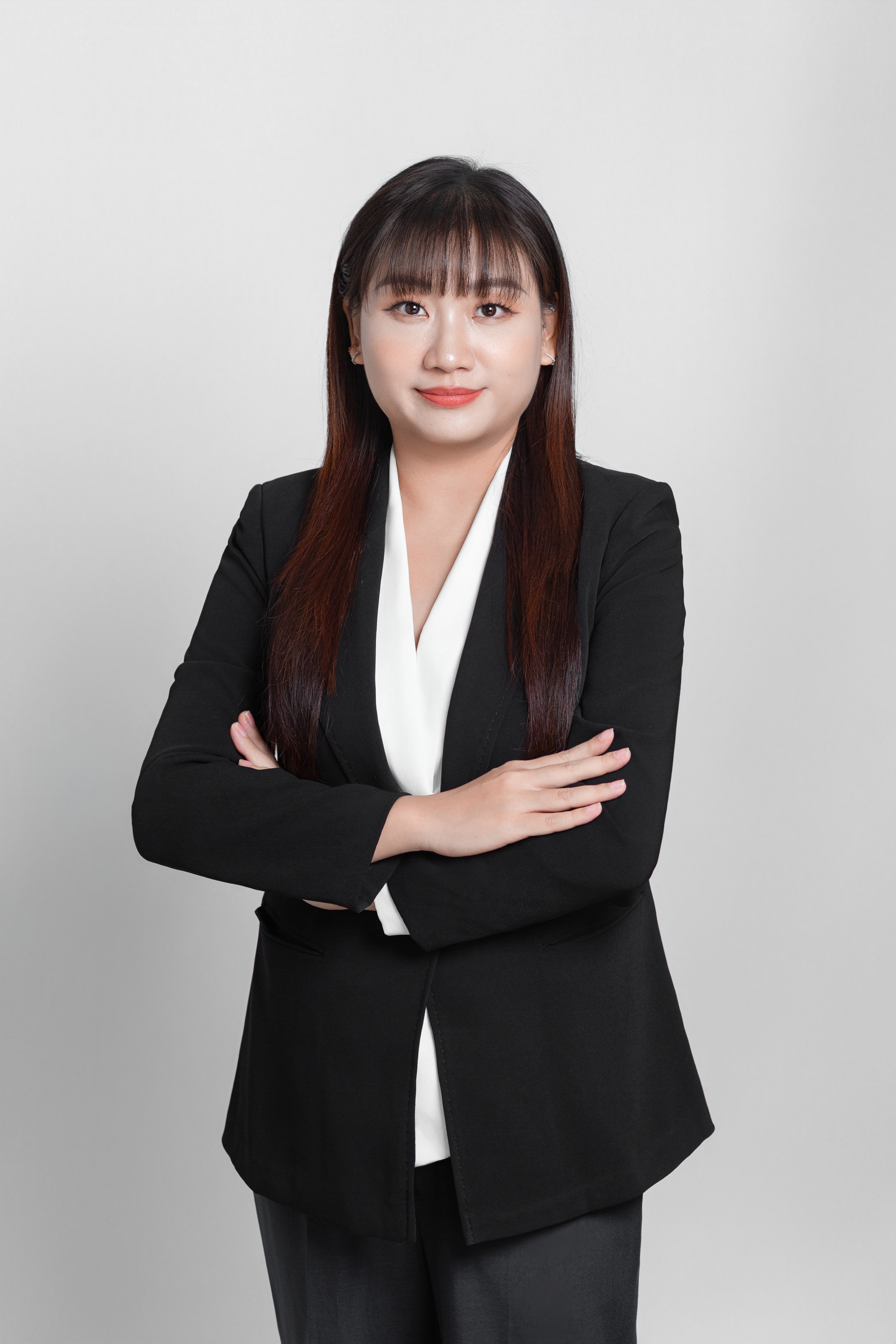
Saigon South Campus
2018
Vietnam
Our family business operates across multiple industries, including investment, manufacturing, and healthcare, with a focus on identifying and developing new business opportunities in the Vietnamese market. Rather than focusing on a single industry, we leverage our family’s business network and resources to explore potential partnerships and introduce promising international products and solutions to Vietnam. In my role, I am responsible for identifying, evaluating, and building relationships with overseas partners, as well as coordinating the process of bringing suitable foreign products into the Vietnamese market. Working in a diversified, family-led business environment requires me to combine strategic thinking, market awareness, and cross-cultural communication while carefully assessing potential partners and opportunities to ensure long-term business value and sustainable growth.
Growing up, I was surrounded by business conversations. My parents often talked about building their company, making difficult decisions, and dealing with uncertain times. I did not fully understand the weight of those decisions then, but listening to them gradually shaped my interest in business. After university, I chose to work in different industries, hoping to gain practical experience and, more importantly, develop a perspective of my own before returning to the family business. A few years later, I came back to the company and took responsibility for developing relationships with international partners and exploring opportunities to bring foreign products into the Vietnamese market. As the eldest daughter, I felt a strong responsibility to contribute to the company’s future. Yet working with family was not always easy. We sometimes had different views on management and operations, and disagreements were inevitable. Instead of seeing these moments as obstacles, I tried to understand where they came from, learn from them, and find better ways to work together. Over time, I realized that taking responsibility was not simply about inheriting a role. It was about learning, adapting, and having the courage to improve what had been entrusted to me. Then, life took me in an unexpected direction. I was invited to teach at Vietnam National University, Hanoi, where I spent five meaningful years as a lecturer. Teaching changed the way I saw my own career. I discovered how rewarding it was to support young people as they explored their ambitions and made important choices about their futures. That experience eventually led me to establish my own education company, providing educational consulting, study-abroad guidance, career orientation, and scholarship support for students aspiring to study at leading universities around the world. My own learning journey continued when I pursued an MBA at RMIT University. Beyond business knowledge, the experience gave me new perspectives, international connections, and relationships that I continue to value. I was especially grateful for the encouragement of my professors and friends, whose support reminded me that meaningful growth rarely happens alone. Looking back, I am grateful for every chapter of my journey—for my family, who gave me my foundation, and for the people and institutions that encouraged me to grow beyond it. I no longer see succession as simply taking over what the previous generation built. To me, it means carrying forward the values I inherited while having the courage to create something of my own. My journey has taught me that honoring a legacy does not require following a predetermined path. Sometimes, the best way to carry a legacy forward is to keep learning, keep exploring, and find your own way.
Mekong Petrochem
Tran Thi Hien Hau
Success is only a moment. It is the effort that makes the journey worthwhile.
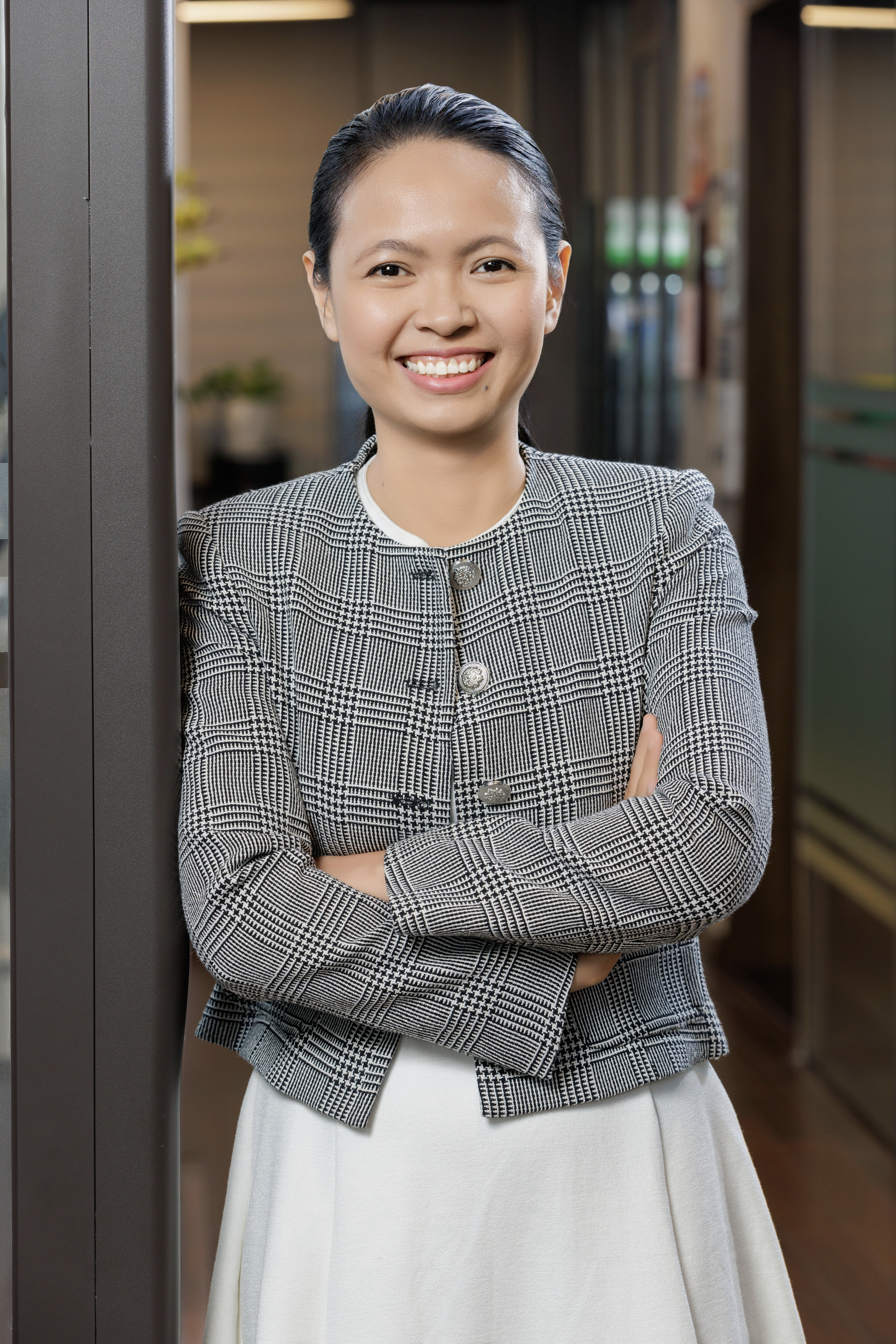
Saigon South Campus
2012
Vietnam
Mekong Petrochem is a family-owned lubricant business founded in 1998 by my father-in-law, a medical doctor who sought to build a livelihood alongside his medical career. Through years of challenges and setbacks, the company has developed an integrated supply chain from seaport operations to direct distribution to dealers. My role is to manage operations, optimise performance, and help shape the company’s strategic direction, ensuring that Mekong continues to grow sustainably in the years ahead.
I grew up during Vietnam’s economic reform and was fortunate to witness the country transform from widespread hardship into a middle-income economy. Many people of my generation were raised by parents who were extremely careful with money because they still carried painful memories of poverty and hunger. Yet when it came to my education, my parents never held back. Sending me to RMIT was one of their greatest investments in me—an investment made without demanding any guaranteed return. These memories have become one of the strongest motivations behind both my personal development and the business I now help lead. In my case, I has been lucky to have a family-in-law alike with my blooded one. Although our two generations grew up under very different material conditions, we share the same values: appreciating life, contributing to society, and recognizing those who have devoted their effort and youth to building Mekong Petrochem over nearly three decades. One of my greatest challenges arose when I proposed investing heavily in marketing to strengthen the Mekong brand. My family raised many objections, believing it could consume significant resources without creating the practical value traditionally prioritized by our company. I felt almost hopeless. I knew we could not rely only on established management practices while society and customer expectations were rapidly changing. Instead of forcing the idea through, I spent countless days and nights studying different marketing approaches and gradually building a stronger business case. I first had to earn the leadership team’s confidence that I understood our customers, could sell through new channels, and could demonstrate why customers needed a stronger Mekong brand to support their own business growth. The experience taught me that, in a family business, the hardest challenge is not necessarily convincing your parents; it is earning the support of experienced employees whose knowledge and skills may be greater than your own. Today, although the results have not yet reached all my expectations, Mekong has begun applying modern marketing and business-management solutions. Our customers choose us because of our consistent quality, approachable brand, and accessible pricing. Delivering that balance requires careful coordination across raw-material sourcing, manufacturing, and distribution by the entire Mekong team. The RMIT community continues to remind me of my responsibility to my family and society. The professional mindset of my lecturers and the perspectives shared by my classmates shaped me into a different person. Without RMIT, Mekong would not be what it is today—a company that has developed what we believe to be the lubricant industry’s only fully digitized modern distribution system.
Nhựa Quân Kiệt
Trinh Uyen Quan
Transforming Legacy Businesses with Next-Gen Mindsets
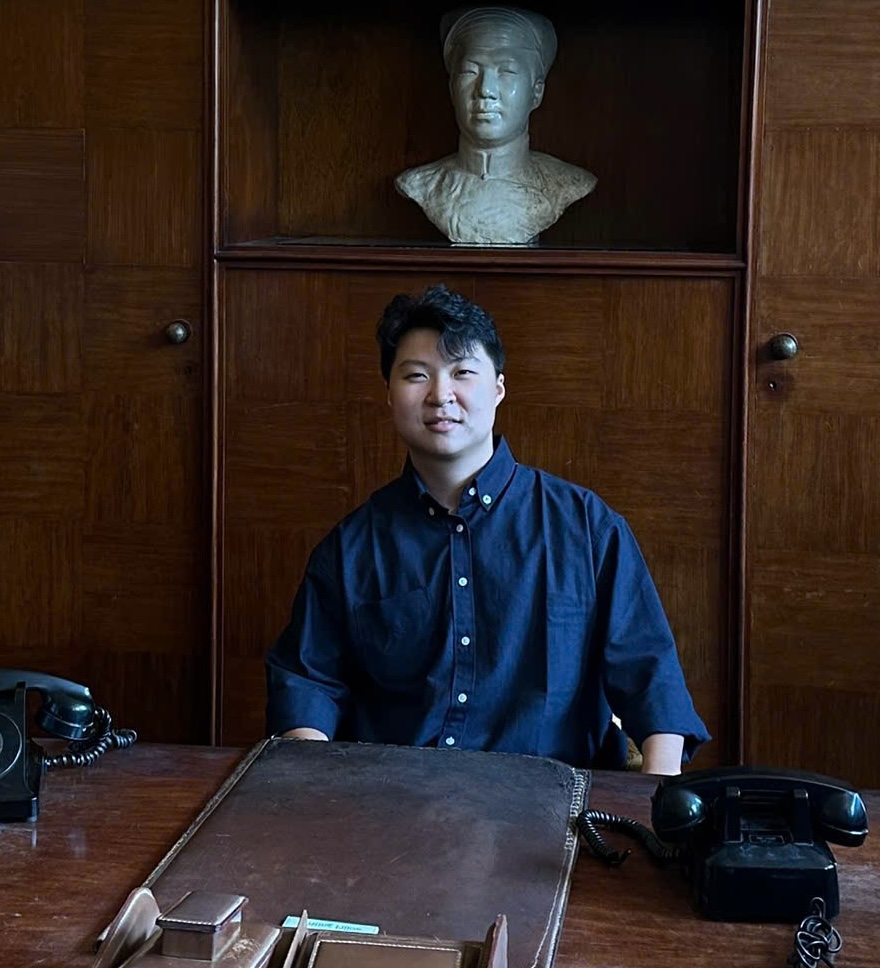
Saigon South Campus
2023
Vietnam
My business mainly serves B2B customers from various industries, including pipe manufacturers, food processors, metal packaging manufacturers, paper packaging manufacturers, and ceramic manufacturers. I serve as COO, ensuring that daily operations run smoothly and according to plan.
I partially joined my family business very early, starting with small tasks when I was in middle school. Starting early helped me prepare and understand the nature of the work, markets, products, and human relationships better than many others in my generation. It also cultivated a learning attitude that has always guided me throughout my professional journey. Four years ago, I worked for a SaaS company as a second job alongside my role in my parents’ business. I had the opportunity to understand how new-generation businesses operate compared with traditional ones. The core values—people, products, and vision—stood out to me the most. Early this year, after experiencing a major family crisis, I decided to leave my second job. I now lead the businesses alongside my brother. Together, we recognize that there are many gaps and opportunities for innovation, and we continue working every day to sustain and scale the business. I would be happy to connect with you if we share similar values, aspirations, and dreams, and explore potential future collaborations.
Cong Bang Corporation
Pham Nhat Nam
The Bridge Between Two Generations: One built the business. One will carry the story forward.
Saigon South Campus
2025
Vietnam
Cong Bang Corporation, established in 2008, is the official distributor and developer of SEKISUI CHEMICAL GROUP in Vietnam, Laos, and Cambodia. The company has a mission to elevate human living standards through advanced insulation and acoustic solutions that contribute to more sustainable, comfortable, and energy-efficient environments. I serve in business development within the high-technology manufacturing sector, specializing in foam OEM applications across Vietnam, Laos, and Cambodia. My role is defined by my ability to bridge technical innovation with market expansion. I work closely with regional partners to introduce cutting-edge foam technologies that meet diverse industrial and residential needs, from construction, automotive, fashion, and packaging to medical applications. My expertise lie in identifying growth opportunities, building strategic collaborations, and ensuring that high-performance solutions are tailored to the unique demands of Southeast Asia’s fast-developing markets.
Every family business begins with a dream. For Cong Bang Corporation, that dream began with a founder (Mr. Eric, my uncle) who had the courage to start from the ground up and the determination to build something that could stand the test of time. Today, Cong Bang Corporation has grown across multiple business areas, from industrial and construction materials to insulation, acoustic, and HVAC-related solutions, serving a wide range of demanding applications. Through partnerships with the Sekisui Group, Cong Bang has brought advanced material solutions to OEM automotive manufacturing, hotels, restaurants, high-end projects, and other sophisticated developments. What began as one entrepreneur's vision has evolved into a business built on relationships, expertise, international partnerships, and long-term trust. Throughout his entrepreneurial journey, Eric understood that the world never stops changing and neither should a business leader. That belief led him to RMIT University, where he completed his Executive MBA. RMIT became an important part of his development, challenging him to broaden his perspective, think strategically, and see business beyond day-to-day operations. Growing up in a family business, I always knew that the company I saw around me had a story. Only as I grew older did I begin to understand that he was also the Founder, the person who had started Cong Bang Corporation from the ground up, taken the risks, built the relationships, and spent years turning an idea into a business that would eventually become one of Vietnam’s trusted brands in its field. Cong Bang Corporation did not begin with everything it has today. It began with ambition, persistence, and a willingness to take the first step when there was no clear path ahead. Over the years, my uncle built the company through different stages of Vietnam’s economic development, gradually expanding its business across industrial and construction materials, insulation, acoustic, and HVAC-related solutions, while developing partnerships with international brands such as Sekisui Foam. But when I look at Cong Bang Corporation, I don't only see a business. I see years of my uncle’s life. I see the decisions he had to make when there was no easy answer. I see the relationships he built over decades. I see the values that became part of the company’s culture. My uncle encouraged me to experience a world beyond the family business, develop my own perspective, and challenge myself. He also recommended the place that had once shaped his own journey, RMIT. I realized that RMIT had become a bridge between us. The same institution that had once challenged my uncle to think differently was now challenging me. We could talk about business cases, leadership, strategy, innovation, people, and the future. I could ask him about decisions he had made years ago, and he could understand some of the new ideas I was bringing back from my generation. For the first time, I was not simply listening to my uncle’s stories. I was beginning to understand the thinking behind them. He became not only my uncle, and not only the Founder of our family business, but also my mentor. He taught me things that no classroom could fully teach. He was not trying to teach me how to become him. He was teaching me how to become myself. He built the foundation. My generation has to build upon it. And perhaps, one day, I will sit across from the next generation of our family and tell them about the man who started it all. The lessons he taught me. The company he built. And the university that connected our two journeys. Because when I look back, I realize that my uncle did not simply give me an opportunity to join a family business. He allowed me to discover what it means to carry a legacy. Cong Bang Corporation is the legacy he built. And my journey is only beginning. I may never build the company exactly the way he did. My responsibility is to take what he built, learn from it, and have the courage to write the next chapter in my own way. Because perhaps the greatest gift a founder can give the next generation is not a successful business. It is the knowledge, values, and freedom to build something worthy of the legacy they inherited. My uncle built the legacy. RMIT connected our generations. And now, it is my turn to build what comes next.
Lĩnh Private Enterprise
Nguyen Ngoc Trung Kim
The Best Foundation: Hard Work, Grit and Family - Standing on Strong Shoulders
Saigon South Campus
2022
Vietnam
Linh Private Enterprise is a premier two-wheeler dealership specializing in the retail sale of motorbikes, motorcycles, parts, electric bicycles, and electric scooters. We provide the local community with a diverse lineup of reliable transportation brands such as Honda, Yamaha, Suzuki, SYM, KYMCO, YADEA, DAELIM, and more. Beyond the showroom floor, our operations encompass full-service dealership management, handling vehicle registration, tax and administrative compliance, inventory tracking, and customer after-sales support to ensure a professional purchasing experience from start to finish. As a General Manager, my core responsibilities include operational and administrative oversight, directing the sales and service teams, structuring daily responsibilities, managing inventory, driving retail performance, maintaining brand standards, and handling other tasks as required.
Being asked about my career path today, I suddenly think back to my days as a student at this school. I honestly feel a bit sentimental. Back then, I majored in Business Management with a minor in International Business. I'm not even sure what those majors are called nowadays, but looking back, you could clearly tell that business was the only path I ever wanted to pursue. When it comes to how I entered this industry, my family’s journey actually started way back in 2004. My parents simply aimed to build a financial foundation for the family, so they started building a business. In the beginning, my parents weren't just standard retailers or simply operating as authorized dealers for motorcycle brands. They genuinely understood vehicles, engines, the local market, and they slowly built everything from the ground up. I heard them share their story day by day over the years. They worked so hard and were so good at what they did that now we are running nearly ten dealerships across various brands, which is something I admire so much. To be completely honest, before I decided to come back, I went through a lot of consideration and doubt. Like most young people, I wanted to break out on my own, prove what I could do, and build something entirely independent. But then, it was like a lightbulb went off in my head. I caught myself thinking: Wait a minute. Why am I constantly talking about wanting to do big things in business, yet completely ignoring the incredible resources sitting right in front of me? Why was my ego so big, insisting on starting from zero when I was already standing on this amazing launchpad built by my parents' efforts? Honestly, if it weren't for their hard work back then, I wouldn't even be here, standing on this stage today. That exact moment of realization is what brought me back home. When I officially stepped into the family business a little over three years ago, my goal wasn't just to keep selling our current products. More than anything, I wanted to inherit my parents' grit and entrepreneurial spirit. Working side by side with the older generation definitely came with its challenges, but it also gave me priceless lessons in things like social intelligence, handling real-world situations, and developing business intuition that would have taken me years to learn elsewhere. I gradually learned how to handle situations, build my professional skills, and work effectively. When working with people, I realized that the fewer management layers you have, the more accurate your processes need to be. Workflows are documented and used for staff training, not to create rigidity, but as an important step to minimize risks and improve task completion rates. Sure, we had our fair share of generational clashes and misunderstandings. But over time, that friction turned into a deep appreciation for the sheer amount of love and sacrifice my parents poured into this business. Now, standing on that foundation, our generation is bringing in fresh ideas, technology, and new ways to connect with customers. For me, the magic formula is combining the experience and battle-tested wisdom of our parents with the fresh energy of Gen 2. That’s how we will continue to grow and sustain our family business for many years to come.
Công ty TNHH Thương mại An Thành ĐT
Le Thanh Hao
From My Mother’s “Yes” to My Own: How a Family Business Taught Me That Women Can Lead
Saigon South Campus
2024
Vietnam
Founded by my mother in 2003, An Thanh DT is a family-owned business in Dong Thap, Vietnam, specialising in the distribution of gas and kitchenware. It started as a small, locally rooted enterprise and has grown into one of the province’s leading businesses in the sector, among the few established and led by a female CEO. As Growth Strategy Lead, I work across business development, market expansion, operational improvement, and long-term growth strategy. Beyond growing the business, I see my role as carrying forward my mother’s entrepreneurial legacy while helping build a more resilient, innovative, and women-led family enterprise for the next generation.
I do not remember one dramatic moment when I decided to join my family business. I remember something quieter: watching my mother run it. Founded by her in 2003, our gas and kitchenware distribution business in Dong Thap grew from her determination into one of the leading businesses in the province. As a girl, I watched her negotiate, make difficult decisions, earn people’s trust, and keep going when things were uncertain. She never told me that women could lead. She showed me. When I eventually stepped into the business as Growth Strategy Lead, I realised I was not simply joining a company; I was inheriting a story. My question was no longer whether I could continue what my mother had built, but how I could help it grow for the next generation. That question became real when our approaches collided. My mother trusted relationships, experience, and ways of working that had served the business for more than two decades. I wanted to introduce more structured processes, data-driven decision-making, digital tools, and new approaches to growth. At times, what I saw as necessary innovation felt to her like changing something that already worked. Instead of choosing between “old” and “new,” we chose to learn from each other. I learned that her experience was also a form of data, built through years of knowing customers, suppliers, and our community. She became more open to experimenting with my ideas when I learned to introduce change gradually and prove its value. We found our middle ground: preserving the trust and values that built the business while making room for innovation. This experience changed my definition of growth. Growth is not simply about becoming bigger; it is about knowing what must never be lost while having the courage to change what can be better. I hope our family business can become a small but meaningful example of what Vietnamese businesses can achieve: locally rooted, professionally managed, adaptable, and ambitious enough to look beyond traditional boundaries. Most importantly, I want our story to challenge the assumptions that still surround women in business. My mother’s business proved something to me long before I had the words for it: girls can lead well. Now, I want to help build a future where they do not have to prove it quite so hard.
Tuan Viet Shoes
Tran Viet Cuong
The Business I Spent Years Trying Not to Inherit
Saigon South
2011
Vietnam
Tuan Viet Shoes is a 100% Vietnamese-owned family footwear manufacturer founded in 1989, specializing in vulcanized rubber footwear, particularly rubber boots, while providing OEM/ODM development and manufacturing services for international brands. I currently serve as a Board Member, Executive Advisor, and COO. In parallel, I am the CEO of tuvi’s, our family-owned footwear brand, leading its transformation from my father’s original vision into a modern, purpose-driven Vietnamese brand serving domestic and international markets.
For a long time, I thought joining the family business was something that would eventually happen to me—like grey hair or taxes. My parents started Tuan Viet Shoes from a small rubber-outsole workshop in 1989. They came from a farming family, built the company largely through experience, instinct, and an extraordinary tolerance for things going wrong. By the early 2010s, my father already had another dream: after years of making shoes for international brands, why couldn’t we create a Vietnamese brand of our own? That dream became tuvi’s. I wish I could say I immediately understood the vision. I didn’t. I had studied abroad and spent years in international environments like the RMIT South Saigon Campus, where everything had a framework, a presentation, and preferably an Excel file. I came back to a factory full of people who could look at a piece of rubber, touch it for three seconds, and tell me something was wrong. My degree was impressive right up until somebody asked me why a shoe was not bonding properly. That gap created plenty of friction. I wanted systems, digitalization, branding, and new ways of working. The older generation often responded with the manufacturing equivalent of: “Interesting PowerPoint. Now come and see what actually happens on the line.” Annoyingly, they were often right. But not always. Over time, something changed. We stopped arguing about old versus new and started asking what each could contribute. Their craftsmanship met our systems. Their instincts met data. Experience met experimentation. And somewhere during that process, my relationship with Tuan Viet changed too. It took me almost twenty years to understand that inheriting a family business was not primarily about inheritance. It was about opportunity. Today, when I walk through the factory, I no longer see only machines, production lines, or pairs of boots. I see people, hundreds of livelihoods, accumulated knowledge, relationships built across decades—and the possibility of creating something meaningful from all of it: bringing greater abundance to more people through decent work, made possible by many decent people working together. My ambition for tuvi’s is therefore bigger than selling footwear. I want to prove that Vietnamese manufacturing can create not only products for other people’s brands, but also ideas, brands, and values of our own. And perhaps the biggest twist is this: I spent years wondering whether I had to continue my father's journey. Eventually, I realized I wanted to.
Maple Bear Vietnam
Dao Khanh Linh
A Question Worth Inheriting

Melbourne
2025
Vietnam
Our family business operates in Vietnam’s education sector with a long-term ambition: to bring the best possible education to Vietnamese children. Through Maple Bear Vietnam, we aim to combine international educational practices with an understanding of the Vietnamese context, creating learning environments centred on immersion, curiosity, play-based learning, and the child. As a Business Development Specialist at Maple Bear Vietnam, I work across school development, international partnerships, and strategic growth, connecting our Vietnamese team with Canadian educators and global partners. As the next generation, I hope to bring fresh perspectives while helping carry this educational ambition forward.
My father did not begin his career in education. He built his career as an auditor at UHY, yet behind the numbers was an ambition he carried for years: to bring the best possible learning experience to Vietnamese children. That ambition eventually grew into Times School, now with four campuses in Hanoi. Growing up, I watched education become part of our family life. Schools, teachers, and students often found their way into conversations around our dinner table. I knew how much my father had built, but for a long time, I did not fully understand the question that had driven him to build it: What kind of education do Vietnamese children truly deserve? Strangely, I had to leave Vietnam before I began to understand. Studying at RMIT in Melbourne exposed me to far more than what could be taught in a classroom. Living among different cultures, perspectives, and ways of thinking taught me to question what I knew, remain curious about what I did not, and see learning as something that should continue long after university. RMIT changed my understanding of education because education changed me first. When I returned to Vietnam, my father’s question suddenly felt different. I no longer saw education only through the schools my family had built; I understood, from my own experience, how profoundly the right learning environment could expand a young person’s view of the world. That was when joining the family business became meaningful to me. Our journey with Maple Bear became part of that same search. Canada’s bilingual environment first drew our attention, but we found something deeper in its educational philosophy: immersion rather than memorisation, children at the centre of learning, and play and curiosity as ways of discovering the world. These ideas resonated with what I had learned personally—the most powerful education does not simply give us answers; it teaches us to keep asking better questions. Today, my work connects Vietnamese schools with Canadian educators and international partners, helping translate a global educational philosophy into something meaningful for Vietnamese classrooms. Sometimes, sitting in those conversations, I think about how far that original question has travelled: from my father, to our family dinner table, to my years at RMIT, and now into classrooms filled with children whose futures we are helping to shape. Perhaps that is the RMIT lesson I carry with me most: never believe that what you already know is enough. Keep listening, questioning, adapting, and learning. And that is what I hope our family’s work can pass on to the next generation, children who are curious enough to explore the world, confident enough to find their place in it, and grounded enough to bring something meaningful back to Vietnam. My father began with a question. RMIT taught me why it mattered. Now, I am finding my own way of answering it.
Metal Solutions Company Limited
Nguyen Minh
From Workshop Floor to Industry Transformation: Earning Trust, Scaling Technology, and Leading Change
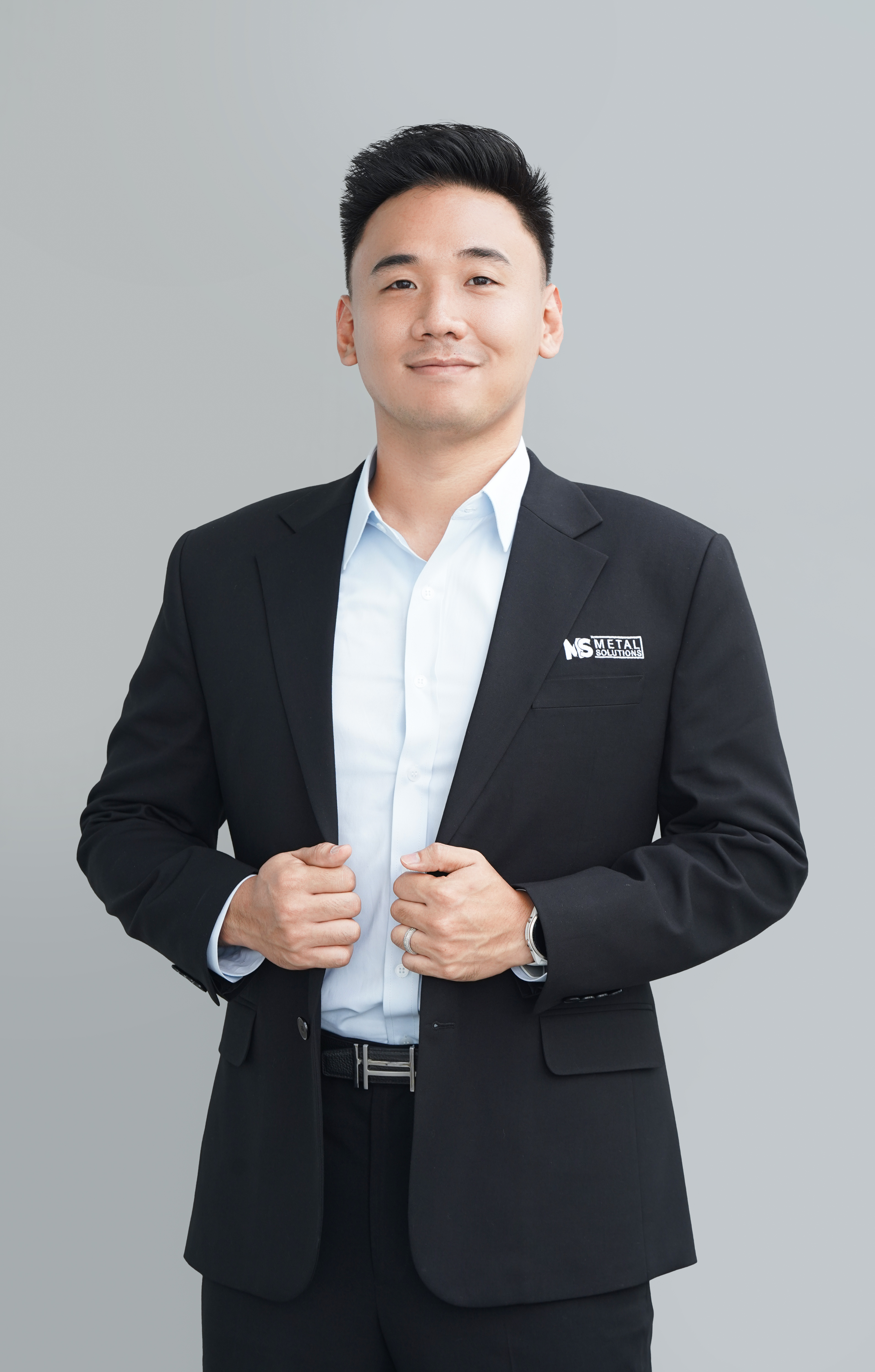
Saigon South
2025
Vietnam
For the past six years, I have served as CEO of Metal Solutions, a company specialising in advanced surface engineering and thermal spray technologies. We provide solutions including HVOF, Plasma Spray, and PTA welding to repair, maintain, and extend the service life of critical industrial components. Our technologies support customers and partners across a wide range of heavy industries, including steel, paper, and other manufacturing sectors, helping to improve equipment reliability, reduce downtime, and optimise the performance of production lines.
When I returned from Australia after studying commerce, I joined Metal Solutions, a traditional mechanical engineering company where many of my colleagues understandably had little confidence in either my technical ability or the value I could bring. Rather than enter the business through a senior management role, I started on the workshop floor as an entry-level technician. For the first six months, I focused almost entirely on learning. I worked alongside experienced technicians, studied decades of manuals and operating instructions, and tried to understand not only how our technologies worked, but also why things had always been done in a certain way and where the limitations were. Only after building that foundation did I begin redesigning our production processes. I learned to program robots, operate HVOF and thermal spray systems, and implement many of the changes myself. It took roughly two years before I felt I had truly earned the trust of senior staff and the confidence to embrace my role as Director. What had once been a VND 3 billion annual segment eventually became our core business, contributing over 90% of revenue. We have since exceeded US$2 million in annual revenue and continue to grow rapidly. As the company expanded, another limitation became clear: traditional, paper-based management could no longer support the number of orders we were handling while maintaining consistency and quality control. During my MBA at RMIT, I was exposed to modern digital tools and immediately began applying them at Metal Solutions. Over two years, we moved our records to the cloud, standardised workflows, introduced Slack, and built more than 100 automated processes based on RPA principles. There was significant resistance at first, but through training, persistence, and investment in company-issued devices, adoption gradually followed. Today, more than two-thirds of our daily processes are managed through these workflows, helping us scale from roughly 40–50 orders per month to more than 150. One lesson from RMIT that continues to shape my leadership is the importance of what I call the “organiser.” I am not the smartest engineer, salesperson, or accountant in my company. My role is to ask the right questions, bring the right expertise together, and direct our resources toward a common goal. Looking ahead, I believe RMIT and Metal Solutions could create real value together. We can provide students and faculty with access to advanced HVOF, Plasma, and surface-engineering technologies, real industrial applications, and research opportunities. In return, RMIT can contribute academic expertise, engineering talent, and collaboration, helping accelerate the development and adoption of advanced surface engineering in Vietnam.
THO LONG LABEL
Nguyen Huu Tho
One Brick at a Time - Transforming a Family Legacy Through Innovation
Saigon South
2020
Vietnam
Tho Long Label Co., Ltd. is a label-printing manufacturer serving garment, footwear, food, electronics, and interior companies in Ho Chi Minh City, Vietnam. My role is to manage operations, production, and customer relationships.
One Brick at a Time – Transforming a Family Legacy Through Innovation Upon graduating with a degree in Textiles and Fashion Merchandising, I dedicated seven years to gaining practical experience in the fashion industry. During this period, I secured a well-paying position with a competent employer. However, I found myself contemplating whether I desired a life of consistent employment or a career in services that would have a tangible impact. This realization led me to transition into the printing industry. I am acutely aware of the rapid advancements in technology and changing customer behavior after COVID-19. I believe that this opportunity will only arise within the next two to three years. I am filled with excitement and eager to elevate our business to new heights. I initiated discussions with my family to resign from my current position and was entrusted with the responsibility of managing the family business that my parents had established. The initial year of any new role presents its own set of challenges. As the F2 leader, you face double the stress. Nevertheless, progress and moving forward are the keys to overcoming obstacles. Employees will recognize your enthusiasm, energy, and experience, which will undoubtedly earn you their respect. By consistently building one good brick every day, you will eventually achieve remarkable success. As a leader, my primary objective is to foster a culture of growth and development within the company. I envision a future where the growth of the business is directly linked to the performance and contributions of our employees. The traditional method of printing paperwork for executive orders and storing numerous design changes has proven inefficient. This process is time-consuming and requires a few individuals to take sole responsibility for remembering and managing the history of changes. To address this, I have implemented part of an ERP system that enables everyone to locate, track, and resolve issues more effectively and quickly. Furthermore, I am committed to assembling a dynamic team of young professionals who are eager to learn, adapt, and provide support to our experienced team members. When I observe our employees inviting their family members to join our company, I am confident that this approach will cultivate a collaborative and innovative work environment. Additionally, it is imperative to establish a robust network of dependable material suppliers who can provide us with favorable lead times, consistent quality, and competitive pricing. This approach will mitigate the risks associated with relying on a limited number of suppliers. I am particularly appreciative of the invaluable experiences and knowledge acquired during my time at RMIT. The university’s diverse range of projects, assignments, courses, lecturers, friends, events, and part-time jobs have significantly shaped my mindset and expertise. Furthermore, the vibrant RMIT Alumni community has been instrumental in enhancing my networking skills and providing valuable insights from various perspectives.
Hong Ngoc Duong Dong., JSC
Le To Quyen
Sailing The Same Boat On A New Journey
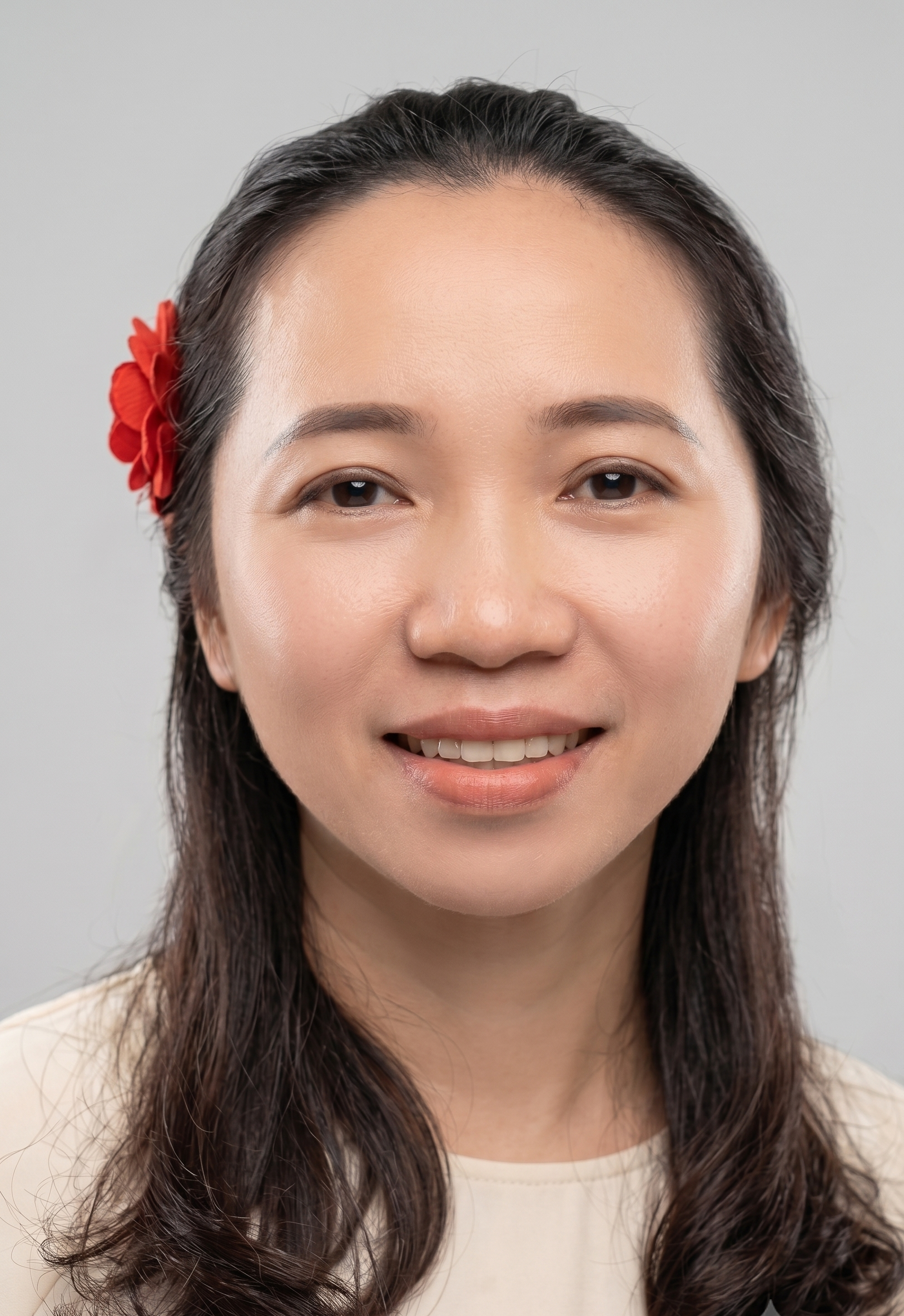
Saigon South Campus
2012
Vietnam
My family business, Hong Ngoc Duong Dong, has been operating on Phu Quoc Island since 1996. The company is a key partner for large infrastructure and real estate developers in Phu Quoc, with a core operations team and a comprehensive fleet of barges, cranes, trucks, heavy equipment, and warehouses that are highly capable of delivering end-to-end supply and logistics services. In addition, we continue our traditional business line of providing fish sauce essence to the food industry.
Our family business is built around a seaport on one of Vietnam’s most well-known tourism islands. Over the years, we have grown from a traditional port operator into an integrated supply and logistics partner for major infrastructure and real estate developers on the island. I am currently the Deputy Director in charge of operations. Interestingly, joining the family business was never really part of my original plan. After graduating from university, my parents supported my passion for hospitality. We opened a hotel in the center of town, and I spent several years living and working on the island. Running the hotel gave me the opportunity to understand the island beyond what I had known from growing up in the family—and, more importantly, to gradually see the scale and potential of our core business. After several successful years, we exited the hospitality business, and my parents reinvested the proceeds into expanding the seaport. That decision turned out to be a major turning point for our family. The business grew from a relatively small operation into a much larger and more complex organization. At the same time, the island was experiencing a wave of major infrastructure and real estate development, bringing a huge increase in projects and cargo volumes to our doorstep. The opportunity was enormous—but so was the pressure. My parents, who had built the business from the ground up, suddenly found themselves dealing with a scale of operations that was very different from what they had managed before. They were exhausted, almost burnt out. Although my own experience in the industry was very limited at the time, I felt an urge to step in and give them a hand. And that was when my real journey in the family business began: when the business outgrew the organization. In the beginning, everything was messy. The traditional organizational structure and management practices that had worked well for a small family business were simply not ready to keep pace with large, complex projects and increasingly professional business partners. I can describe it as being like a machine originally designed for a motorbike, suddenly being asked to run at racing-car speed. The problem was not that the machine was bad. It had brought the family this far. The problem was that we were asking it to do something completely different. To survive and grow, we had to move forward. We had to break some old chains, replace obsolete processes, and build new systems. But, of course, a castle cannot be built overnight. And transforming a family business is not just a matter of changing processes. It is also about managing relationships, expectations, and emotions. I had to learn where I could make changes and where I needed to respect the boundaries of my parents and other family members. I started taking responsibility for areas where I had more knowledge or experience—particularly accounting, finance, reporting, and organizational processes—while gradually building my credibility in operations. The journey was far from smooth. There were many debates and arguments. Everyone had their own experience, their own beliefs, and, naturally, everyone believed they were trying to do the right thing. Sometimes, the most damaging moments were not caused by bad decisions, but by frustration. That is perhaps one of the hardest things about a family business: you cannot simply leave the emotions at the office. A disagreement with a colleague can end when you leave work. A disagreement with your parents can follow you all the way to the dinner table. What eventually helped us was the realization that, despite our different approaches, we were all in the same boat. My parents built this business from almost nothing. Their experience, instinct, and determination are the foundation that brought us to where we are today. I have tremendous respect for that. But I also gradually came to understand something equally important: what brought us here may not necessarily bring us to where we want to go next. The environment has changed. The size and complexity of our projects have changed. Our partners have become more professional, and the standards expected from us have changed as well. The next stage therefore requires a different way of working. My parents gradually understood that the changes I was pushing for were not a rejection of what they had built. They were an attempt to protect it—and prepare it for the next generation. For me, professionalism is not about replacing family values. It is about giving those values a structure that can survive as the business becomes larger. We are still on that journey. There are still disagreements. There are still moments when old habits meet new expectations. And I am sure there will be many more challenges ahead. But perhaps that is what makes a family business unique. You are not simply managing a company. You are carrying a legacy while trying to build something that the next generation can be proud of. And sometimes, the most difficult part of succession is not deciding who will lead the business next. It is finding a way for two generations to believe in the same future, even when they have very different ideas about how to get there.
VIET UC LPG CO., LTD
Thắng Bùi (Nis Bùi)
Ordinary Journeys, Lasting Roots
Melbourne
2017
Vietnam
Viet Uc Trading Liquefied Petroleum Gas Company Limited, also known as Viet Uc LPG Co., Ltd., was established in 2013 and is a privately owned enterprise specializing in the wholesale and distribution of liquefied petroleum gas (LPG) and related energy products in Vietnam. Headquartered in Dong Nai Province, the company provides reliable and safe gas solutions for residential, commercial, and industrial customers. With a strong commitment to quality, safety standards, and customer satisfaction, Viet Uc LPG continuously enhances its operations and services. The company aims to contribute to a sustainable energy supply while creating professional career opportunities for young talents in the energy sector. I currently serve as Head of External Relations at Viet Uc Trading Liquefied Petroleum Gas Company Limited, alongside my role as Deputy CEO. In this role, I lead corporate communications, stakeholder engagement, and strategic partnerships, playing a key role in shaping the company’s external positioning and long-term growth.
My family’s story began with farming. Like many Vietnamese families, we came from a simple life where hard work, family, and looking after the people around us mattered more than anything else. Over the years, our family found its way into the energy business, from the warmth of charcoal to LPG. The source of the flame changed, but what it represented remained the same: warmth, nourishment, and a sense of home. In 2013, my parents established Viet Uc LPG. Growing up, I saw the business simply as part of our family life. I saw gas cylinders, delivery vehicles, warehouses, employees, customers, and familiar faces around us. Only as I grew older did I begin to understand what was behind them: years of hard work, uncertainty, responsibility, and the trust my parents had built with people. What stayed with me most was not the business itself, but the people around it. A family business is never built by one family alone. It grows through employees who stay and contribute, partners who believe in you, customers who return, friends who stand beside you, and neighbours who become part of our everyday life. In many ways, the business became a place where our family values met the wider community. When I eventually stepped into the business, I found myself asking: What does it mean to inherit something without simply repeating it? My years at RMIT and my experiences living and working across different countries gave me new perspectives on communication, people, business, and change. They encouraged me to question old assumptions and imagine new possibilities. But returning to a family business also taught me humility: not everything old needs to be replaced. Some traditions survive because they carry wisdom. Today, I see my role not simply as continuing what my parents built. I see it as carrying forward what they taught me to work hard, to keep your word, to value relationships, to take care of people, and to create something useful for others. I want to bring new ideas, technology, and more responsible ways of working into the business, while keeping the human values that brought us here. My parents inherited values from the generations before them. They built their own chapter and passed those values on to me. One day, I hope to pass them on again. After all, what we inherit is not only a business. It is a way of living, caring, and contributing, and our responsibility is to make it meaningful for the generation that comes next.
Bếp Cô Đang
Vu Anh Thu
From Our Family Kitchen to the Future: Preserving Vietnamese Tradition Through Innovation
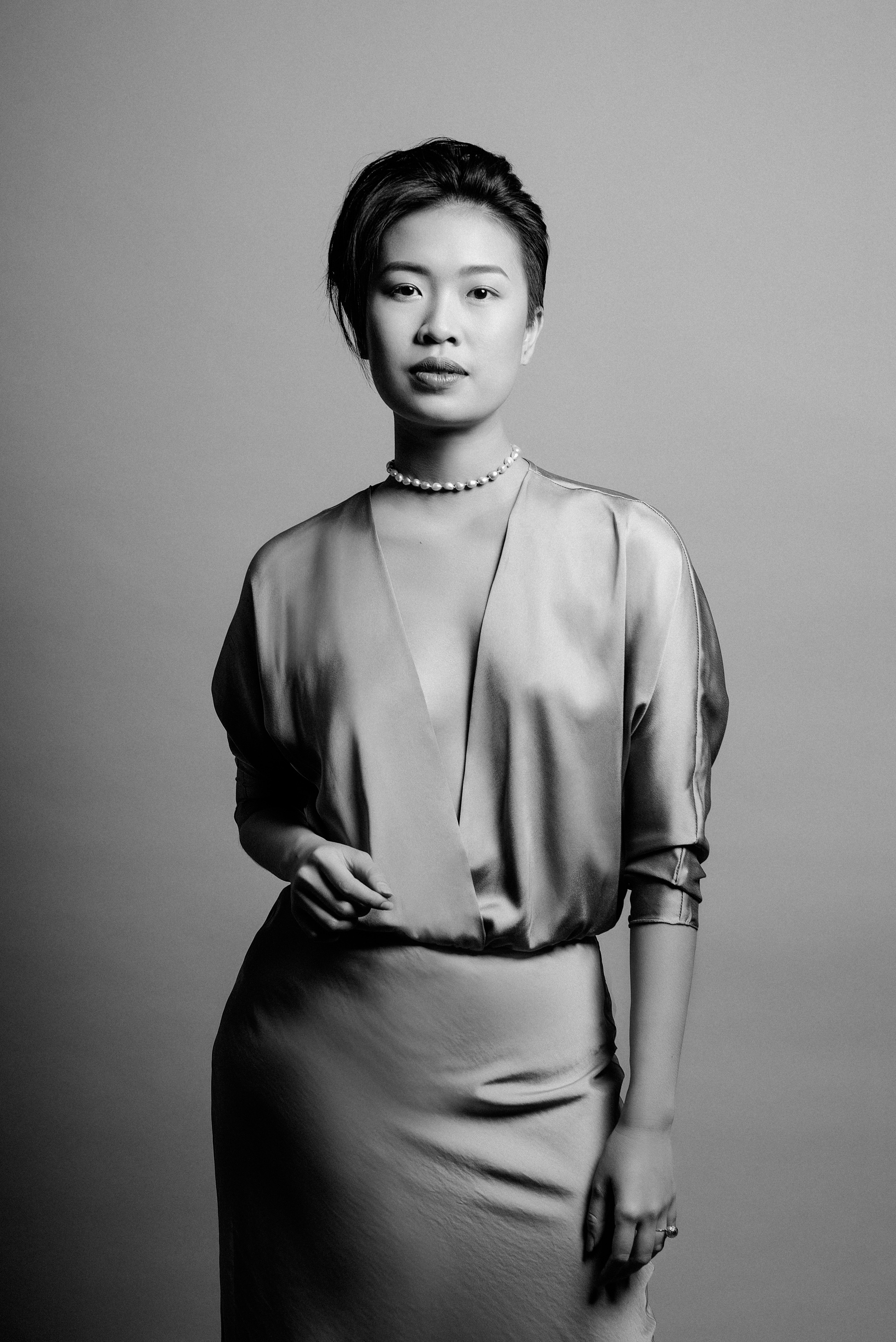
Saigon South
2019
Vietnam
My mother owns the craft: she braises the fish for 18 hours, then portions and packs the finished product. I own the route to market: strategy, positioning, branding, combo and bundle architecture, marketing, website, order flow, and fulfillment, so that a handmade product can reach more customers and earn repeat purchases.
I realized I wanted to join the family business when I helped my mother manage a batch of deliveries in Ho Chi Minh City for the second time. Our kitchen is based in our hometown of Can Tho, but she had begun receiving a growing number of orders from customers in Ho Chi Minh City. Each week, she transported the products to my apartment, where we arranged individual deliveries to customers. Coordinating all the orders at once was complicated, and the delivery costs were relatively high because we relied on on-demand shipping services. Having previously optimized operations for my own consumer-products business, I immediately saw opportunities to improve the process. That was the moment I became eager to use my experience to help my parents streamline the entire journey from our kitchen to our customers’ homes. One story that has stayed with me came from customers who bought our braised fish for their elderly parents or grandparents. Because the fish is slow-cooked until the bones become completely soft, it is easy for both older adults and young children to eat. Several customers have told us how happy they were to see their parents enjoying their meals and eating more rice than usual. What may seem like a simple meal can mean so much to a family, especially when an elderly loved one, who may normally have little appetite or difficulty eating, genuinely enjoys the food. Stories like these remind me that our family business is not only about preserving a traditional dish; it is also about helping families care for the people they love. I hope our family’s work can demonstrate that traditional Vietnamese dishes and recipes do not have to disappear as lifestyles change. By improving production, operations, packaging, and distribution, we can make these dishes more accessible and relevant to modern consumers without losing their authenticity. Food is an important expression of culture. When a traditional dish is preserved, developed, and passed on to future generations, the history and values behind it are preserved as well. I hope our journey shows that Vietnamese businesses can combine tradition with innovation: honoring what came before while building something sustainable for the future. In doing so, we can introduce the world not only to Vietnamese food but also to the richness and resilience of Vietnamese culture. One lesson from university that I still apply every day is never to assume that the first solution is the best one. I learned to keep looking for ways to improve, to question my own choices and assumptions, and to evaluate whether there might be a more effective approach. This mindset encourages me to research how similar challenges are addressed in different industries and parts of the world, then adapt those ideas to our own circumstances. In our family business, it helps me balance confidence with curiosity: making decisions when necessary while remaining open to learning, refining, and doing things better.
Phu Si Service Trading Production Co., Ltd
Ha Tuan Kien
From Digital Products to Physical Ones: Returning Home to Carry On My Father's Legacy
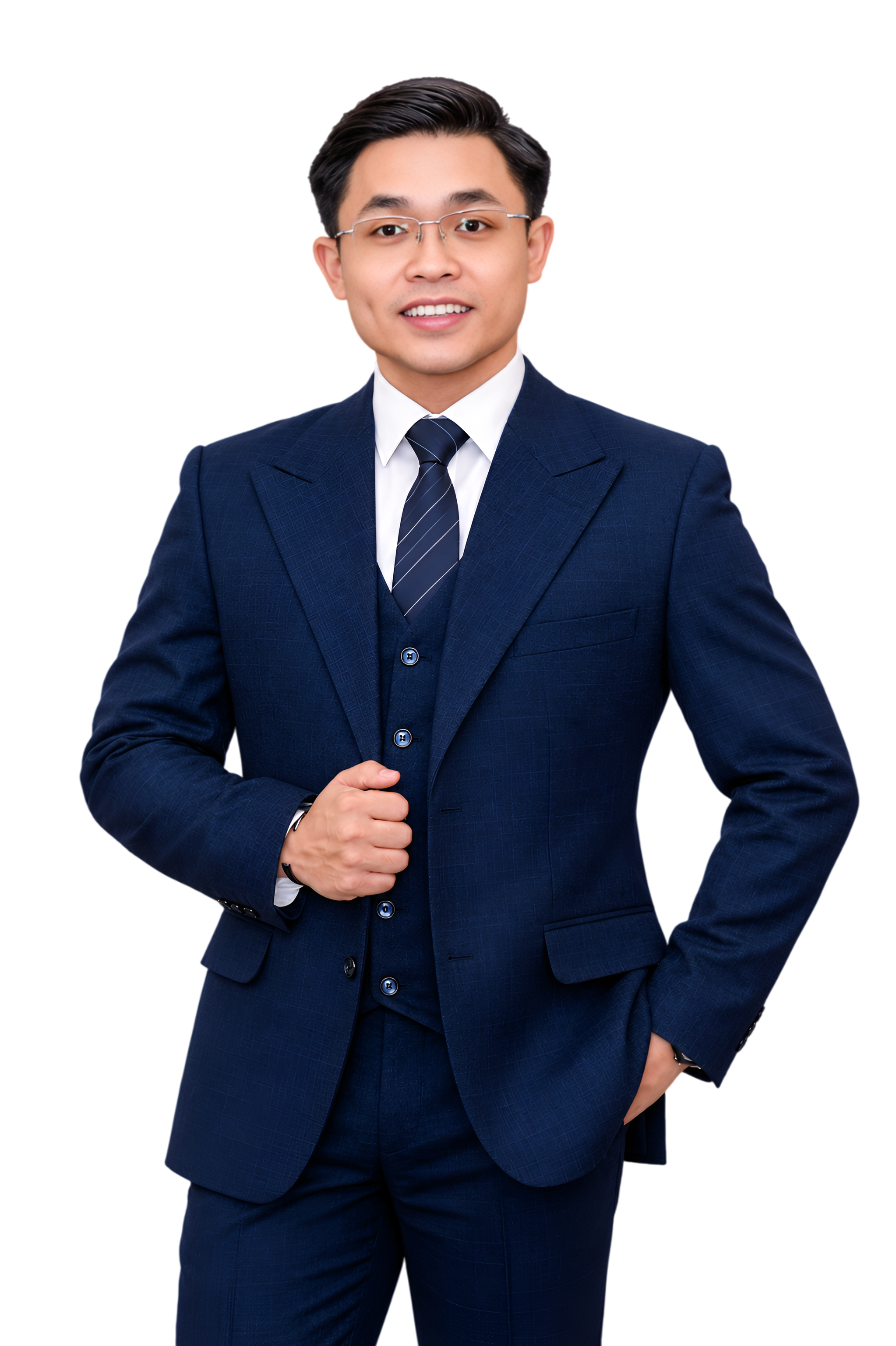
Saigon South
2024
Vietnam
Phú Sĩ specializes in manufacturing and wholesaling tarpaulin fabrics for awnings, vehicle covers, and the production of inflatables, as well as clear PVC curtains and components for awnings, retractable roofs, and roller blinds. With over 16 years of experience, we supply high-quality, reasonably priced products to customers nationwide, backed by dedicated service and fast delivery. Our stable supply chain allows us to respond quickly to orders, with products prepared and shipped out daily to keep our partners' timelines on track and maintain quality standards. Within this operation, my role is to keep that reliability running smoothly from the inside, managing inventory and driving operational improvements so the right stock is always ready to move.
After graduating with a degree in Hospitality and Restaurant Management, I was determined to build my own career. Despite the tough job market during COVID-19, I was fortunate to land a role as a Product Executive at VNG, and later as a Product Manager at Firegroup. With strong support from colleagues and managers, my career, despite being outside my field of study, went smoothly for over four years. Throughout that time, my father and I often talked, and I came to see the deep, boundless passion he had for the awning and tarpaulin business. It struck me as a real shame if that legacy was not carried forward. So I decided to leave my job and return to take over the family business, stepping once again into an entirely new field. Starting out as a newcomer, I had to learn everything from the ground up. Unlike the digital products I was used to, information about Vietnam's awning industry was scarce and hard to find. Worse, the company's data still lived on paper and scattered spreadsheets, making it hard to see the bigger picture, and I suspected this was also holding back every new hire. So I proposed implementing an ERP system. The idea met resistance at first, but I worked to win over our long-tenured staff by showing them the benefits and personally training them. They struggled early on, as they were used to the old ways, but gradually came to see the system as a real help for business decisions, pricing policies, and beyond. An efficient operation, though, is only half the story. As a former Product Manager, I believe a great product is what truly sets a business apart. Vietnam's awning industry today competes mainly on price, which drags down quality and squeezes margins. Amid Vietnam's rapid urbanization, my father and I are now focusing on premium product lines cassette awnings and aluminum louvered pergolas, hoping to help make our cities more beautiful along the way.
Hoang Hai Construction and Trading Co., Ltd
Hoang Thanh Hai
Turning Legacy into Future Growth
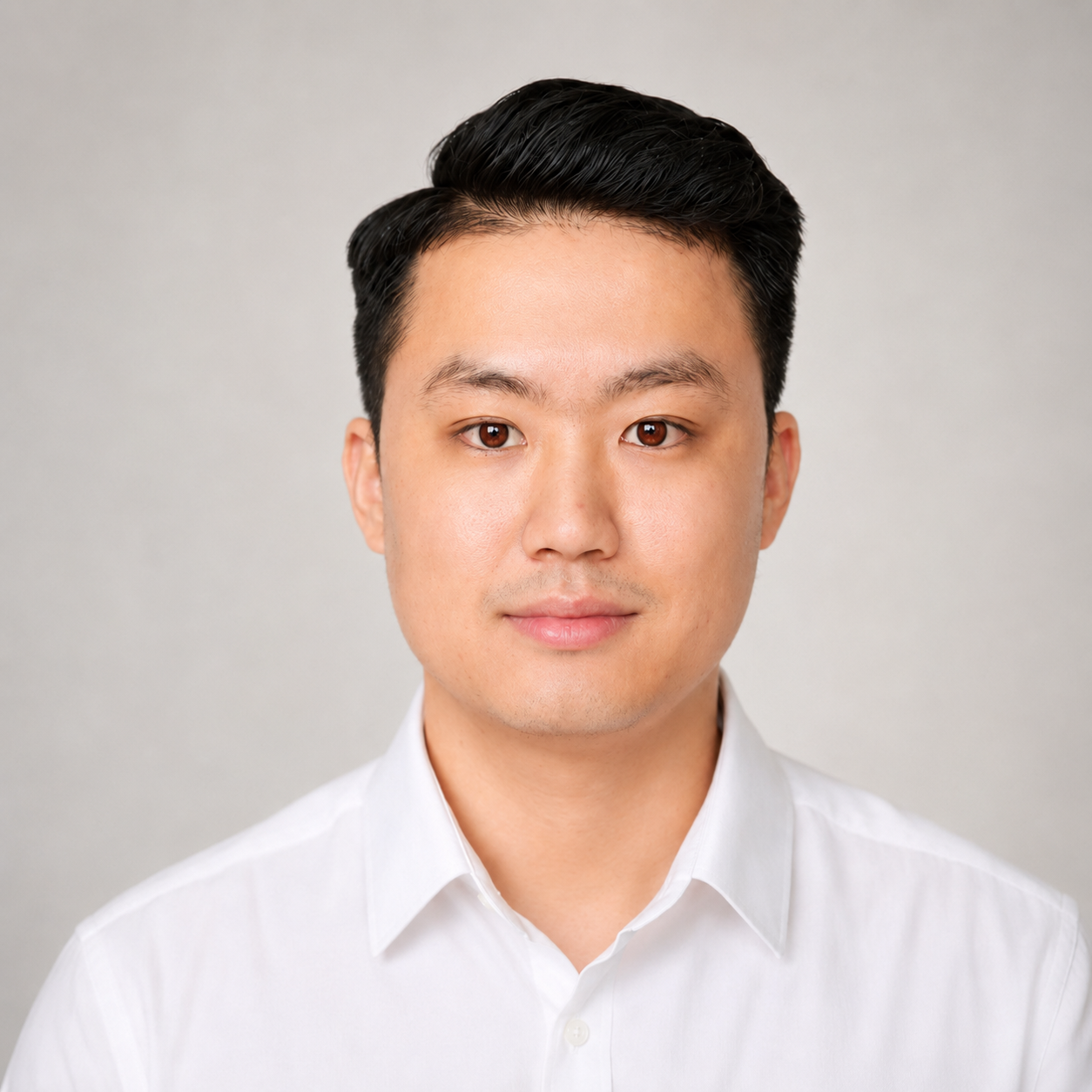
Saigon South
2023
Vietnam
Our family business mainly operates in road construction, infrastructure development, and construction materials. My role focuses on HR, administration, and internal management, while also supporting the management team in developing new projects. I am involved in cost optimization, improving management systems, increasing productivity, and digital transformation. In addition, I help review legal and compliance matters to reduce risks and improve operational efficiency. My goal is to make the company more professional, efficient, and sustainable in the long term.
Before joining my family’s construction business as a second-generation member, I had studied and worked in Hanoi and Ho Chi Minh City, including a position at a large bank. Returning home meant leaving a stable career and a professional environment I knew well. What ultimately attracted me was the opportunity to solve practical business problems and contribute directly to the company’s development. When I joined, I saw how much the previous generation had built through experience, trust, and hard work. Direct communication and flexible decisions had helped the company grow. However, as the business expanded to more projects, construction sites, employees, and equipment, these methods became harder to maintain. Information could arrive late, making it difficult to monitor costs, coordinate resources, and identify inefficiencies early. I began to see where I could contribute: improving processes and applying technology to support better cost control. Rather than focusing on expansion alone, I wanted us to examine how we worked every day. Could information move faster between construction sites and the office? Could more consistent reporting help us understand project costs and use equipment more efficiently? These questions shaped the changes I wanted to introduce. My proposed approach was to standardize essential workflows and gradually use digital tools to collect and organize operational data. Clearer information on project progress, expenses, cash flow, and resource utilization could help managers identify problems sooner. My aim was to reduce duplicated work, unnecessary spending, and delays while giving people a clearer basis for decisions. However, my ideas sometimes clashed with established practices. I was looking for consistent processes and measurable information, while the existing approach relied heavily on practical judgment and direct communication. I had to learn that introducing technology also meant understanding the habits and experience behind the way people worked. Instead of trying to change everything at once, I chose a gradual approach. I learned to preserve flexibility where it was useful and introduce greater structure where the growing business needed it. I wanted data to strengthen practical judgment and make everyday decisions easier. This experience has shaped my understanding of being part of the second generation. My contribution is to build on the foundation my family created by helping the company operate more efficiently and make better-informed decisions. For me, innovation begins with practical improvements: simpler processes, clearer information, and more careful use of resources. The challenge is to bring experience and technology together in a way that people can understand, trust, and sustain.
M — N Associates
Nguyen Bao Anh Duy - Mai Ngoc Que Lan
Two minds. One vision — Shaping Vietnam’s Creative Future Together.
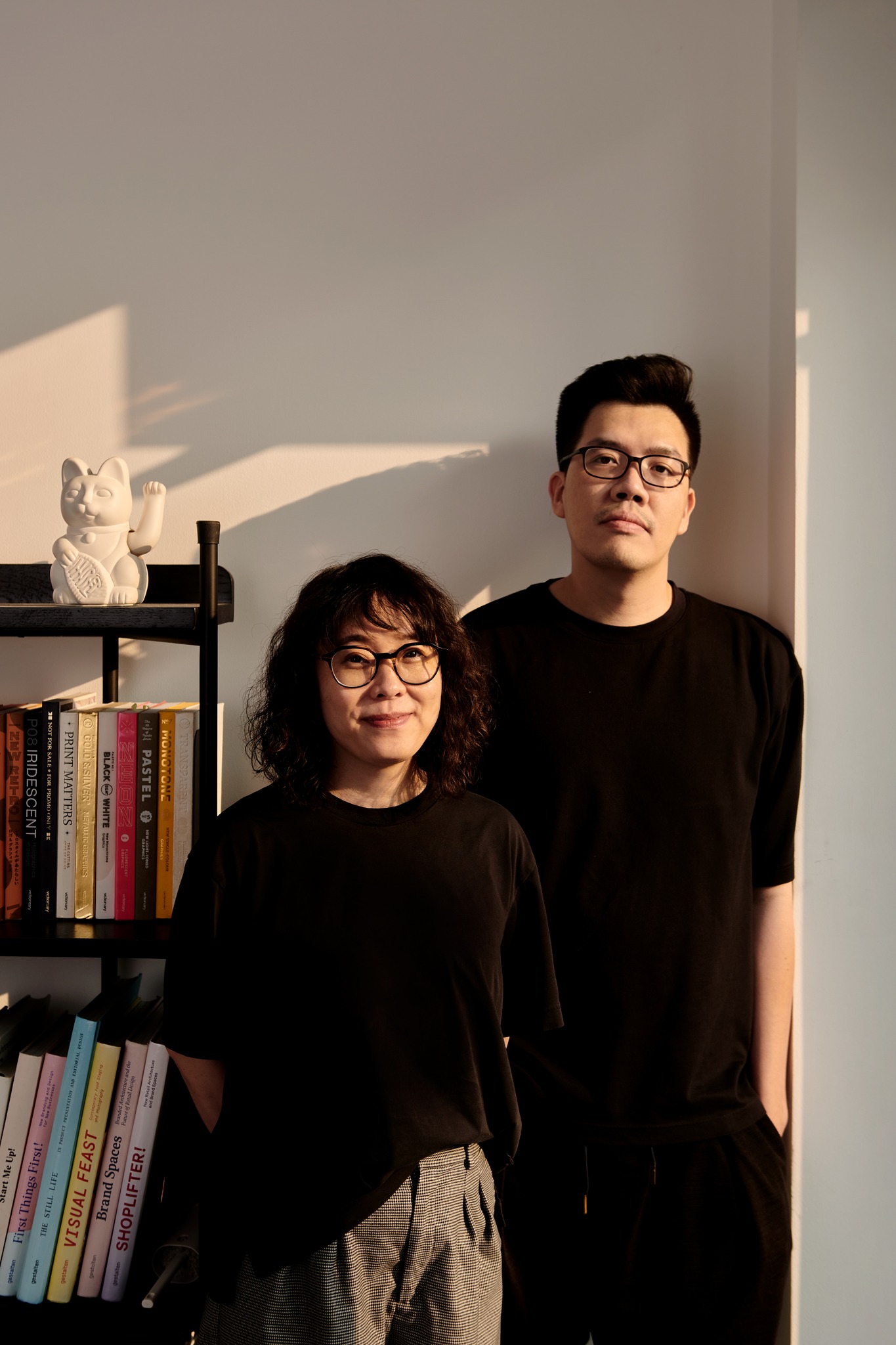
Saigon South
2014
Vietnam
M — N Associates is an independent strategic branding company founded in Ho Chi Minh City in 2014 by partners in life and business, Duy Nguyễn and Lan Mai. We help businesses express their identity through strategy, design, typography, packaging, and digital and spatial experiences. As Executive Creative Director and Partner, Duy leads the creative vision. As CEO and Partner, Lan leads the business, operations, and project delivery. Together with our team, we build distinctive brands rooted in Vietnamese culture, with the ambition to make their stories resonate internationally.
Before M — N Associates became a company, it began with a coffee shop. Lan and Duy often met there with friends, spending long hours talking and gradually falling for each other. At the time, neither of them knew that those ordinary gatherings would become the beginning of a shared life and a shared practice. Before that possibility took shape, Duy had discovered independent creative studios in RMIT’s library. A book called The Small Studios showed Duy how small practices could build a future through their own convictions. Around the same time, a branding assignment taught Duy a harder lesson: Duy had put too much of himself into the design and too little attention into the system the brand needed. That experience pushed Duy to understand branding more deeply. During their first year, almost every bit of money they earned went into buying books and learning about branding. When Lan left her previous company, Duy came up with what felt like a crazy idea: opening a studio. In 2014, they founded M — N Associates in Ho Chi Minh City. Their name brings together their surnames, Mai and Nguyễn. They started very small, with one table, two old laptops, four chairs, two desk lamps, and one printer in our apartment. That was the entire studio. They did everything themselves, from designing and arranging shoots to printing and putting up signs. They also travelled whenever they could, looking for new ways to approach projects and discovering possible directions for the studio’s work and models. Those journeys helped them understand the world beyond their desks and gave them a wider sense of what design could do. Being partners in life and business meant building something that depended on both of them. Duy brought a background in multimedia design and an interest in strategy and storytelling. Lan brought design knowledge, production experience, and the ability to organise people and turn ambitious ideas into finished work. Today, Duy leads their creative direction, while Lan leads the company as CEO. Earning clients’ trust took time. They wanted businesses to see how design could express their purpose and support their growth. They learned to demonstrate that value through completed projects. Each became evidence for the next conversation, and each taught them how to work better together. Guta Cafe became a turning point. Looking at contemporary Vietnam’s street culture, they found inspiration in an ordinary plastic stool. Its familiar form helped shape a distinctive identity and custom typography. The project gave them confidence that everyday Vietnamese life held ideas capable of connecting with people locally and earning recognition internationally. As more talented people joined them, the studio grew beyond what either of them could make alone. Today, M — N Associates is one of Vietnam’s leading branding agencies, bringing together around 20 young and talented people who work to build meaningful creative solutions for cultural organisations and major corporations across the country. Their work has expanded to brands and institutions including GHTK, Biti’s Hunter, MoMo, Bát Tràng Museum, and Quang San Art Museum. In 2024, Lan and Duy shared their journey at the Brand New Conference, one of the biggest branding conventions in the world, in Salt Lake City, ten years after starting the company. Looking back, building M — N has meant learning how to give a shared ambition a practical foundation: thoughtful work, dependable delivery, and relationships built over time. It began with a coffee shop, a small room, a few old devices, and an idea that seemed slightly unreasonable. It grew through curiosity, persistence, and the belief that a studio could create its own path. Their hope is that the next generation of Vietnamese designers can see a future for themselves here. They want to keep building a company where their curiosity has room to grow, and where the culture they live with every day becomes a source of creative confidence. For them, that is a future worth building together.
T-Group
Nguyen Minh Dang
Value Before Ask
Saigon South
2025
Vietnam
TGroup is an ecosystem with over 15 years of experience across different services - Eplus (events, MICE, PR, digital marketing), The Wall Architecture (interior design & construction), Nguyen Moc Production (event and interior fabrication), Enabler Plus (e-commerce enablement), and GolfCare Asia (golf tournaments, premium travel). I currently support the group as a part-time Sales Executive. Whenever I meet someone new through my network or at business events, I like to hear about what they're building, and if one of TGroup's companies could genuinely help, I introduce it as an option worth considering.
Some of my clearest memories with my dad are not at the office, but in the car, on the way home. He talks about the business the way other dads talk about their day, and over the years I noticed his purpose kept changing. In the beginning, it was simple: build something so the family has financial comfort. Later, the reason changed, and he started talking about the team, like how working with outside vendors was annoying and unreliable, and bringing things in-house was better for the people who work there, giving them steady jobs and salaries. Later still, the business grew into things he actually loves, like golf, and I saw it turn into something that supports whole communities around that too. Every time, the purpose got bigger and included more people. I think my dad's mantra, even if he never said it directly, is simple: wherever you go, whatever you do, provide value first. The moment this became real for me was during my second year at RMIT, while I was interning as a marketing operator at a games corporation in Vietnam. By then I'd already built some trust with the team through small projects' success and referring a college friend for a website project that went well. So when my brand needed an agency for an offline event, I thought of Engage Plus. They delivered it right to expectation, and the team was happy. That was the moment it clicked for me: if I keep sharpening my own skills at work, I can create value for both my network and my family's business at the same time. That first referral in year 2 wasn't a one-off — by year 3, I referred both Eplus and Engage Plus for a bigger shared project. Around the same time, a close friend from RMIT had to move to Cambodia to help run his family business and needed a house built there, so I referred The Wall, and they did a good job for him too. That habit stuck with me, and two years after graduating, I'm still doing it — meeting people, hearing about what they're building, and if one of TGroup's companies genuinely fits, I would bring it up as an option for them to choose from. That's basically how I ended up doing sales for TGroup, without ever really deciding to. Value first, always. The rest usually follows on its own.
3S Software Co.,Ltd
Võ Quỳnh Như
Finding My “Như Ý”: A Young Successor’s Journey
Saigon South
2023
Vietnam
3S Software is a Vietnamese family-owned technology company founded in 2004. 3S specializes in ERP, MES, and digital transformation solutions for manufacturing and distribution businesses, particularly in plastics & rubber, pharmaceuticals & medical devices, food & beverage, metals & fabricated metals, furniture, automotive, and industrial machinery. We partner with global technology providers to improve operational efficiency, data visibility, and process control as Epicor, Sage, AVEVA, Intouch. As the second generation in the family business, I work as a Partnerships Manager, focusing on strategic partnerships, business development, marketing, and sales support while helping modernize the company and prepare it for its next stage of growth and succession.
I would like to begin by introducing the very first gift my parents gave me: my name, “Như.” In Vietnamese, Như is often associated with “Như Ý,” a phrase that expresses the wish for everything to go as one hopes that every journey I take will be successful, smooth, and blessed by my family. There is another interesting dimension to my name. “Như là” is commonly used in Vietnamese when giving examples, sharing real-life stories, or simply connecting different ideas. Perhaps that is why I have always been curious about other people’s stories. I find myself drawn to those who share a similar role to mine a successor, a young person, and a lifelong learner trying to find my own path. Since 2023, I have had the opportunity to work in my father’s business, 3S Software, an IT company serving manufacturing and distribution businesses in Vietnam. With around 20 employees, most of whom specialize in ERP implementation, the company has given me the opportunity to wear many hats from Marketing and Sales Support to HR, Partnerships, and Assistant to the CEO. Rather than following a clearly defined position, I have often found myself filling whatever gaps the business needed me to fill. One experience particularly changed the way I looked at my role in the family business. Before Tet, I received mixed feedback from a prospect, a partner, and our internal team regarding a sales presentation. Everything seemed to be going in different directions, and I felt overwhelmed because the outcome was far from what I had expected. I remember calling my RMIT Entrepreneurship professor, Mr. Eytan Shaham, to ask for advice. He listened to everything I shared, encouraged me to step back and look at the facts, and then asked me simple but powerful questions: Were we aligned with the prospect’s expectations? What was unusual about this situation? What could I improve? And perhaps most importantly, how could I make my next project become “Như Ý”? That conversation taught me that being a successor is not about making everything go according to plan. It is about learning how to understand different perspectives, identify what is really happening, and continuously improve the way I contribute to the business. Through the RMIT Family Business Club and related events, I have had the privilege of listening to many different succession stories. I have seen different pathways, business models, industries, visions, and expectations that one generation hopes to pass on to the next. One successor chose to build a career outside the family business first, hoping to prove his capabilities to both the board and his parents. Another daughter had been working in her family business since she was eighteen. Someone else built an agency under the family company, while another started a new venture from scratch with people from the older generation. Some joined their family businesses when the companies were at their peak; others stepped in during times of crisis. These stories have made me realize that there is no single definition of a “right” successor, and perhaps there is no single pathway to succession either. Each family business has its own story, its own challenges, and its own version of “Như Ý.” For me, the journey is not simply about inheriting a business. It is about discovering what I can contribute, understanding what my generation can bring to the table, and learning how to connect the values of the past with the possibilities of the future.
Công Ty TNHH Thang Máy - Kỹ Thuật Điện Hisa
To Thi Quynh Chi
Expect the Unexpected
Saigon South
2024
Vietnam
HISA Elevator is a family-owned elevator manufacturer with over 20 years of experience. We specialize in OEM production and work with more than 300 distributors nationwide. Guided by the motto “Quality – Safety – Modernity,” we are constantly improving and investing in modern machinery and new factories to ensure that our products meet quality standards, ensure user safety, and offer long-lasting durability. I currently work as an Executive Assistant, supporting my father in day-to-day operations by helping improve the way we work through new ideas and new tools, while also strengthening relationships with our partners.
I used to joke that I was probably the least likely person to enjoy office work or being in business. I've always been someone who loves creativity, so sitting behind a desk all day? That just didn't sound like me. So after graduating from RMIT, I chose to pursue a creative path, such as photography and modelling. I always knew I would return to my family's business one day, but I thought it would be years later—after I had spent enough time chasing my own dreams. But life is truly unpredictable. Just as a creative project I had poured my heart into came to an unexpected end, our company was also facing a challenge. A colleague who had been with us for more than twenty years needed to leave for family reasons, and my father asked if I could take on that position because it required a trustworthy person. To be honest, I didn't say yes because I had suddenly discovered a passion for business. I said yes because I didn't have a next plan yet, while my family needed me, so I simply thought, “Why not? I'll give it a try.” That “try” ended up changing me. What surprised me most wasn't learning about business. It was finally seeing everything I had never noticed before. I saw colleagues who had quietly spent decades growing the company alongside my parents. I had conversations with customers and partners that taught me not only about business but also about life. Joining the RMIT Family Business Club made that feeling even stronger. For the first time, I met other next-generation leaders who were also trying to answer the same question I had been asking myself: How do I honor what my parents built without losing who I am? Somewhere along the way, my question changed. Instead of asking, “Do I really belong here?” I started asking, “How can I contribute in a way that's uniquely mine?” Today, I contribute by bringing fresh ideas to make work more efficient and by building stronger relationships with our partners. They're small things. But maybe that's the point. Not every generation is meant to rewrite the story. Sometimes, our role is to quietly add our own light to a flame that has been burning long before we arrived, so it burns a little brighter for those who come next.
Kien Phu
Nguyen Duc Phu
No Shortcuts, Just Steps Forward
Hanoi
2025
Hanoi, Vietnam
Kien Phu is a tile levelling-wedge brand under Dong Anh Transformer Manufacturing Co., Ltd., a company established in 2016. Building on its manufacturing capabilities and experience in factory operations, the Kien Phu brand was officially developed in 2024, focusing on the production and supply of tile levelling-wedge solutions for the construction materials and tile installation markets. Kien Phu’s development is built on consistent quality, practical value, and responsibility towards partners. We focus on optimising our products based on real-world functionality, consistent form, stable pulling performance, and clean breakage while maintaining reasonable pricing to meet market and distribution channel needs. With the direction of “Built from the Foundation, Lasting through Quality,” Kien Phu aims not only to supply products but also to become a reliable manufacturing partner for distributors. We prioritise transparency in materials and production processes, conduct quality control checks on every batch, maintain a stable supply, and take full responsibility for the products we bring to market. Currently, our factory has a production capacity of over 100 tonnes of tile levelling wedges per month, enabling us to meet large-scale and continuous supply requirements for factories, central warehouses, and distribution networks nationwide. In addition to products under the Kien Phu brand, the company also provides OEM manufacturing and customised packaging services, supporting partners in developing products under their own brands. For strategic distribution partners, Kien Phu offers regional market protection policies, together with sales support and partner protection programmes designed to minimise inventory risks and establish long-term partnerships.
I did not always know that I wanted to join my family business. Growing up, I saw the factory mostly as my parents’ work rather than something connected to my own future. That changed when I began to understand how difficult it was to build a manufacturing business from the ground up in Vietnam. Behind every machine were years of investment, risk, relationships, and people who had grown together with the company. I realized that joining the business was not simply about continuing what my family had built, but about finding what I could contribute to its next stage. One of my first challenges was introducing new products and a more market-oriented way of thinking. A simple example was our tile levelling system, a small construction accessory used by tilers to keep tiles flat and evenly spaced. The product itself is simple, but developing it taught me an important lesson: manufacturing is not only about producing something cheaply. We had to understand what installers actually needed, improve material consistency, control production quality, and think about packaging, distribution, and branding. At first, some of my ideas were questioned. The older generation had built the company through experience, relationships, and practical judgment, while I often approached problems through data, branding, technology, and experimentation. Instead of trying to replace the old ways, I learned to combine both. Their experience helped me understand what was realistic; my perspective helped us explore what could be improved. I began to feel that I was earning their trust when my ideas moved beyond presentations and started producing tangible results. I became involved in the details, from materials and production processes to speaking with distributors and understanding feedback from workers who used our products. That experience taught me that trust in a family business is earned through execution, not through a title. Looking ahead, I hope our family business can represent a generation of Vietnamese manufacturers that compete not only through low-cost production, but through consistency, transparency, product development, and strong partnerships. Even with something as small as a tile levelling system, we can demonstrate that a Vietnamese-made product can be reliable, professionally manufactured, and capable of creating real value for both workers and distributors. For me, continuing the family business is not, therefore, about preserving everything exactly as it was. It is about respecting what the previous generation built while developing the capabilities needed for the next one.
HELLA BEAUTY
Tran Pham Bao Tran
From an RMIT Classroom to Building Hella Beauty
Melbourne
2022
Ho Chi Minh City
My family operates a manufacturing and trading business in Vietnam, which gave me early exposure to product development, supply chains, and day-to-day operations. Building on this foundation, I founded Hella Beauty in 2020 as a new venture within our family business ecosystem, focusing on affordable body care for Gen Z. As Founder and CEO, I lead brand strategy, product development, digital marketing, e-commerce, and overall business growth. While my family’s experience and resources provided valuable support, I am responsible for shaping Hella Beauty’s identity and driving its expansion.
Growing up in a family that operated a manufacturing and trading business, I was familiar with beauty products, supply chains, and daily operations from an early age. However, it was during my time at RMIT in Melbourne that I began to see how I could build on that foundation in my own way. A Business Start-up course in RMIT Melbourne gave me my “lightbulb” moment. Through developing a business idea from identifying a customer problem to testing its market potential, I realised that my family’s manufacturing experience could be combined with the branding, digital marketing, and customer insights I was learning at RMIT. Instead of simply following the existing business model, I wanted to create a new consumer brand that could speak directly to a younger generation - Gen Z. That idea became Hella Beauty, which I founded in 2020. With support from my family business ecosystem, I developed an affordable body care brand designed for Gen Z consumers in Vietnam. While my family’s experience provided a valuable operational foundation, I took responsibility for shaping the brand identity, developing products, building its online presence, and growing the business through e-commerce, livestreaming, and creator partnerships. One lesson from RMIT that I continue to apply every day is to begin with the customer, not the product. University projects taught me to research, test assumptions, listen to feedback, and continuously improve. This mindset has helped Hella Beauty respond quickly to changing beauty trends while ensuring that our products remain relevant, accessible, and connected to the real needs of our customers. It also taught me that innovation does not always mean leaving tradition behind; sometimes, it means building on what the previous generation created and adapting it for a new market. Looking ahead, RMIT could support our organisation by connecting us with talented students, alumni mentors, and industry partners. Internship collaborations could give students practical experience while bringing fresh perspectives into our business. I would also value opportunities to exchange knowledge with other alumni working in family businesses, especially around brand building, digital transformation, and succession across generations. Through this community, Hella Beauty can continue to grow as both an independent brand and a new chapter in my family’s entrepreneurial journey.
Lien Doan Plastic Trading Company
Doan Ngoc Hieu
Solemate: Three Decades of Soul in Every Step
Saigon South
2011
Vietnam
Lien Doan Plastic Trading Company, also known as Leedo, is a prominent Vietnamese manufacturer established in 1990, specializing in footwear components such as plastic, PU, and EVA shoe soles, as well as finished footwear. With two major manufacturing sites in Long An and Ho Chi Minh City, the company holds a 40% share of the PU shoe sole market in HCMC and supplies reputable brands both domestically and internationally. I serve as the Chief Operating Officer and a key contact person for the company. In this leadership role, I oversee international trade relationships, notably driving exports to markets such as Australia, Japan, and Myanmar.
Every successor to a family business faces a defining crossroads: do you join out of obligation, or out of inspiration? For me, that moment arrived during my first year of university in 2008. I vividly remember reading about Ms. Vưu Lệ Quyên, now the CEO of Biti’s, and her journey of launching the premium brand Gosto. Her fierce ambition to elevate Vietnamese footwear and bring it to the global stage struck a powerful chord within me. Looking at Lien Doan, our company with over 30 years of history in crafting shoe soles, I realized our potential was limitless. We weren't just manufacturing components; we were shaping the foundation of how the world walks. In that exact moment, my mindset shifted from "inheriting a job" to "carrying a mission." I wanted to build on our legacy and help take Vietnamese footwear to the world. However, implementing new strategies requires the hardest currency to earn in a family business: trust. As a young successor, you cannot simply demand respect from veteran staff who have dedicated decades to the company’s legacy. To bridge this generational divide, I adopted an "outside-in" approach. Rather than trying to immediately overhaul our core operations, I proved my capabilities independently and focused on building my own track record by spearheading external projects and launching new ventures in other industries. When these outside ventures succeeded, they demonstrated my strategic vision, financial discipline, and resilience. Seeing tangible results achieved outside the comfort zone of the parent company changed everything. The older staff and my family no longer just saw the "founder's child"—they saw a proven leader. Winning their trust wasn't about winning an argument or a negotiation; it was about demonstrating value through action. In retrospect, of all the lessons from my university days, the most impactful one for my journey came from a negotiation class centered on the book Getting to Yes. It taught me that negotiation isn’t about winning or forcing concessions; it is about uncovering principled, interest-based solutions where both parties thrive. Whether I am dealing with international clients or aligning with our internal teams, I don’t approach discussions as battlegrounds. Instead, I focus on mutual gains, ensuring that every partnership we forge is a "perfect fit"—a true Solemate connection built on shared value. Today, blending thirty years of foundational wisdom with fresh entrepreneurial energy, we are not just maintaining a family business—we are evolving its soul.
DTA Solutions
Nguyen Huu Thien An
Technology Makes Everything Simpler
Hanoi
2022
Vietnam
Founded in 2024, DTAs is a technology and communications solutions provider driven by the vision to pioneer digital transformation and multimedia communications. We design, develop, and operate optimized tech platforms, centralized data management systems, and digital media solutions—transforming raw data and nascent ideas into breakthrough connectivity for businesses. As CEO, I spearhead product development, engineering, sales, and long-term service agreements, holding a steadfast belief that no data or idea is ever truly without purpose; there are only messages and value waiting to be amplified
"Over my seven years in growth management, I’ve constantly witnessed the clash between traditional business mindsets and digital transformation. Many business owners—from traditional Vietnamese tea brands to local aesthetic clinics—are accustomed to the ""old way"" of aggressively hunting for new leads. When I stepped in as CMO of DTA Solutions, my ""new way"" focused on a re-growth strategy. I had to convince them to stop pouring excessive resources into acquiring new customers and instead focus on their existing customer database. It took time to shift their mindset from just tracking gross sales to valuing the lifetime potential of a ""cross-sale,"" but finding that middle ground of respecting their legacy while modernizing their operations was a pivotal breakthrough. The first major innovation I championed was shifting our clients' focus toward the Zalo digital ecosystem. Many traditional founders felt overwhelmed by complex tech stacks and didn't know how to use them. When I introduced Zalo Mini Apps and automated Zalo Notification Service (ZNS) as a centralized, low-barrier solution, the initial reaction was skepticism. “Why change what isn't broken?” they asked. I navigated this friction not by speaking in complex tech jargon, but by showing them tangible workflows—how we could automate customer care and drive revenue sustainably without overwhelming their staff. The most rewarding part of this journey is seeing the relief on the faces of business operators. Through initiatives like our digital transformation workshops for the next generation of family businesses, I’ve seen young heirs become equipped with the right tools to carry their parents' legacy forward. By implementing solutions like DTA's Traffic Maintain, we remove the overwhelming learning curve, allowing them to focus on what they do best: creating value for their communities. Looking ahead, my vision for DTA Solutions is clear: to be the trusted operational partner for Vietnamese businesses. I want to show the world that Vietnamese enterprises can achieve incredible, sustainable scale when they combine traditional business values with modern automation. I truly believe that business sustainability begins with the heart, is guided by knowledge, and is ultimately realized through the application of technology."
YourFit
Lê Đào Quỳnh Anh
A World Where Everyone Is Happy
Saigon South
2026
Vietnam
"Ten years ago, we founded YourSupplement with the goal of helping people improve their nutrition. As the business matured, we took the next step in building an active lifestyle ecosystem by launching YourFit Private Gym, which allowed us to support people through personalized coaching, exercise, and long-term healthy habits. After graduating, I returned to support the business with a fresh perspective. As I became involved in business development, branding, marketing, partnerships, operations, finance, events, and customer experience, I began to see that fitness is not only about training. It is about guidance, consistency, care, and the right environment to help people build healthier habits over time."
"My journey began when I was interviewed by an RMIT lecturer for a research project exploring how Vietnamese people with experience in Australia perceive safety in the country, and the conversation stayed with me long after it ended. It brought me back to my own exchange experience at RMIT Melbourne, where I saw how strongly well-being and community care were built into everyday life. When I compared that experience with the current health and safety concerns in Vietnam, I began writing down all the ideas that came to mind—small things that could perhaps make a meaningful difference back home. As Deputy Minister of Health Đỗ Xuân Tuyên shared, “One đồng spent on prevention can save one thousand đồng in treatment” (Thu Hien, 2025). This perspective reinforced my belief that health is not only about treating problems after they occur, but also about building the right habits, knowledge, support systems, and environment to prevent them in the first place. Growing up, my mom always taught my brother and me that well-being is built from daily habits. Going to bed before 10 PM, eating vegetables before rice, drinking warm water, and limiting sugar were routines we grew up with. At the time, they felt like small rules at home. As we grew older, they became the foundation of our curiosity about nutrition, fitness, and preventive care. Around ten years ago, inspired by these early lessons from our mom, my brother and I had already started to realize that nutrition and exercise should not exist separately if we truly wanted to help people build a healthier lifestyle. After founding YourSupplement with the purpose of bringing quality nutrition closer to more people, we saw YourFit as the next meaningful step—a place where proper training, trusted nutrition, and daily healthy habits could come together. YourFit could be more than a private gym. YourSupplement could be more than a supplement store. Together, they could support a more complete lifestyle, where people move better, learn more, connect with others, and take better care of themselves. This is why we are building a broader health and well-being community through doctor-led workshops, badminton, pickleball, tennis, hybrid training, trekking, running, swimming, cycling, charity projects, and environmental initiatives. Our vision is to create a space where people can step away from daily pressures, relieve stress through sport, build meaningful connections, and feel inspired to live healthier, happier lives. In 2026, as YourFit became a client partner of RMIT MBA and Professional Communication students, we continued this spirit by preparing thoughtful gifts for everyone involved. These small gestures reflect the family culture behind our brands—a culture built on care, appreciation, and shared memories—while the collaboration itself gave us the opportunity to share our belief in healthier living and community well-being with the RMIT community. In line with SDG 3, SDG 8, and SDG 11, we hope to promote better health and well-being, build a supportive workplace, and contribute to more connected and sustainable communities. At the heart of this journey are the values we grew up with as a family, but the path ahead will always be shaped by the people and communities we hope to support."
Vietnam Zerowaste Co., Ltd.
Phạm Gia Khang
From Waste to Worth: A Family's Journey of Turning “Nothing” into “Something”
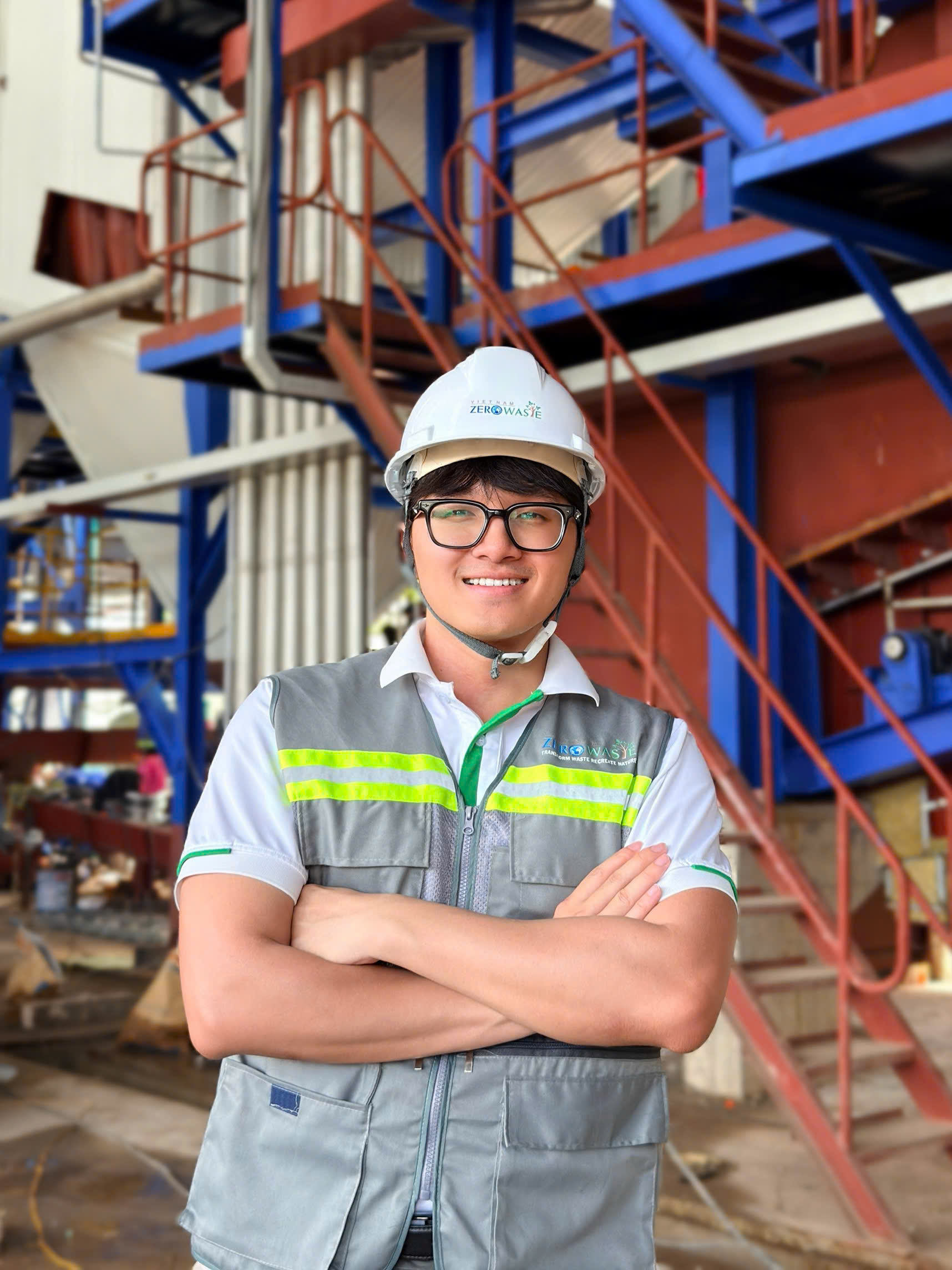
Saigon South
2023
Vietnam
Vietnam Zerowaste is our family's industrial energy solutions business, founded in 2008 and one of the first biomass boiler manufacturers in Vietnam. We design, manufacture, and operate high-efficiency biomass boilers, centralized steam systems, and waste-to-energy solutions that turn agricultural and industrial by-products into clean thermal energy for factories. As CEO, I lead production, engineering, sales, and long-term operating contracts, carrying forward my family's belief that nothing is truly waste, only energy waiting to be released.
"I grew up around steel, steam, and the smell of welding. Vietnam Zerowaste was never just my parents' company; it was the dinner-table conversation, the weekend factory visits. My real start, though, was as an intern while I was still a student at RMIT. I joined the sales and marketing team, and I still remember the pride of closing my first projects and realizing I could actually bring in business. But the defining moment came right after I graduated, when the company was shaken by a major change in its leadership team. Watching everything my parents had built suddenly at risk, I knew I couldn't stay on the sidelines. That was the moment I chose to step in for real, and I have been helping run the company ever since. When I first stepped in, almost everything ran on paper: task management, reports, and approval documents, with no online records. My first real push was digital: I rolled out Microsoft's business management tools so that production and reporting data could sync online, and everyday workflows like approvals and shift reports could run smoothly from end to end. Senior staff were used to the old paper-based way, so the change took patience, but once the first reports came through in real time, the value was undeniable. I also reshaped how we work with FDI clients, adapting to international standards and expectations, which opened the door for us to win a series of projects with foreign partners. Vietnam is raising its environmental standards toward those of developed nations, with stricter limits on emissions and wastewater, and real accountability for sustainability. For manufacturers, that creates a genuine tension: how do you grow greener while protecting your cost competitiveness and hard-won technical expertise? At the same time, the country's industrial growth is accelerating, and energy demand is rising right alongside it. Sustainable energy is no longer optional. It's the foundation on which the next decade of Vietnamese industry will be built. I want Vietnam Zerowaste to be part of that answer: helping factories run cleaner and more affordably on their own agricultural and industrial residues, turning ""waste"" into a competitive advantage rather than a compliance burden. And I believe family businesses like ours have a special role to play. We think in generations, not quarters, and we are patient enough to invest in sustainability, rooted enough to keep skills and trust alive across decades. My hope is that a Vietnamese family business can show the world that doing things responsibly and staying competitive are not opposites, but the same path forward."
Vietsteel Machinery Co.,ltd
Mai Kieu Anh
A Woman’s Journey of Grit, Machines, and Building Beyond
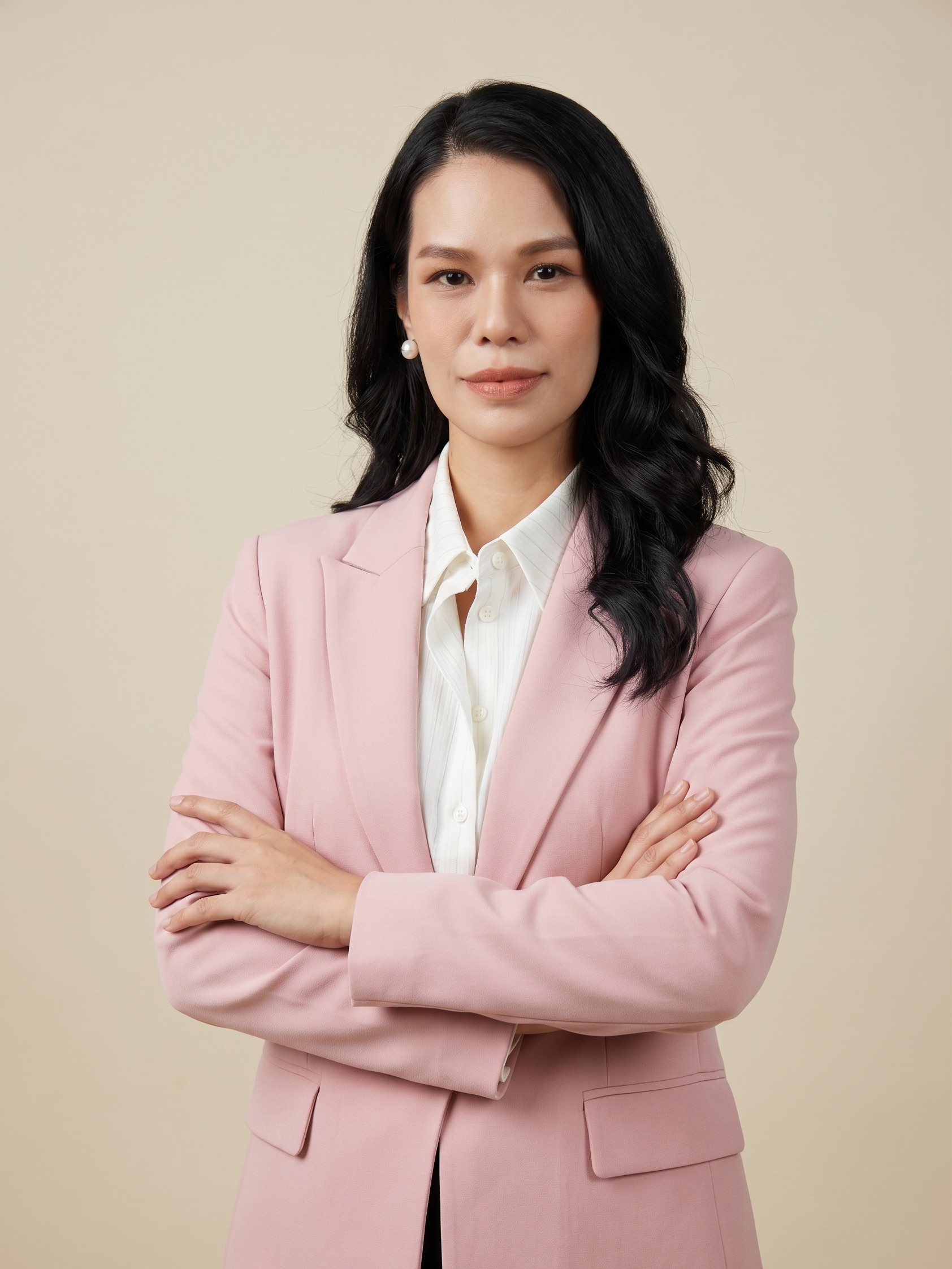
Saigon South
2016
Vietnam
Founded in 2005, Vietsteel Machinery is a leader in manufacturing automated roll-forming lines for the global market. We engineer high-performance systems for roofing sheets, purlins, floor decking, cable trays, seamlock profiles, and custom metal sections. With over two decades of engineering expertise, we have exported to nearly 50 countries across five continents, cementing the presence of Vietnamese manufacturing worldwide. As a board member overseeing commercial, logistical, and financial strategy, I lead branding, business development, and market expansion. I focus on navigating complex supply chains and driving sustainable growth through raw grit, ensuring our heavy machinery competes globally while maintaining lasting international customer partnerships.
"Growing up, my family business wasn't an abstract corporate concept; it was just my parents' grueling daily routine. After graduating, I intentionally chose a different path, taking a standard corporate consulting job to build my own professional identity. The true turning point came later. Looking closely at what my parents had built, I realized this wasn't just a small SME; it was generating real cash flow and delivering critical industrial products that fueled our local economy and contributed directly to the global supply chain. That sudden realization of stewardship changed everything. I quit my corporate job and returned to the family business, starting entirely from scratch at the ground level as a regular employee. Starting in a factory environment was challenging. With a background in architecture and business, I had to earn the trust of engineers and technicians who had spent decades designing and building machinery. Rather than relying on my position, I chose to spend time on the production floor, learning how every machine was designed, assembled, tested, and delivered. Those experiences changed the way I viewed leadership. Respect came from listening, learning, and working alongside people, not from a title. RMIT has had a lasting influence on my leadership style. It taught me to think critically, solve problems systematically, and embrace different perspectives. Those lessons continue to guide me as I bridge engineering with business strategy, ensuring that innovation always serves practical customer needs. Balancing leadership with motherhood has become another defining part of my journey. There were days when I expressed milk in my car before returning to the factory to resolve production issues. Those moments taught me resilience, empathy, and perspective. Carrying forward a family legacy is not about preserving the past—it is about creating new opportunities, empowering people, and building a stronger future for the next generation."
Kim Vu Fabric And Fashion Co., Ltd.
Tran Hoang Kim Ngan
Kim Vu Fabric: Weaving Heritage into the Future
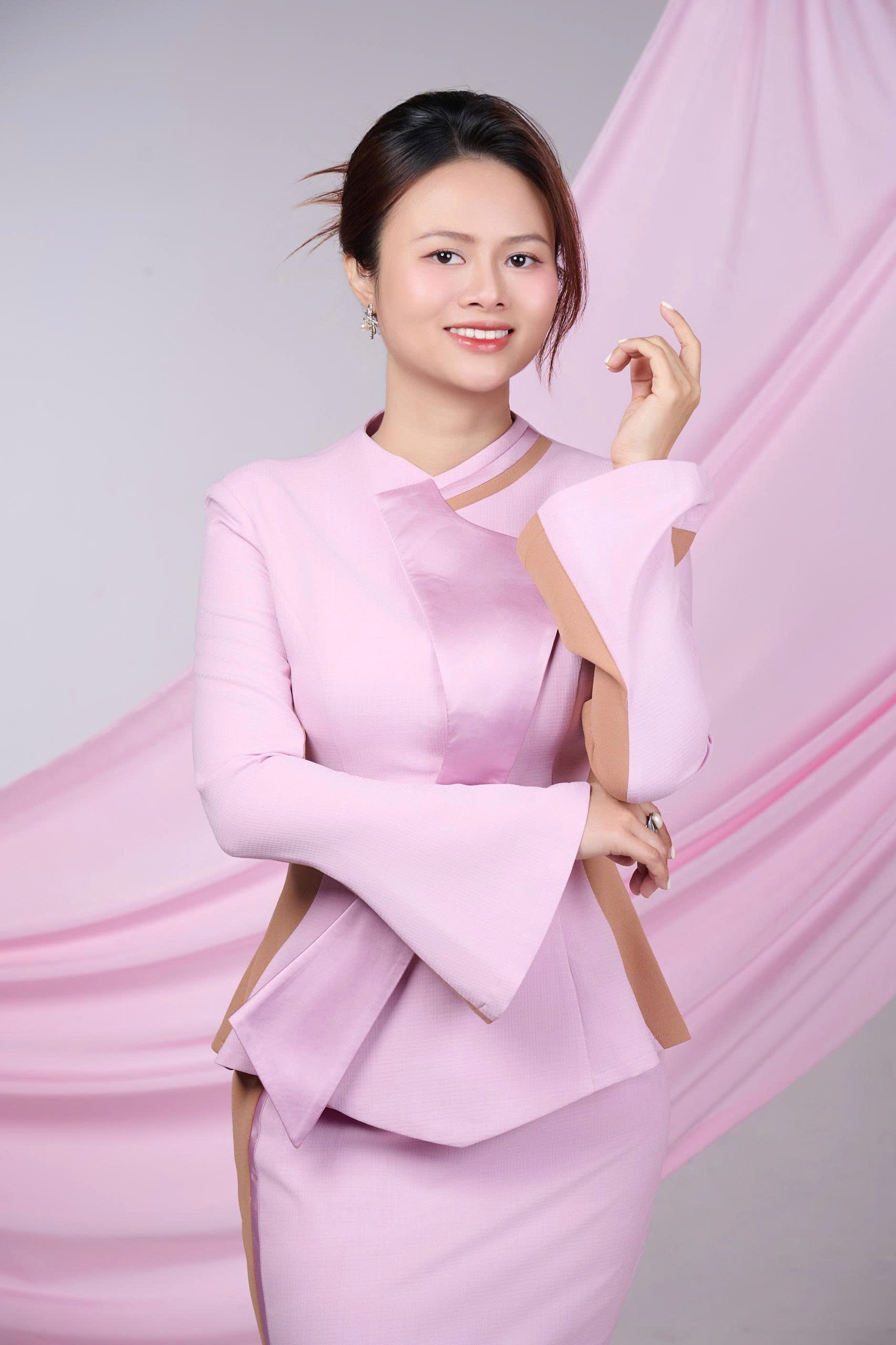
Saigon South
2016
Vietnam
Kim Vũ Fabric & Fashion is a second-generation Vietnamese family business with more than 30 years of experience supplying premium fabrics for fashion brands, corporate uniforms producers, and manufacturers nationwide. Founded in the traditional textile district of Chợ Lớn, we have grown from a small market stall into a trusted textile partner for businesses across Vietnam. As the second-generation leader, I am leading Kim Vũ’s transformation from a traditional fabric distributor into a modern, sustainable textile company. Through branding, digital transformation, circular economy initiatives, and innovative materials such as pineapple fiber, I aim to bring Vietnamese textiles to the global stage while preserving my family’s entrepreneurial legacy
"Some of my earliest memories were not from a playground, but from walking through fabric aisles with my parents in Chợ Lớn. As a child, I simply thought we sold fabric. Only years later did I understand that every roll of fabric represented someone’s dream—a school uniform, a chef’s jacket, a hotel brand, or a young designer’s first collection. Kim Vũ was never only about textiles. It was about helping others build something meaningful. That realization completely changed how I viewed our family business. My dream is not simply to build a larger textile company. I want Kim Vũ to become a symbol of Vietnamese innovation. I hope that one day, when people around the world think about sustainable textiles from Vietnam, they will recognize not only our products but also our philosophy—that business can create economic value while also creating social and environmental impact. Success, to me, is leaving behind a business that future generations are proud to inherit. Returning to RMIT now feels different from the first time I walked onto campus as a student. Back then, I came to learn. Today, I come back carrying the responsibility of carrying forward my family’s business. What would help us most is to stay connected to the RMIT community. Whether through research collaborations, student-led consulting projects, or conversations with academics and fellow alumni, I believe fresh ideas and different perspectives will help businesses like Kim Vũ continue to evolve while remaining true to our family values. At the same time, I hope Kim Vũ can give back to the university that shaped me. We would love to offer internship opportunities, share our experience as a second-generation family business, and open our company to students as a place where they can see how business theory becomes everyday practice. If one RMIT student visits Kim Vũ and leaves believing that a traditional Vietnamese family business can innovate, grow sustainably, and create a positive impact, then I will feel that our partnership has come full circle."
Le Bros
Le Quoc Anh
Swept Up By A Milk Tornado, Landed On A Dream Career
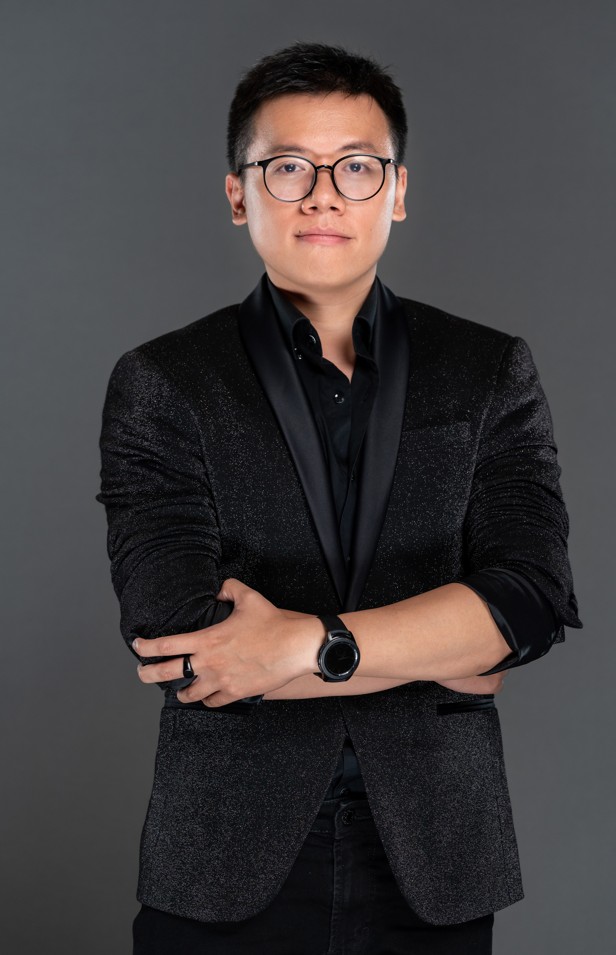
Saigon South
2016
Vietnam
Le Group of Companies is a family-built house of two brands: Le Bros, a 23-year-old Strategy & Integrated Marketing Communications agency, and Le Media, publisher of Dep Magazine — Vietnam's largest locally-owned high-fashion magazine for over 25 years. My parents laid the foundation; I joined to expand what they started into something sharper. As Vice President and Creative Lead at Le Bros, I oversee the conceptual direction of everything we create — from brand strategy to campaign ideas to the words that bring them to life. I also organize VSMCamp, one of Vietnam's largest marketing events, which gathers nearly 1,000 professionals each year
"I “wanted in” before I even had the words for wanting. As a baby, I was a hopelessly picky eater, and my parents discovered the only cure was to play a VHS tape of old Vietnamese commercials while they fed me. So I grew up half-raised on jingles: Biti's ""Bước chân Tây Sơn thần tốc,"" Dutch Lady's flickering fireflies, Vinamilk's “trăm phần trăm” cows dancing across the fields like they owned it. Every kindergarten class has that one teacher who asks what you want to be when you grow up. I remember announcing, with total sincerity, that I wanted to be a CEO. I had watched my father direct a commercial for Zon Zon snacks, stood at the edge of the set beside my favorite comedian Quang Thắng, and quietly decided nothing on earth could be cooler. But “rose-colored glass” ideals didn’t last. The deeper I went into the family business, the louder the doubting voice in my mind grew. Vietnam holds roughly three hundred agencies doing the exact same services, and I couldn't tell you why I deserved a place at the front. I interned in my family business during my RMIT years and mostly felt like a guest in my own house, so I left for a junior copywriting job at a global agency instead. I remember my first meeting when my direct supervisor was presenting a script idea. One sentence she said, that one gloriously, genuinely dumb sentence that changed my career trajectory: “…a swirl of milk emerges from the ground, wraps around the main character like a white liquid tornado!” I had stumbled into the one profession where a sentence that was gloriously absurd could be pitched with a straight face and taken as seriously as a business plan. I stayed for years, not chasing a title, but hungrily studying how a real creative team thinks, fights, and breathes. I only came home once I had something worth carrying back. Alongside a creative director we later hired, I helped build the creative team our family agency never had, reshaping us from a modest PR and events outfit into a proper full-stack agency, producing work good enough for a portfolio and honest enough for a case study. My staff still teach me more than I can count. But in concepts and copywriting, they look to me now, and that, quietly, is the trust I had been chasing. What makes it worthwhile is that I helped my agency concoct creative concepts that land somewhere real: the phone brand Xiaomi honouring a fading art form of “Tuồng”, the beer brand Bia Saigon carrying two thousand tired workers home for Tết, a campaign with UNICEF daring to speak the name of a struggle many teenagers carry in silence: teenage depression. Advertising, at its best, is not only the cleverest way to sell something. Sometimes it is simply the gentlest way to make someone feel heard."
Tara Joint Stock Company
Lê Huy
"A Journey Towards Bridging The Gap Between Different Generations For A Better, United Future."
Saigon South
2023
Vietnam
My family business, TARA, is the exclusive developer and distributor of BlueStone household electrical appliances, with a strong focus on B2B and commercial projects. Within this organization, I serve as the Contract and Supply Chain Manager, a role that places me at the center of our global procurement and delivery operations. I oversee sourcing from international manufacturing partners, negotiate strategic production agreements, and manage the complexities of global trade logistics. Along the way, my work has become a bridge between product development, cost optimization, technical compliance, and client fulfillment. From ensuring that each product meets strict specifications to managing seamless door-to-door delivery to our clients’ warehouses, my role is to turn international supply chain coordination into reliable, efficient business execution.
"Realizing how difficult it is not only to earn trust, but also to gain support for decisions of significant consequence, is a long process of building a track record of results. It means understanding that, from the other side's point of view, they may view us as still under development and inexperienced. Yes, there will be times when our arguments are valid and supported by evidence from outside the organization. But it matters much more when you, as a second-generation leader, decide to build that track record in front of the board of directors and senior management so that trust can be earned. Trust can also be easily lost, especially if you are facing biases. The first major change came from tackling overseas markets during COVID-19, when I took charge of developing international markets. The biggest challenge came from a difference in confidence levels; in this case, I was less confident than the organization. There was friction in adapting to different standards, and asking others to put in the same effort as you was a challenge. Navigating this friction required taking on more responsibility and pioneering the process of researching, presenting, and implementing changes. It also required substantial results and a win-win solution for all parties, even when favorable and unfavorable conditions were outside your control. The connection was less about an idea and more about gaining a better understanding of the specific position we occupy within a family business. There are not many people who are in the same position as us, and a lot of the time we feel unable to share openly. In my case, specifically, it was about the shared struggle of bridging the gap between my own development and what is required of me by the family business. Having people who are a few years ahead of you helps you gain significant insight while maintaining a sense of familiarity and making it easier to share."
A Chau Steel.,JSC
Lê Ngọc Quốc Trung
There Are No Failures, Only Trials
Saigon South
2024
Vietnam
A Chau Steel is a family-owned steel manufacturer based in Vietnam, producing steel billets and supplying steel products to customers across the construction and manufacturing sectors. Officially established in 2008, the company has grown steadily through long-term relationships, consistent quality, and a strong commitment to serving its customers. As part of the next generation of the family business, I am gradually taking on a leadership role, learning every aspect of the business while preparing to guide its next phase of growth and modernization.
"There wasn’t one defining moment; it was something I came to appreciate over time. My father grew up in a poor farming family in rural Vietnam. Like many first-generation Vietnamese entrepreneurs, his journey was far from easy. He experienced failed ventures, financial setbacks, and the need to start over more than once. In his 50s, when many people would have been thinking about retirement, he built our steel business from the ground up. What amazes me most is how he did it. Steel manufacturing is an industry that usually demands huge amounts of land, capital, and complex machinery. Yet our mill sits on less than one hectare. Instead of seeing that as a limitation, my father treated it as a challenge, constantly improving our processes and making better use of every square meter. Today, our small mill produces an output that surprises even competitors who visit. It taught me that resilience and continuous improvement can outweigh size and resources. As with many second-generation family business members around the world, joining the family business was never really a choice, it was a responsibility. But how we preserve it, grow it, and shape its future is very much our choice. That is the responsibility of carrying the fire forward. Growing up, taking over the family business was always seen as a given by the people around me. As I got older, I stopped seeing it that way. Instead, I came to see it as both a privilege and a responsibility. Inheriting a business is not something anyone is automatically entitled to. It has to be earned through hard work, learning, and proving that you are capable of leading it for the benefit of the business and the people whose livelihoods depend on it. So there was never a single moment when I decided to join the family business. The defining moment was realizing how much responsibility comes with one day leading it, and how hard I would have to work every day to be worthy of that opportunity. Family businesses in Vietnam are often seen as bureaucratic, unprofessional, or short-term in their thinking. While that may be true for some, I hope it doesn't define all of us. After all, many of the world's most respected companies also began as family businesses before evolving over generations into professionally managed organizations. That is the future I hope to help build. I want A Chau Steel to become a company known not just for its products, but for its discipline, safety, professionalism, and the way it values its people. More broadly, I hope our journey can show that Vietnamese family businesses are capable of building world-class companies. For a country that only began opening its economy in 1986, I believe the next generation has an opportunity to prove that businesses built in Vietnam can earn the trust and respect of customers around the world. "
Vietson Mechanical
Mai Kiều Anh
A Woman’s Journey of Grit, Machines, and Building Beyond
Saigon South
2016
Vietnam
Established in 2016 as part of our industrial ecosystem, Vietson Mechanical specializes in heavy and oversized fabrication, custom machinery, and high-precision OEM component manufacturing. Combining advanced engineering with flexible production, we deliver tailored solutions that meet strict international standards. As the Managing Director, I oversee daily operations, business development, and market expansion. My focus is on transitioning our traditional SME workflows into smart manufacturing while scaling our global footprint. We build lasting partnerships through raw engineering grit and quality-driven innovation, positioning Vietson as a trusted partner for complex fabrication in both domestic and international markets.
"Growing up around manufacturing taught me that success is built through raw persistence rather than shortcuts. After building my foundation and gaining experience within our core family group, my perspective shifted completely when we expanded into a new venture—Vietson Mechanical. I realized this was more than an opportunity to carry forward a legacy. It was a chance to build an entirely new industrial milestone, blending traditional manufacturing values with modern innovation. To truly understand it, I returned to the business from the ground up, learning our operations from scratch before taking on independent leadership responsibilities. Entering heavy fabrication and precision mechanical manufacturing as a young woman was not easy. Every day presented new technical challenges, from understanding oversized fabrication projects to learning OEM production requirements and complex manufacturing processes. Trust was never automatic. It came through showing up consistently, asking questions, solving problems, and working closely with experienced engineers and production teams. Those daily lessons shaped both my confidence and my leadership philosophy. As the Deputy Director, my role focuses on business development, operational coordination, and expanding opportunities across domestic and international markets. I work closely with our teams to strengthen customer relationships, improve internal collaboration, and ensure every project meets the highest standards of quality, precision, and reliability. I also believe that sustainable growth depends not only on technical capability but also on building a culture where people continue learning and improving together. The education I received at RMIT continues to influence how I approach every challenge. Critical thinking, structured decision-making, and collaboration across different disciplines have become essential tools for managing a growing manufacturing business. They allow me to navigate uncertainty while keeping long-term goals in focus. Beyond work, I am also a mother of two children. Balancing family life with factory operations has taught me resilience in ways no classroom ever could. Those experiences remind me that leadership is about responsibility, empathy, and perseverance. My goal is not only to grow Vietson Mechanical into a trusted engineering partner but also to contribute to the continued development of Vietnam's manufacturing industry while creating opportunities for future generations."
SAF Vietnam - Saigon Food Manufacturing - Import - Export JSC
Dang Phan Nhu Quynh
Built to Last
Saigon South
2016
Vietnam
I am a next-generation leader of SAF Vietnam, the family-owned company behind ELLAC, a Vietnamese milk formula brand with over 24 years of heritage. Today, ELLAC provides nutrition to more than 500 kindergartens and schools across Vietnam. As General Director, I lead business strategy, brand transformation, and market expansion, combining over 11 years of corporate experience in FMCG and banking with the entrepreneurial mindset of a family business. My focus is on strengthening ELLAC through innovation, operational excellence, and trusted nutritional solutions while preparing the company for sustainable growth and international expansion.
From the outside, our manufacturing business looks simple: we receive orders, produce milk formulas, and deliver it to customers. But stepping into the business showed me that I was entering a maze my parents had spent more than twenty years learning to navigate. Because we produce nutrition for children, every decision carries weight. I found myself studying food safety regulations, preparing for inspections, responding to audits, and ensuring every process met increasingly rigorous standards. Every time I sat in meetings with school principals and government officers, I learned that trust had to be earned through transparency, consistency, and a willingness to answer every question—whether the purpose was an inspection, an evaluation, or the beginning of a new partnership. It was in those moments, not while walking through the factory, that I truly understood what my parents had built. Behind every box of milk was decades of resilience, discipline, and integrity. I also experienced the disappointments they had quietly carried for years: customers who chose not to sign, projects that didn't move forward, and the constant responsibility of protecting a reputation that could take years to build but only moments to lose. The greatest realization wasn't that the business was difficult. It was that my parents had never been in the business of simply manufacturing milk. They had spent more than two decades earning the trust of schools and families, one relationship and one promise at a time. Only then did I realize that what I was inheriting wasn't just a factory or a brand, it was a reputation built over 24 years, and the responsibility to protect and strengthen it for the next generation. When I joined SAF Vietnam, I noticed something that had remained unchanged for over twenty years: our factory layout. Rather than simply purchasing new equipment, we made the bold decision to redesign our production flow by investing in a clean room and a one-way manufacturing system. It was unfamiliar territory for all of us. Instead of relying solely on consultants, I invited our production team into the process. Together, we visited suppliers' factories, studied different layouts, learned construction terminology, debated material choices, and questioned every assumption about what would—and would not—work for milk powder production. The construction was only at the beginning. The new environment introduced stricter hygiene standards, different maintenance routines, and more careful product handling. The transition was more demanding than we had anticipated. Production slowed as the team adapted to new workflows, additional maintenance schedules, and higher operating standards. Rather than expecting everyone to adjust overnight, we treated the implementation as a learning journey. We held regular retrospectives, listened closely to operators' feedback, refined the workflow, and invested in new handling tools that improved both efficiency and product care. As confidence grew, so did ownership. The factory gradually found its new rhythm—not because change was imposed, but because the people operating it helped shape it. Today, we proudly welcome schools, parents, suppliers, and government agencies to visit our factory. Looking back, I realized the clean room was never the real innovation. The real innovation was discovering that sustainable transformation is about creating an environment where people learn, adapt, and improve together.
Gạo Ông Cua (Ho Quang Tri Private Enterprise)
Tran Quang Vu & Ho Kim Uyen
Gạo Ông Cua: Protecting a Legacy for the Next Generation
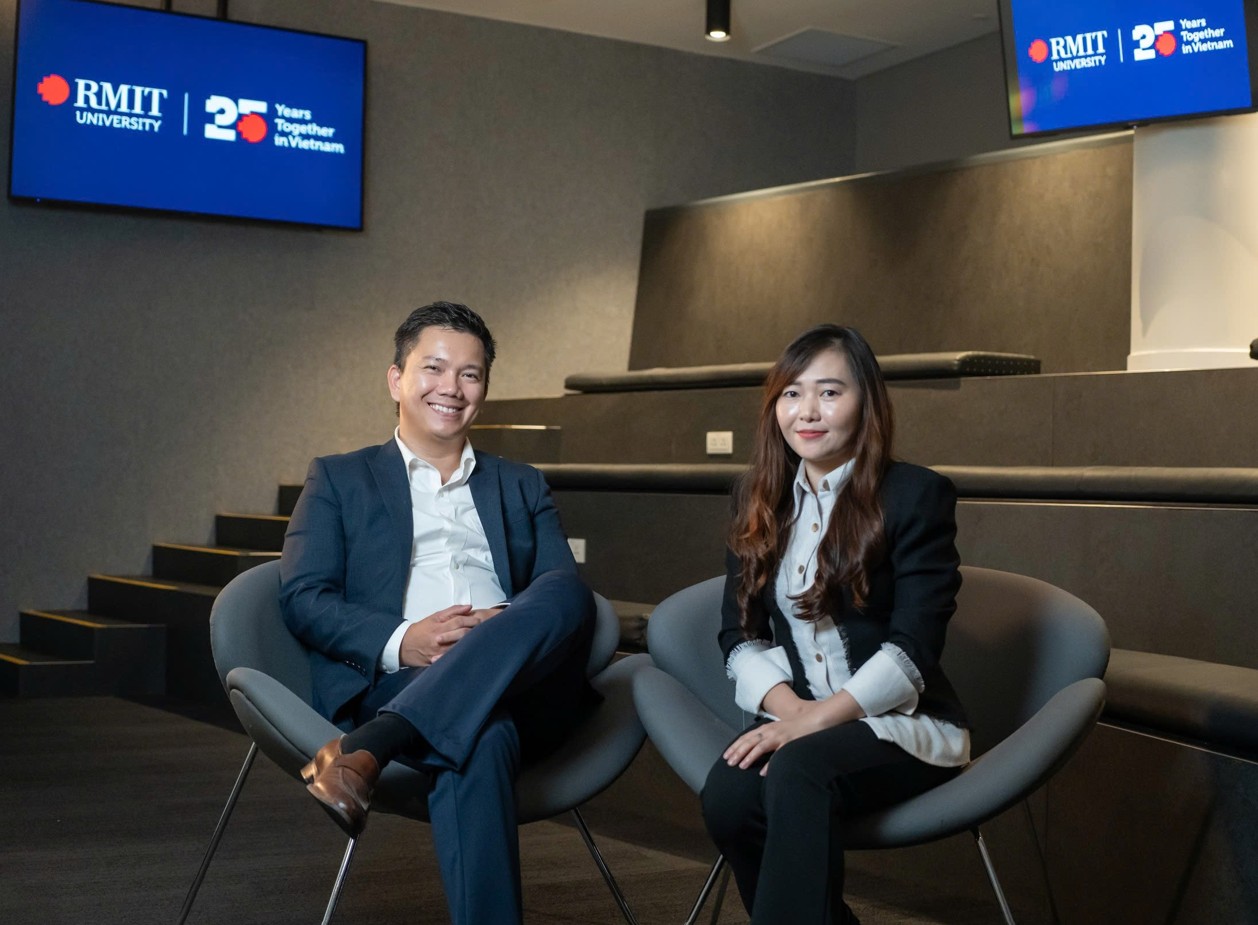
Saigon South
2010
Vietnam
Ho Quang Tri Private Enterprise is the family business behind Gạo Ông Cua and ST25, a three-time World’s Best Rice award winner developed over 30 years by agricultural scientist Mr. Ho Quang Cua. We cultivate premium, climate-resilient rice through a sustainable rice-shrimp ecosystem in the Mekong Delta. As Head of Strategy and International Markets, together with my wife, Uyen, I lead the company’s evolution. Drawing on our backgrounds in strategy consulting and branding, we focus on scaling operations, protecting our global intellectual property from counterfeiters, expanding international distribution, and bringing our family’s agricultural legacy to supermarket shelves worldwide.
The RMIT MBA was a valuable gateway that enabled my transition from an IT background into the world of strategy consulting. That degree paved the way for formative roles at Dream Incubator, Deloitte Consulting, and KPMG, helping me build the commercial and analytical toolkit I needed when the time came to step into the family business. It allowed me to bring top-tier corporate strategy directly into the heart of a traditional agricultural enterprise. For nearly 40 years, from 1990 to 2026, Mr. Ho Quang Cua poured his heart into the soil, using complex crossbreeding methods to create the ST25 rice variety. He is a scientist at heart. But when ST25 won “World’s Best Rice,” his biological masterpiece faced a modern corporate challenge: global intellectual property theft. The friction between the “old” and the “new” lay in bridging his humble, traditional agricultural mindset with the assertive commercial defense required today. We had to apply our combined business backgrounds to transform the enterprise into a fortified global brand—battling counterfeiters, defending trademarks across continents, and navigating international retail standards. The triumph is seeing his agricultural genius protected by our strategic vision. Our dream is simple but deeply personal. We are not just trying to increase sales volume or meet export quotas. We want to defend, build, and sustain Gạo Ông Cua, ensuring that Mr. Cua’s image proudly remains the face of the brand. We want his legacy to live forever—not only in the history books of Vietnamese agriculture, but also on supermarket shelves from Vietnam to the U.S., Canada, and Australia. Ultimately, we are doing this so that one day, our children can walk into a store anywhere in the world, look at that bag of rice, see their grandfather’s face, and feel an immense sense of pride in what their family built together.
Family-owned Real Estate Business
Do Ngoc Ha
The Weight of the Scaffold
Hanoi
2023
Vietnam
Our family business develops and manages residential properties and serviced apartments through a lean, family-led operating model. Rather than maintaining a large administrative layer, we oversee financial planning, legal compliance, and strategic decision-making internally, while outsourcing execution to external partners. As Operations & Legal Manager, I coordinate legal documentation, financing processes, regulatory compliance, and operational risk management across our projects. Working within such a lean structure means every decision carries real financial consequences, requiring careful judgment, shared accountability, and close collaboration within our family to ensure long-term stability.
At 18, my world turned upside down when the pandemic forced me back to Vietnam, shattering my plans to study abroad. Trapped in an unprepared reality, I spiraled into a deep sense of aimlessness and mental exhaustion. In this darkness, my parents threw me a lifeline: managing a specific segment of our family business. I began from ground zero. Guided step by step through complex legal paperwork and bank financing, it took months of intense learning and trial and error before I could handle critical operational risks completely on my own. But that growth came with a heavy emotional toll. While my friends enjoyed carefree university lives, I felt profoundly isolated. None of my peers could understand the crushing pressure I carried. In real estate, every decision, whether directly related to work or not, carried a heavy weight and could lead to huge financial consequences. This high-stakes responsibility left me under immense stress. Yet, walking through our construction sites alone at night, my loneliness turned into clarity. I finally saw the true depth of my parents' sacrifices, and I knew I was ready to protect what they had built. Managing a multi-generational business naturally brought friction, and I often clashed with my parents' traditional methods. For instance, when I proposed modern updates to our apartment layouts, my father was highly hesitant. At first, I thought he was just being rigid. But after several heated arguments, I had a major realization: every change comes with a price tag. My parents weren't resisting innovation; they were protecting our financial stability from unforeseen risks that might not be cost-effective. This shifted my approach from aggressive pushing to "gentle persistence." Instead of just talking, I brought my father out to the field, showed him market trends, and presented data-driven arguments that factored in actual costs. We found a middle ground, creating a balance between two generations by combining the energy of modern innovation with the wisdom of solid experience. It taught me that modernizing doesn't mean replacing everything; it means enhancing our strong foundation while keeping a strict eye on financial reality. While the friction in our daily decisions never truly disappears, I have come to see it differently. What once felt like a restriction is often the result of decades of experience, sacrifice, and responsibility that I am only beginning to understand. Looking at my parents today, I realize they are approaching a stage of life where they deserve to slow down. Yet, letting go of a business they spent decades weathering harsh storms to build is never easy. Rather than pushing for sudden change, I hope to earn greater responsibility one step at a time by taking full ownership of a smaller project from beginning to end. By bearing the consequences of every decision myself, I can continue learning while building the trust needed for a successful transition. My goal is not to replace the generation before me, but to become someone worthy of continuing what they built. If one day my parents can step back with peace of mind, knowing their life's work is in capable hands, that will be the achievement I am most proud of.
Khang Vinh Joint Stock Company
Nguyen Viet Hai
From Family Roots to a Global Network
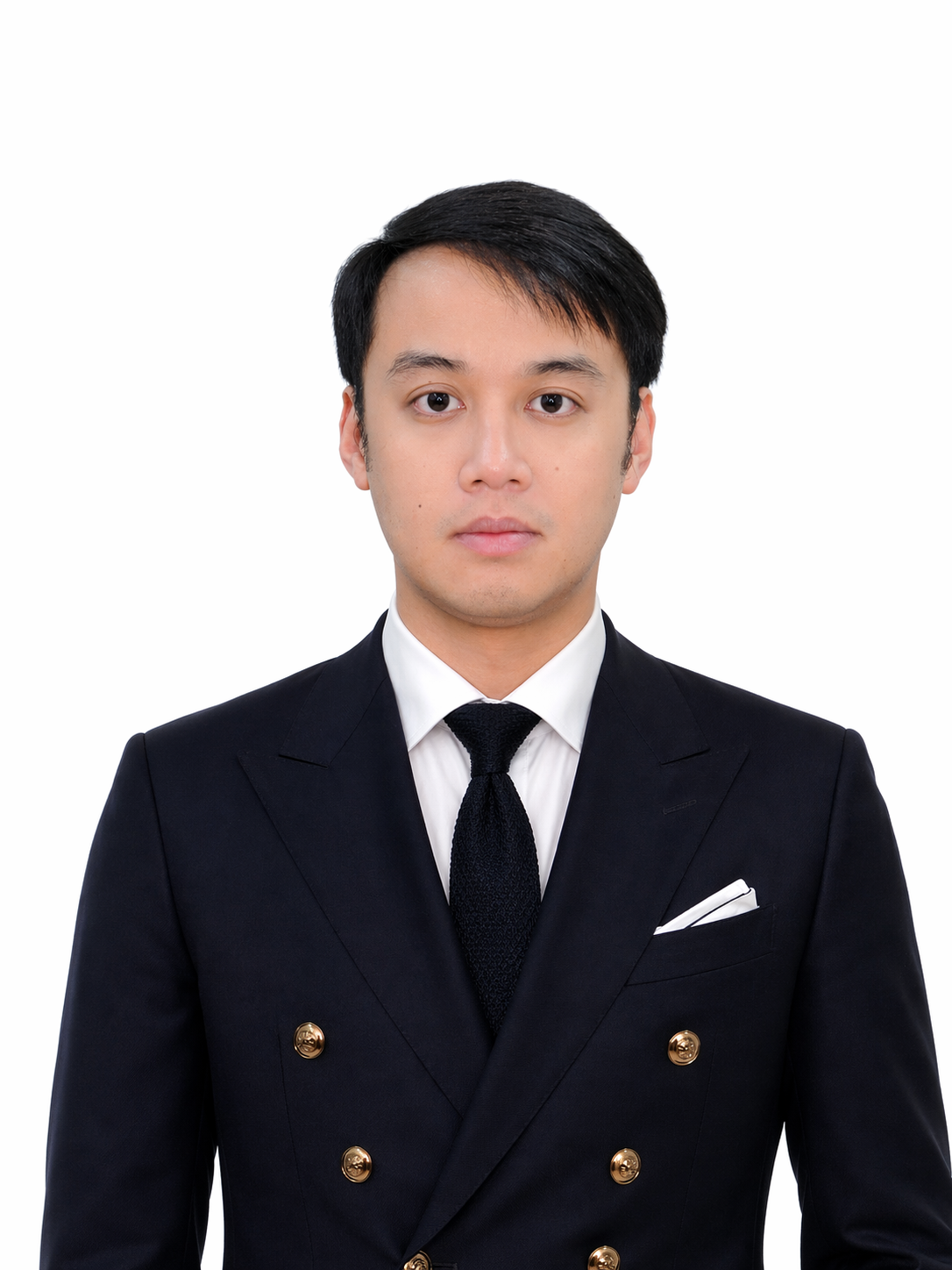
Hanoi
2015
Vietnam
Our family business has been distributing industrial chemicals and feed additives for more than 21 years. We serve customers across Vietnam, from steel and hot-dip galvanizing companies to battery manufacturers and feed mills. Today, I am the Deputy Director, besides operation management, I am directly in charge of sourcing and procurement, working with suppliers across China, Taiwan, Korea, Turkey, Spain, Mexico, and other markets. But my story with the business started long before I understood what it meant to inherit one.
As a child, I often went to our warehouse and office after school. I remember trucks coming in and out, chemicals stacked high, and my parents constantly talking with customers and suppliers. Back then, it was simply the world I grew up in, familiar, busy, and very much my family’s. I never imagined that one day, this little kid would have to step into that world and find his own place in it. To many people, I was simply “the owner’s son.” Some employees had worked with my parents since I was still in elementary school, long before I understood how the world worked. I could feel the questions no one said out loud: Could I really do the job? Could I make the right decisions under pressure? Most importantly, could they trust me? A title on paper could not answer those questions. My actions had to. Trust had to be built through the work, the decisions I made, and by standing alongside the people around me. I spent more time with those who knew the company better, working through problems, handling difficult orders, finding new suppliers, and negotiating prices. When things did not go as planned, the consequences had to be faced rather than passed on. Then, something started to change. Little by little, more hands were working alongside me. More eyes were looking in the same direction, not looking at me. That was when I realised I was no longer just the owner’s son. I had become part of the family business. One of the biggest differences between my generation and my parents’ was how we looked at suppliers. My parents trusted relationships built over many years, while I wanted to explore new markets and find more competitive sources. At first, our views sometimes clashed. Behind those differences was a deeper question of trust: could I introduce new ways of working without putting at risk what my parents had built? I learned that trust had to work both ways. I had to show my parents that new suppliers could strengthen, not replace, the relationships they valued. By carefully assessing their quality, reliability, capacity, and long-term risks, we expanded our sourcing network while preserving the relationships that built the company’s foundation. As the results spoke for themselves, trust grew. The moment I truly felt I belonged came quietly. At first, when problems arose, some senior employees would still go directly to my father. Later, they started coming to me first, asking what I thought, discussing difficult decisions, and trusting me to take responsibility. No one told me I had earned their trust. I simply noticed that their behaviour had changed. That was when I understood what I had chosen to stay for. I was not just inheriting a business. I was inheriting relationships, experience, and a reputation my parents had spent more than two decades building, and the trust behind it. To me, carrying on a family business is not about keeping everything unchanged. It is about respecting what came before, having the courage to improve what needs to change, and earning the trust to carry it forward, leaving the next generation something stronger than what I received.
Craftbeauty Fairtrade
Vu Phuong Chi
Crafting Purpose, Carrying Legacy: Where My Fashion Dream Came Home
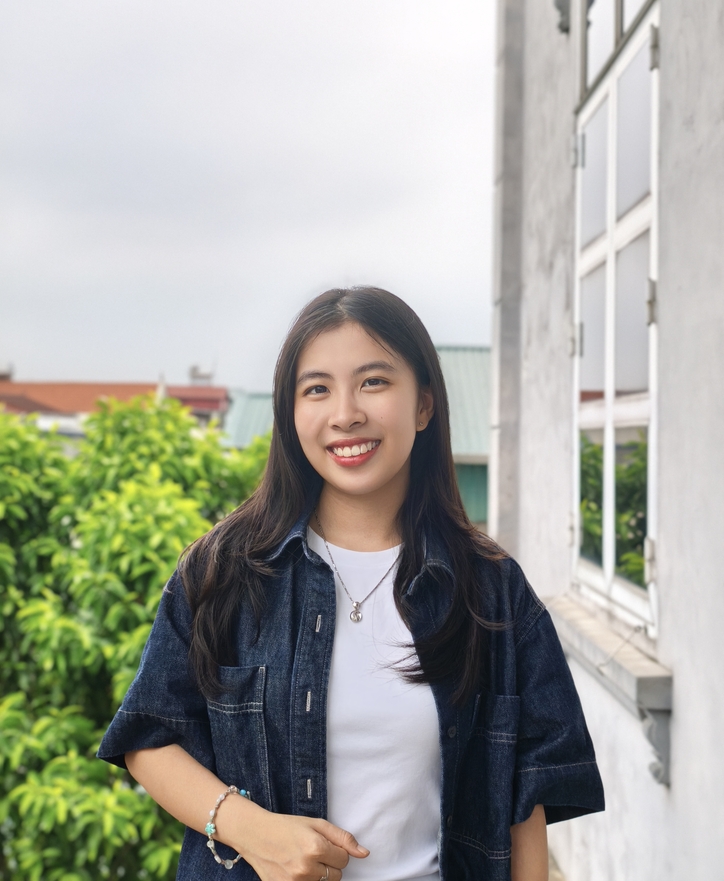
Hanoi
2025
Vietnam
Established in 2003, Craftbeauty Fairtrade is a Vietnam-based manufacturer specializing in fashion accessories and textile products. For us, every product tells two stories: one of craftsmanship and one of opportunity. On one hand, we transform ideas into high-quality handicrafts through end-to-end services, from product design and sample development to sourcing, production, quality control, and global export. On the other hand, Craftbeauty creates sustainable employment opportunities for women and people with disabilities, demonstrating how business success and social impact can grow together. As part of the family business, I have been involved in both decision-making and execution across social media content, product design direction, sales strategy, and operational system optimization.
As a teenager, I once dreamed of becoming a fashion designer, but my parents grounded me in reality, showing me that creativity needs business understanding, which ultimately led me to pursue Finance at RMIT University. Throughout university, I considered between pursuing my own path and returning to the family business. I explored different paths in search of clarity - from working as a blog editor and experimenting the bean-to-bar chocolate process, to studying for the CFA and gaining experience at a financial advisory firm, wondering whether the unknown was where I would discover myself. It all started when my mother's friends wanted to buy our products online. I joined the business part-time to create social media content and launch our retail page. What seemed like a simple project became a turning point. I realized my parents’ business was a foundation to explore business management, amplify social impact, and build something greater than I could alone. Having grown up around the factory, many employees have watched me grow up, just as I have witnessed different chapters of their lives. Most of them come from disadvantaged backgrounds, facing financial, physical, or mental hardship. As I heard their stories, I began to understand the true legacy my parents had built. Beyond providing stable employment, they have created an environment where people gain confidence, independence and life purpose. One case that profoundly shaped my worldview was Ha, a woman with an intellectual disability from a single-mother household. Initially, she struggled to complete even the simplest task: stringing garment tags. She could spend an entire day working on a single tag, often losing focus, getting upset easily and struggling to coordinate her hands properly. I was confused by how someone who initially seemed unable to complete such a simple task could eventually improve so dramatically. I could not yet understand what kind of support could help her change, but the team did not give up on her. They patiently repeated instructions, allowed her to learn at her own pace, and continued giving her opportunities to improve. Over time, with patience and kindness, Ha improved, eventually becoming the fastest worker at stringing tags, and warmly greeting me on every visit. Although she may not be able to actively support others in every task, she can now take on other responsibilities, such as turning products inside out or carrying materials for her colleagues. She has also become less frustrated in her daily life, and her growing independence has made things easier for her mother - she can now even wash herself without assistance. Her transformation showed me the incredible power of meaningful support in unlocking human potential. My contributions to the family business are still incremental, but Ha has given me a value I hope to carry with me long into the future. I want to preserve the belief that my parents have demonstrated through their work, that a business can create value not only through what it produces, but through the people it helps grow. Since secondary school, I have immersed myself in every manufacturing stage - from material sourcing to quality control and packaging. Experiencing each step firsthand taught me that the value of craftsmanship lies in patience, precision, and care in every detail, shaping how I approached innovation. I knew I had to respect a system refined over more than 20 years while exploring new ideas. Fortunately, our team welcomed change with an open mind. From digital tools, new materials and product designs to shared Google Sheets for real-time updates, every improvement became a collaborative effort shaped by everyone's feedback. Working in the family business also allowed me to have time flexibility and stay connected with social networks. One memorable example came from a friend in the RMIT Neo Culture Tech, who inspired me to design a plush keychain based on the school mascot. It reminded me that a “lightbulb” moment often emerges from unexpected conversations. While my contributions have so far been incremental, I hope to continue building a business that empowers our people through skill development and long-term growth
Thu Hien Healthcare
Vu Hien Linh
Built to Last: Weaving New Threads into the White Coat
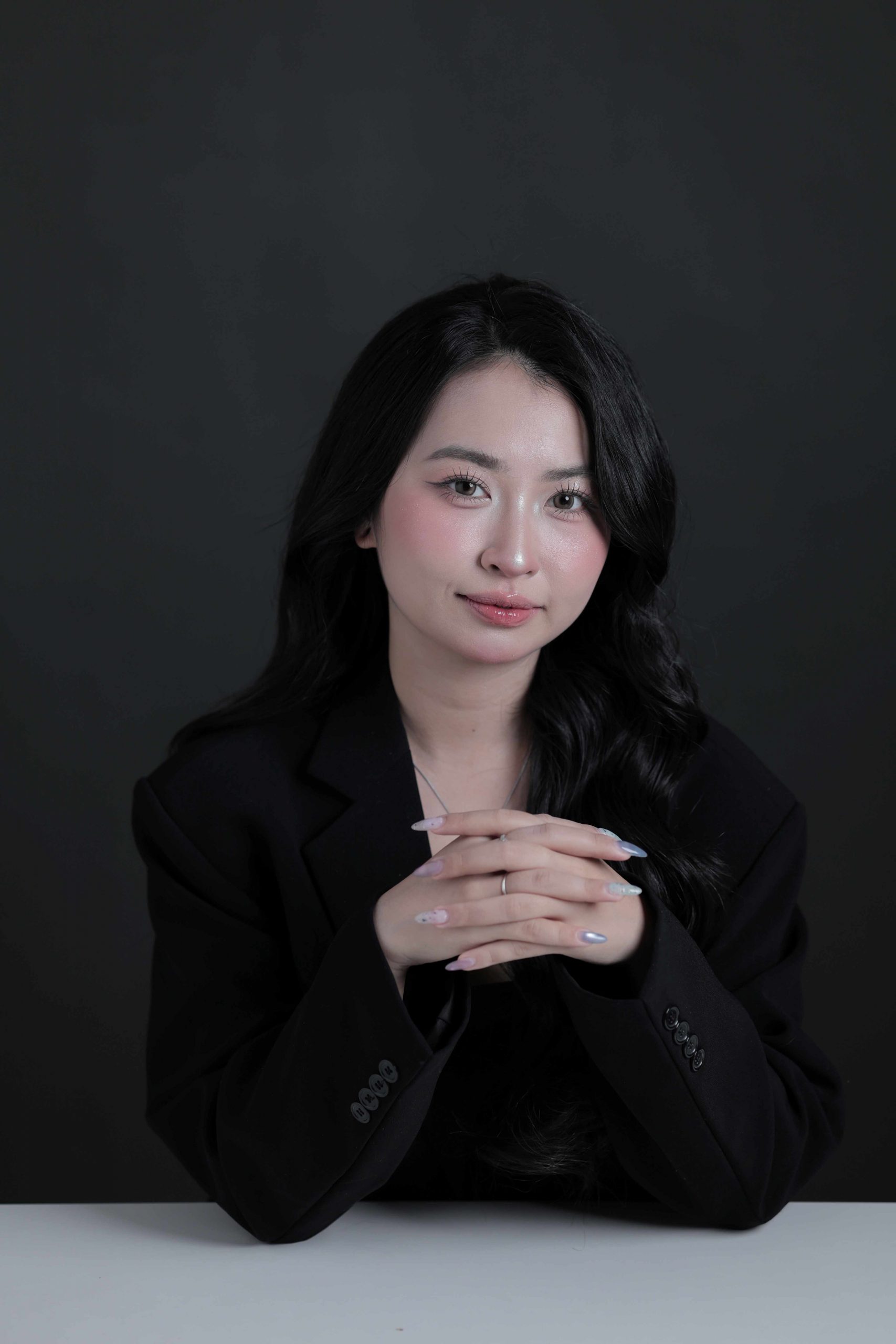
Hanoi
2022
Vietnam
Thu Hien Healthcare is a family-owned medical group that comprises two key brands: Thu Hien Dermatology Clinic and Phuong Nam Pharmacy. We specialize in clinical dermatology treatments, aesthetic services, pharmaceutical and cosmeceutical distribution, and professional medical advisory services for top skincare brands. As the General Manager, I integrate strategic business management with my pharmaceutical expertise to optimize healthcare operations and elevate the patient experience. Working closely with dermatologists and pharmacy partners, I help implement advanced treatment protocols while balancing commercial operations with strict medical standards to ensure sustainable, patient-centric quality.
Witnessing the fragility of the Vietnamese aesthetic industry, with unqualified practitioners capitalizing on patients’ health, was heartbreaking. Deceptive marketing led to severe medical complications. Coming from a family with three generations of doctors, I felt a deep sense of responsibility. With our family’s ten years of clinical excellence and a trusted network of top practitioners, I knew we had to act for the health of the community. During my final year at RMIT, I decided to study for a second degree in Pharmacy. After working in the Big Four consulting world and engaging in UNICEF initiatives, I returned to my family business in the healthcare industry. My goal is to provide true medical value for patients, delivering effective, evidence-based care through which Vietnamese skin is treated with genuine scientific integrity. At 22 years old, I realized I was no longer just an employee working to earn a salary for myself. Suddenly, I was responsible for the livelihoods of our employees, who rely on us to support their own families. Every decision I made carried real weight since it was not only affecting me, but also our employees and their families. Furthermore, I was now responsible for the professional reputation my mother had built over 25 years of medical integrity. For a young girl, it was a moment of profound vulnerability, filled with doubt and fear. Yet, that heavy responsibility became my motivation to continuously improve myself and earn the trust of the people I lead. In healthcare, true care must come from the heart. I always teach my team that when you genuinely care about people, patients can feel it. We are not just treating skin conditions; we are restoring broken trust. I have seen countless clients return simply to give flowers to our doctors and say thank you for helping them. One memorable patient came to us with severe complications caused by an untrustworthy spa. By successfully repairing her skin, we also helped restore her emotional well-being. In fact, I was honored to be invited to one of my clients’ weddings because she felt so lucky and grateful to us. We do not just offer medical treatments; we provide a compassionate, patient-centric environment that honors the true meaning of medicine. As the President of the Family Business Club, I understand the loneliness of young successors. Building a trusted community of peers who share the same educational background is incredibly important. Our club is a safe place where we can share our struggles, exchange business lessons, and offer emotional support to one another. Surrounding myself with like-minded entrepreneurs has completely transformed my journey. RMIT pushed me to my limits and introduced me to wonderful peers who support each other in navigating the challenges of business growth and development. Together, we are building a true family that empowers us to carry the fire forward.
Yesco Transport & Engineering Company Limited
Duong Thi Thao Nguyen
A Family Legacy That Carries Persistence and Their Whole Heart

Hanoi
2026
Vietnam
YESCO Technical and Transportation Co., Ltd. was established on November 20, 2011, in Hanoi. Our mission is to provide factories with comprehensive, all-in-one utilities and optimal solutions designed to enhance production efficiency while minimizing both capital and operational costs. We empower businesses to increase their profitability by offering a wide array of improvement solutions, including energy conservation and specialized, synchronized technical services. In my capacity as an HR and Marketing Specialist, I manage human resources operations, including employer branding, recruitment, timekeeping and managing the content published on the company’s official website.
There were many ups and downs when I joined my family business. As a daughter of the owner, I also witnessed firsthand the hardships that came with running a company. I remember a time when our business was growing rapidly in both revenue and projects, and we needed to hire new technicians to keep up with our customers’ pace. I was in charge of recruitment, spending hours on Facebook, recruitment websites, and over 30 fan pages, as well as paid and free platforms. Despite all this effort, only a few candidates showed interest in our roles. I went through every stage of the hiring process: screening, interviewing, negotiating salaries, and making final offers. Because our work required blue-collar workers, who could easily switch jobs if the waiting time was long, I tried to act as quickly as possible—even sending an offer at 10 pm. Yet, despite my efforts, a candidate canceled our offer right before their start date with a simple message: “I have found another job.” I remember feeling like all my hard work had been wasted. At that moment, my dad said to me: “Your task is only recruitment, but I have witnessed more complicated problems since building this company.” It was then that I truly understood the effort he had invested in building the business. I began to appreciate the early morning phone calls with employees about the day’s plan, the emergency calls from customers complaining about technical problems, and the long days working in the heat with just a simple meal to meet deadlines. They faced countless obstacles along the way, yet they never gave up when things got hard. That simple sentence from my dad made me realize how much I admire what he has built and the resilience it took to get there. As a person in charge of employer branding for our company, I had the privilege of listening to employee testimonials. I remember an electrical technician saying that he could find another job that paid more than ours, yet he chose to stay because the CEO is not only a boss but also someone he can turn to for personal advice, someone older who provides wise guidance about life. The second story is about a mechanical technician. At first, he was expected to lead the team; however, he became frustrated with his colleagues and even left the site when an argument escalated. The general manager considered firing him at that time. However, my dad wanted to give him an opportunity and went to speak with him in person. He explained that our purpose is not just about money but also about collaboration, and proposed practical methods for leading, delegating tasks, and motivating colleagues. This man took the advice to heart, and later became the person who works until 3 am for the company. He later expressed his appreciation to my dad for the wise guidance, which enabled him to motivate and manage the team effectively on his own. As an SME, we have many areas for improvement, and RMIT’s knowledge has helped me develop systemic solutions. In the past, I learned about the Customer Journey Map framework, which enabled me to analyze our current workflow and identify obstacles in order to improve processes. As a student minoring in Digital Marketing, I took a Digital Business Development course in my first year. This allowed me to upload content to the company’s website aligned with Search Engine Optimization (SEO), driving more traffic and attracting potential customers. As a result, our company has been approached by well-established firms, including both FDI and domestic manufacturing companies.
No items found.